Time, light and completeness

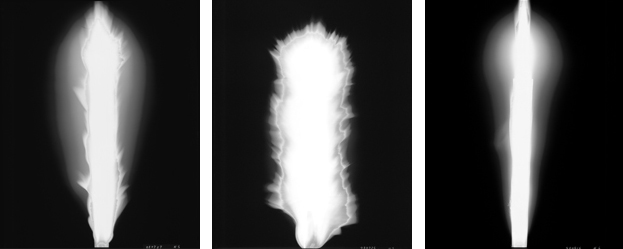
Hiroshi Sugimoto, In the Praise of Shadow, 1999

To a greater or lesser extent all photography is about time and light. A long exposure can make turn something ordinary into a softly unfamiliar image; a short exposure can freeze a moment in time giving a picture the naked eye could never isolate. For Hiroshi Sugimoto the duration of a photograph is often determined by its subject. In the series In the Praise of a Shadow all the light given out by candle is recorded in a single image; Sugimoto describes this as recoding ‘the life of a candle‘.
Continue reading

Mirror Signal Manoeuvre

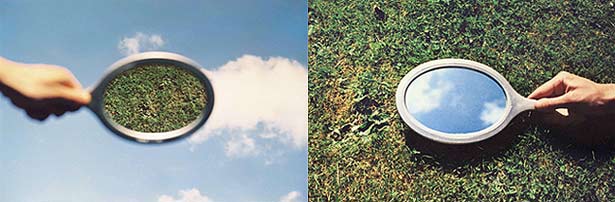
Hreinn Fridfinnsson, Attending, 1973

When I think about the role of art – if it can be said to have one – I think I fundamentally see it as holding a mirror up to the world. I guess this means art tells us stuff me already know, it just switches things around a bit, creating familiarity tinged with an oddness that somehow focuses the mind. Having just written that, I’m inclined to think it proves I probably shouldn’t think about the role of art at all. It just makes me spout art crap.

Continue reading

Uncanny likenesses

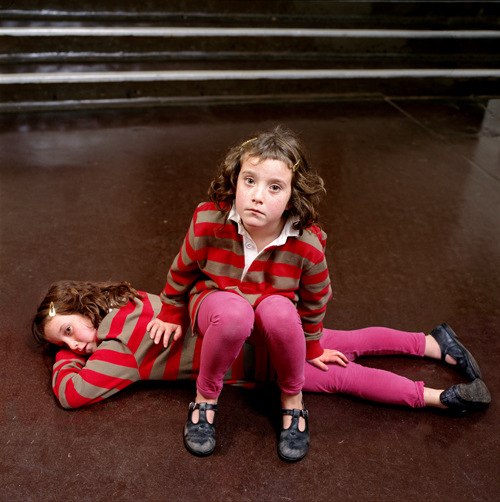
Wendy McMurdo, Helen, Sheffield from the series In a shaded place, 1996

At first sight pretty much any of the pictures in Wendy McMurdo’s series In a shaded place could be a straight photograph. If what you see is what you get, these are twins, dressed the same as some twins are. There is a slight oddness, possibly from the exact similarity of the outfits, but nothing more. But the titles suggest a singularity that is absent from the image. Which twin is Helen?

Continue reading

Life through a very small hole

Steven Pippin, Self-Portrait Made Using a House Converted into a Pinhole Camera, 1986

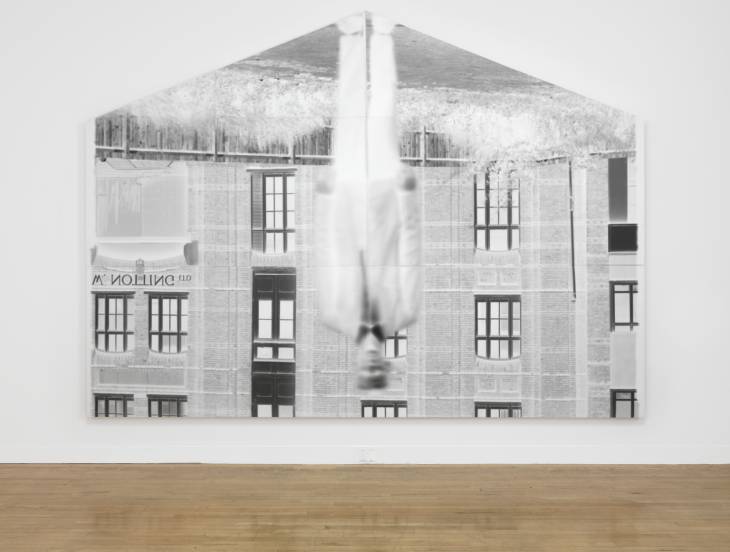
There are quicker and easier ways to take pictures. It’s not as though cameras aren’t readily available in shops. For Steven Pippin though, the process of making a picture usually starts with the process of making a camera. In itself that’s not so unusual. There are probably countless art teachers out there who have encouraged students to make pinhole cameras. Usually such undertakings begin with a box of some sort, often a biscuit tin. But that would be way too easy for Pippin.

Continue reading

Uneven surfaces

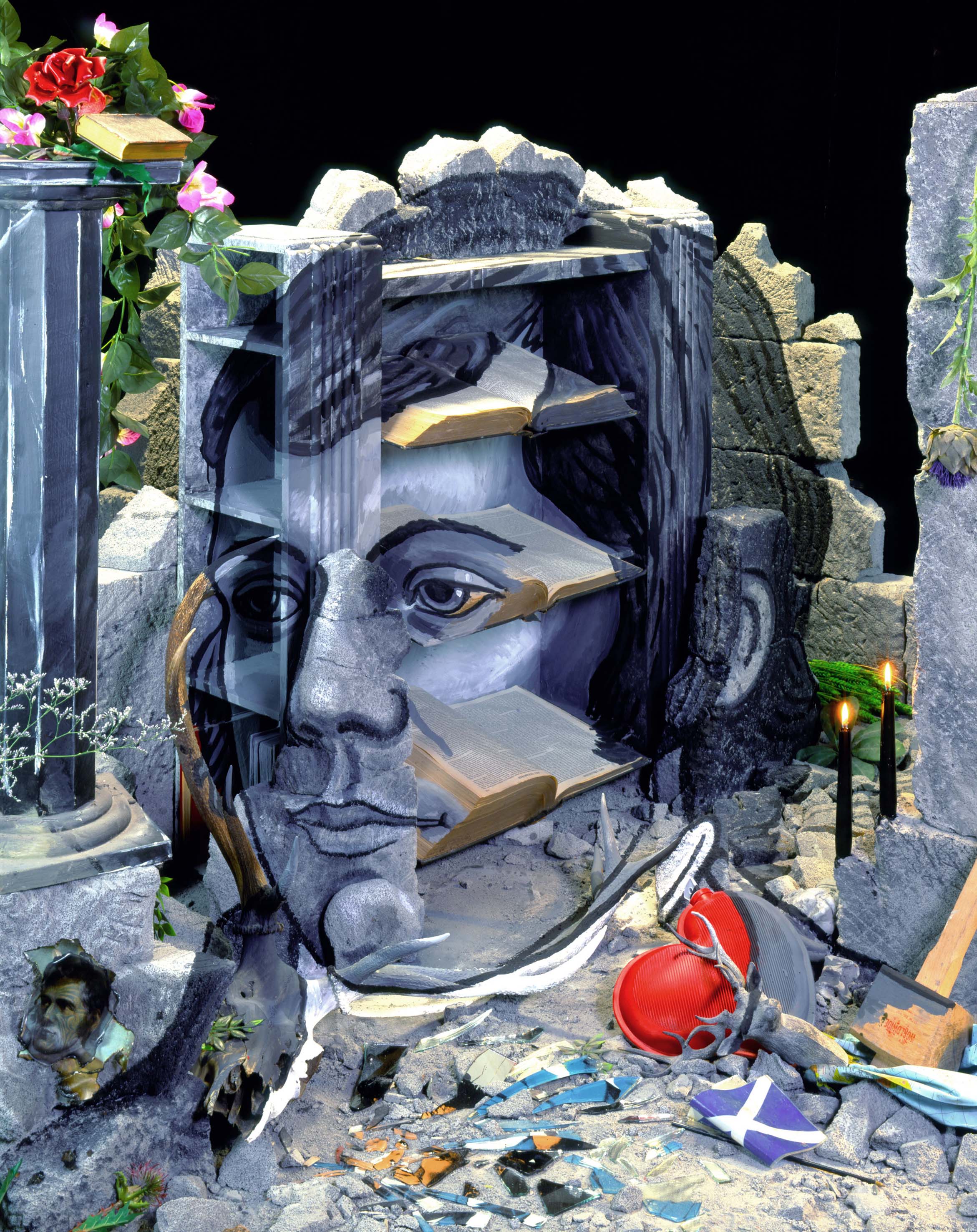
Calum Colvin, Robert Burns, 2002

There are many artists who explore the relationship between painting and photography and plenty who use photography to render studio installations flat – Thomas Demand for instance, who I wrote about yesterday – what makes Calum Colvin’s approach unusual and why talk about his work now?

Continue reading

Representing the real

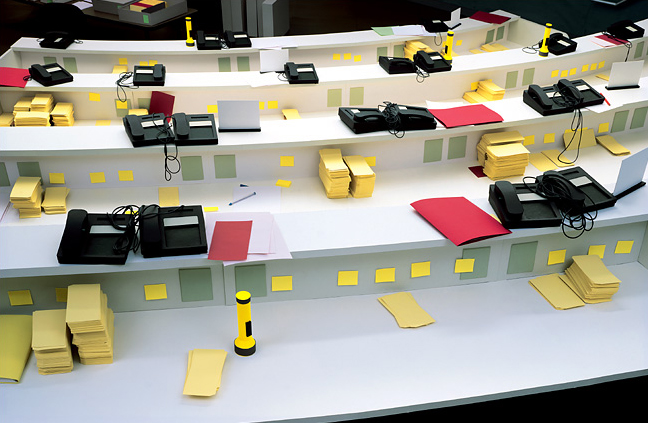
Thomas Demand, Poll, 2001

There are many ways to make a photograph. In photographic terms, Thomas Demand’s approach is very simple. The camera records the scene in as straightforward a manner as it can. But there is something odd – uncanny, perhaps – about the scene; all is not as it seems.

Continue reading

By the light of the silvery moon

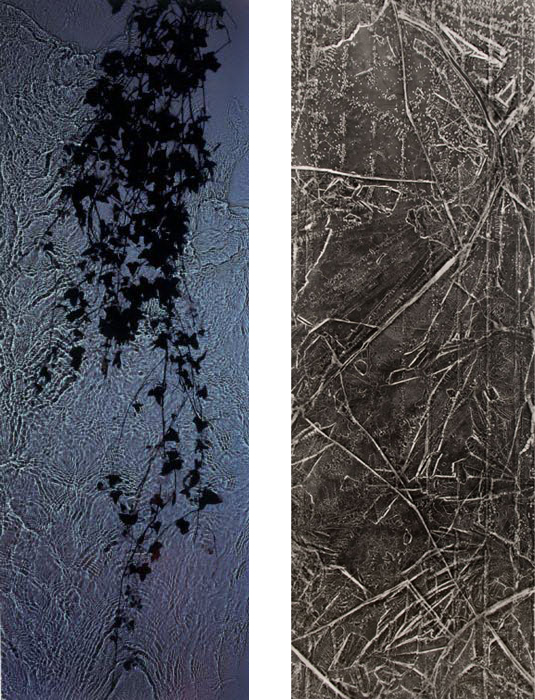
Susan Derges, River Taw, 16 July 1997 and River Taw (Ice), 4 February 1997

Having been thinking a lot about working processes this week, the images that are rattling round my head are mostly ones made by following intriguing processes. In one respect, Susan Derges makes work using one of the simplest possible photographic processes: the photogram. But Derges’s work isn’t made in the darkroom but in the landscape. And these are photograms made on an ambitious scale.

Continue reading

In the kitchen with Cindy

Cindy Sherman, Untitled Film Still #3, 1977

By way of description, the image depicts a domestic scene in which the character – seemingly a housewife – stands at her kitchen sink. The construction of the picture hints at a number of possible narratives and is open to a range of analyses. Though almost cropped from the picture, the woman’s gaze – out of frame and away from the viewer, accentuated by eye makeup surely unnecessary in her own kitchen – holds my attention.

Continue reading

Something from (almost) nothing

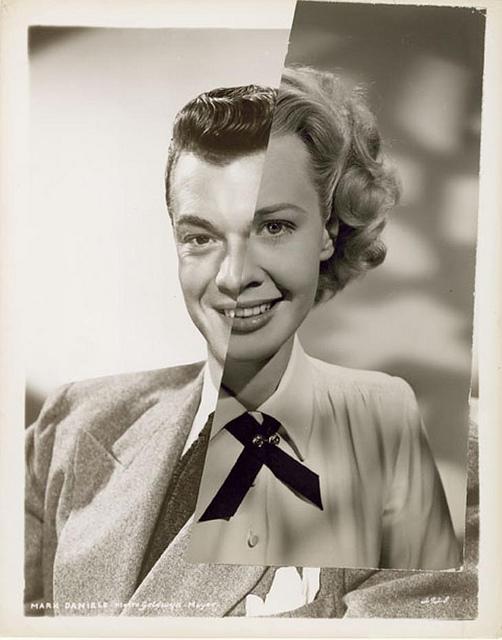
John Stezaker,  Marriage (Film Portrait Collage) XLV, 2007

Cutting up old photographs or magazines to make collages is territory artists share with pretty much everyone who’s ever kept a scrapbook, maybe with everyone who’s ever been a child. But nonetheless – or maybe as a consequence, we all recognise the activity after all – it can be incredibly fertile ground for artists. Even something as simple as cutting up two pictures and sticking them back together can result in intriguing and sometimes disturbing new images.

Continue reading

The art of the fall

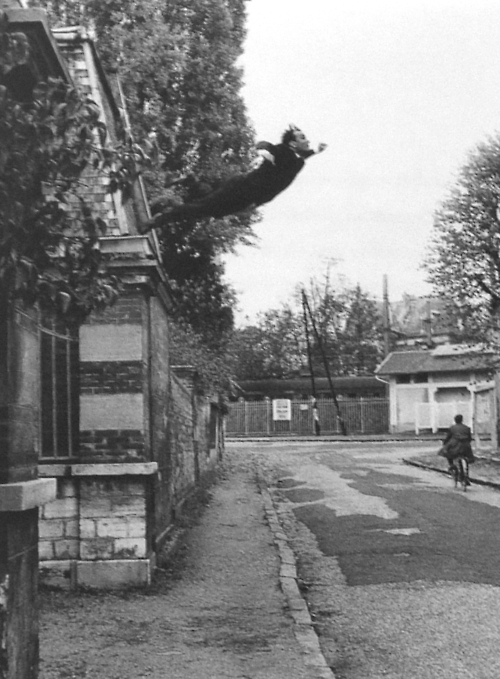
Yves Klein, Leap into the Void, 1960

Is art really as easy as falling off a log ledge (roof, canalside, whatever)? The evidence is plentiful.

In Leap into the Void, Klein certainly makes it look easy, no matter how much our common sense tells us all is not as it seems. Though I love the mix of an earnest look and a preposterous act in Yves Klein’s photograph, his is not the fall that makes me smile the most.

Continue reading