Unknown's avatar

About Ann Jones

London-based artist and educator who somehow seldom gets time to actually make any work, who writes about art, somewhat irregularly, at ImageObjectText.com and occasionally contributes to MostlyFilm.com – writing about art, mostly.

The assembled body

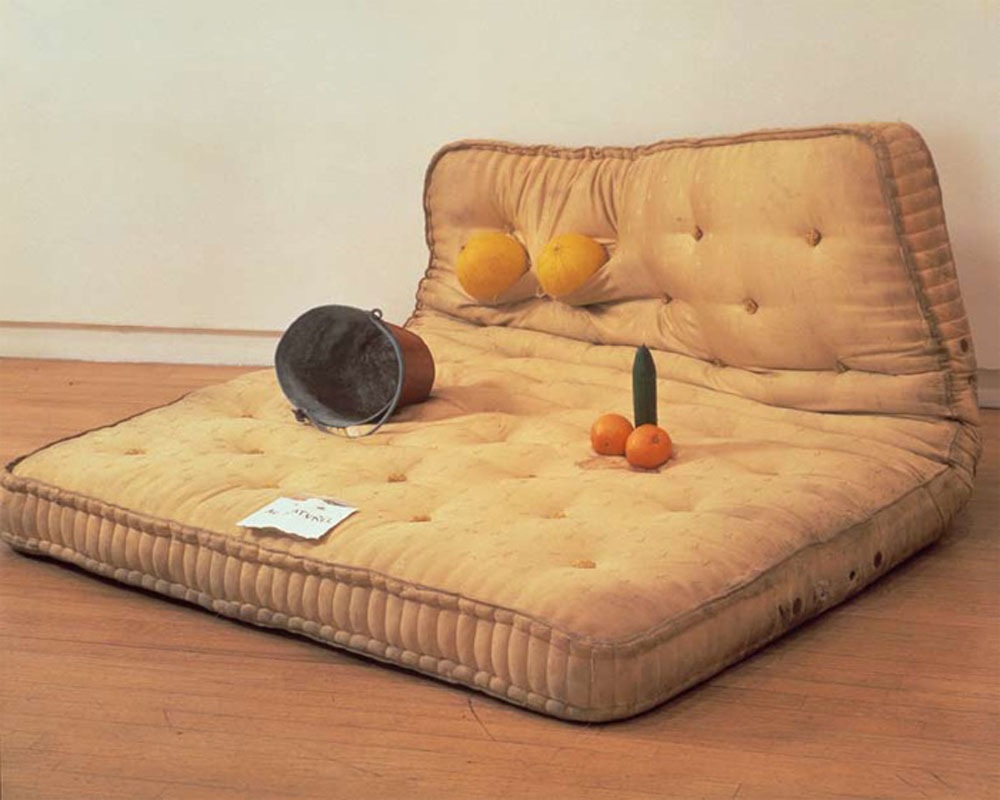
Sarah Lucas, Au Naturel, 1994

Having seen quite a bit of work made from existing objects recently and having been reminded about Au Naturel by seeing Tracey Emin’s Dead Sea in her exhibition at Turner Contemporary, which I wrote about here a while ago, I find myself wondering why it’s taken me this long to write about Sarah Lucas’s work. 

Essentially, Au Naturel is a very simple sculpture of a man and woman in bed, he represented by two oranges and a cucumber, she by a bucket and a pair of melons. What  makes this work for me is that the visual joke of the assemblage triggers thoughts about language and the slang terms used for body parts. In particular, with works like this, Lucas draws attention to the derogatory way women’s bodies are often described colloquially.

Continue reading

In the shadows

Lee Krasner, Untitled, 1948

After I came back from a trip to New York with students in the spring I wrote a lot here about the art I saw in galleries there. One thing that I didn’t write about at the time was a small painting I saw at the Metropolitan Museum; the relevant page on the Met’s website has been open in a browser tab on my laptop ever since I think, but it was seeing Mel Brimfield’s Clement Greenberg – Lee Krasner = Jackson Pollock that brought Lee Krasner’s painting back to mind. Though Krasner’s career was played out in the shadow of that of her husband Jackson Pollock, her contribution to twentieth century American modernism, and to abstract expressionist painting in particular, was considerable. Unlike Pollock’s action paintings, this work is modest in scale 76.2 x 63.5 cm to Autumn Rhythm‘s 266.7 x 525.8cm and the painting seems to me to be much more about the outcome than the performance of making it.

Continue reading

Art about art – Mel Brimfield: Between genius and desire at Ceri Hand Gallery

Mel Brimfield, Vincent (Portrait with Fur Hat and Bandaged Ear), 2012

Mel Brimfield makes art about art in a very different way to others that I’ve written about here before (the reworkings of Hogarth’s A Rake’s Progress by David Hockney and Yinka Shonibare or Gregory Crewdson’s remained Edward Hopper picture, for instance). As with Shonibare’s Diary of a Victorian Dandy, Brimfield’s work is performative but there’s a humour in the work that feels more connected to Nina Katchadourian’s Self-portrait as Sir Ernest Shackleton though in Brimfield’s work the performances are collaborations between artist and performer. The resulting works – photographs, videos and sculpture – reference not only the artists Brimfield is looking at but also our ideas about art and the way the artists have been represented in films. Brimfield’s exhibition Between Genius and Desire at Ceri Hand Gallery Project Space – the gallery’s first show in London – gave me a lot to both think and smile about.

Continue reading

Ancient history for the silly season

Bouncyhenge

Jeremy Deller, Sacrilege, 2012

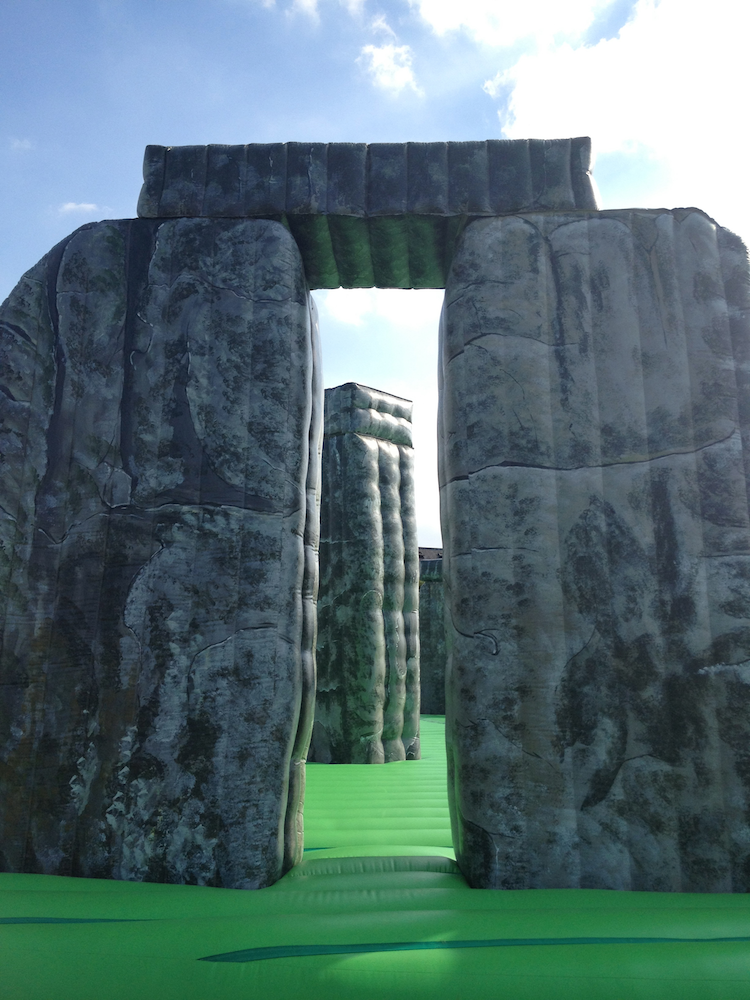
There’s something different about London this summer. The Olympic feelgood factor coupled with a bit of actual sunshine after the seemingly interminable rain means we seem to have found ourselves in a mood to both celebrate our country and the odder aspects of its history and traditions and to jump about. On hand to help out – as part of the London 2012 Festival, the culmination of the Cultural Olympiad – is Jeremy Deller’s Sacrilege. As playful reworkings of our heritage go, a life-size bouncy castle version of Stonehenge certainly hits the spot (especially as it comes complete with anxious announcements about health and safety).

Continue reading

Where activism meets art

Ai Weiwei, Remembering, 2009

It’s possible for text to become meaningless shapes when we’re too close to it, especially if it’s written in an unfamiliar script. At first glance, maybe even to those who read Mandarin, the colourful wall of the Haus der Kunst Museum in Munich which faced visitors to Ai Weiwei’s 2009 exhibition So Sorry, might have seemed more like a cheerful pattern rather than the poignant words of a grieving mother. The colour palette of red, yellow, green and blue is more redolent of children’s books than works of art and certainly doesn’t immediately suggest a memorial. Look closer and it’s clear that the building blocks of the banner are brightly coloured backpacks, the sort that children often use as school bags. But this is a work that needs an explanation.

Continue reading

Ordinary people

Tino Sehgal, These Associations, 2012

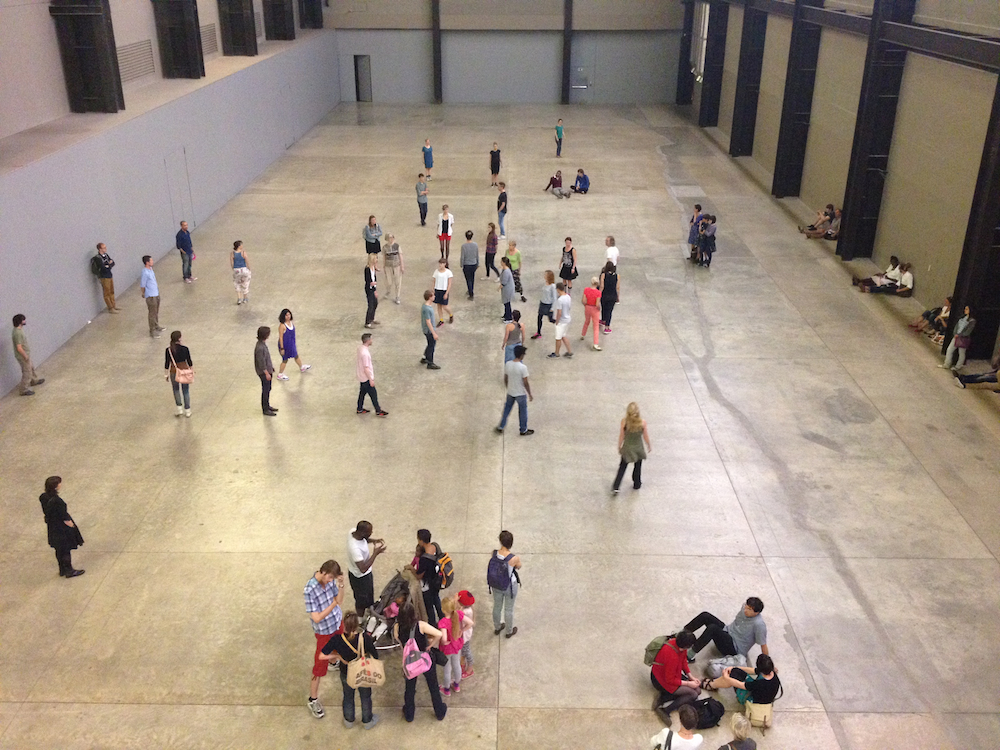
From the start, the Turbine Hall at Tate Modern has been unusual. Taking its name from the function of the vast space when the building was still a power station, it’s really not a typical museum space. The artists commissioned to make work for it have all responded to it in very different ways but it’s the response of the audience, almost as much as the work itself, that makes the annual Unilever Commission fascinating. From Olafur Eliasson’s The Weather Project (which I’ve written about before) to those brief few days when visitors to Ai Weiwei’s Sunflower Seeds were allowed the access the artist had intended before health and safety concerns caused the work to be cordoned off, the Turbine Hall somehow makes people behave more like they would at the beach than in an art museum. All of which makes Tino Sehgal (whose work I’ve touched upon before elsewhere) an intriguing choice for this year’s commission. How would an artist whose work lies in the dynamic between audience and performer make work for such a cavernous space? And how would the audience respond?

Continue reading

Shadow play

Lis Rhodes, Light Music, 1975 (installed at Tate Modern, 2012)

Performance art in museums is still something of a rarity. Though film/video installations do fare a bit better, the prospect of having a space dedicated to showing practices such as these in a major museum is an exciting one. Given that I am also intrigued by the reuse of former industrial spaces, all in all I’m quite excited about the opening of The Tanks – the vast underground tanks that once held the oil for Bankside power station – at Tate Modern. Converted, like the building itself, by architects Herzog + De Meuron, The Tanks are not remotely like the white wall gallery spaces we’ve come to expect. Like the Turbine Hall, The Tanks – two large circular spaces plus some smaller rooms – have been left unashamedly industrial.

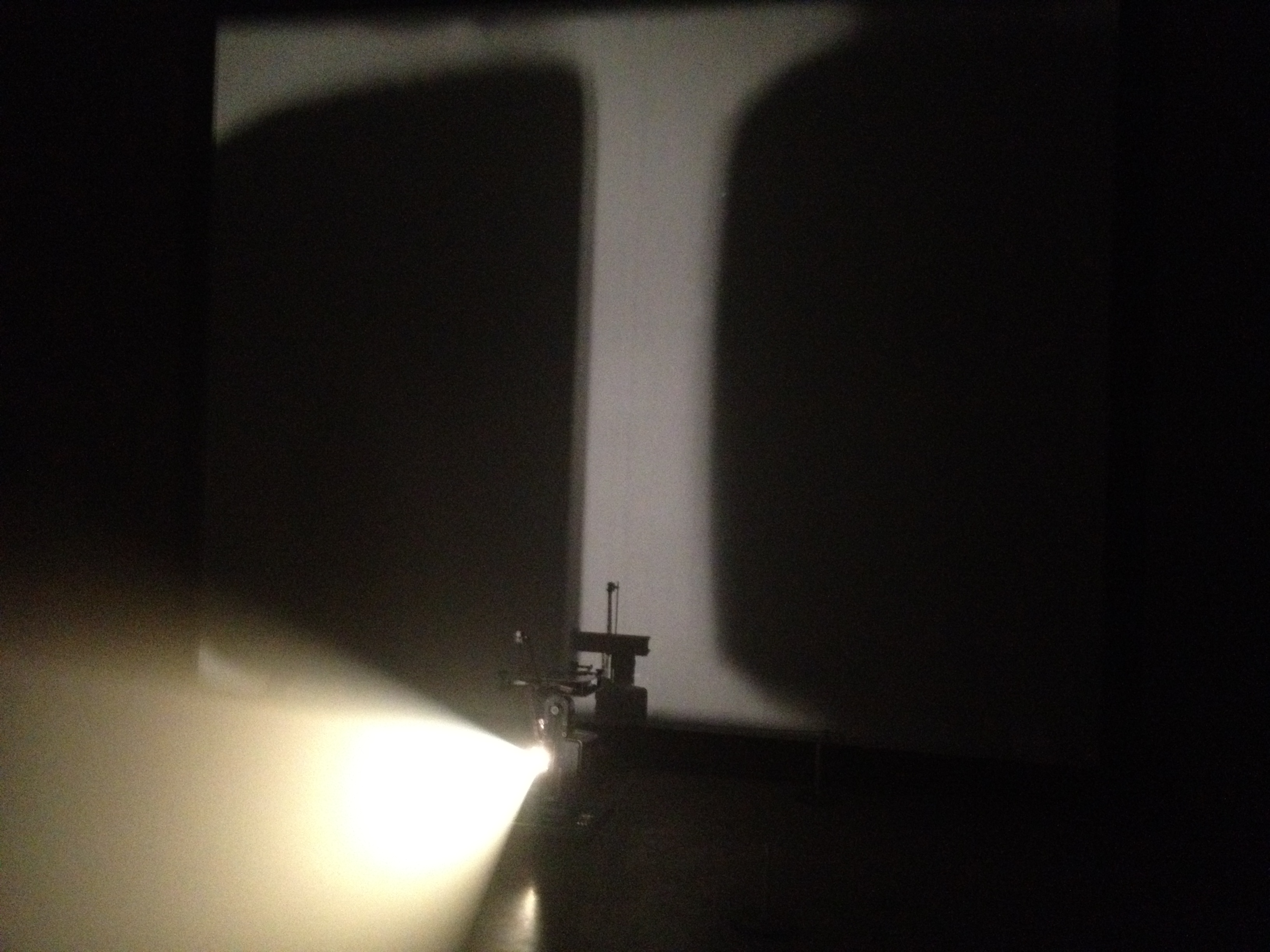
In many ways Lis Rhodes’s Light Music which I saw in The Tanks at Tate Modern reminded me of Anthony McCall’s solid light works, such as Line Describing a Cone (1973). There is the same use of a hazy space to accentuate the beams of projected light. But it is also a very different work. Though both can be described as drawings, Light Music feels more random, as the lines one screen come and go; like much of Rhodes’s work, in some ways, this feels more like collage.

Continue reading

Ready salted – Damián Ortega: Traces of Gravity at White Cube

Damian Ortega, Congo River, 2012

Damián Ortega, Congo River, 2012

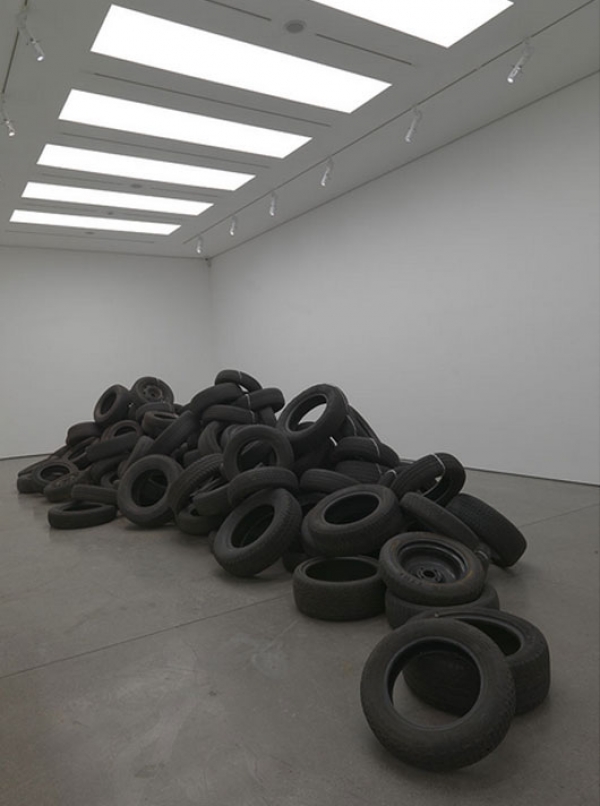
I seem to be looking at a lot of art made from other stuff at the moment. The journey from Bruce Lacey’s assemblages and robots at Camden Arts Centre to Damián Ortega’s sculptures at White Cube Mason’s Yard is a short tube ride and a big conceptual leap. Both exhibitions include sculpture made from ordinary objects but the two shows feel worlds apart.

Continue reading

In the stacks

Marcos Saboya and Gualter Pupo, aMAZEme, installation in Royal Festival Hall, 2012

If someone had asked me to imagine what 250,000 books looked like, I’m not sure I’d have had a clue. A quarter of a million anything is a lot, that much I do know. But I was always rubbish at guessing the number of smarties in the jar at fêtes, and those numbers were always in the hundreds which is much more manageable somehow. Anyway, in case you happen to be wondering what 250,000 books looks like, there they are, made into a maze resembling the fingerprint of writer and educator Jorge Luis Borges by Brazilian artists Marcos Saboya and Gualter Pupo in the Clore Ballroom at the Royal Festival Hall. As with almost everything else in London this summer, it’s part of the London 2012 Festival, the culmination of the Cultural Olympiad.

Continue reading

False pretences

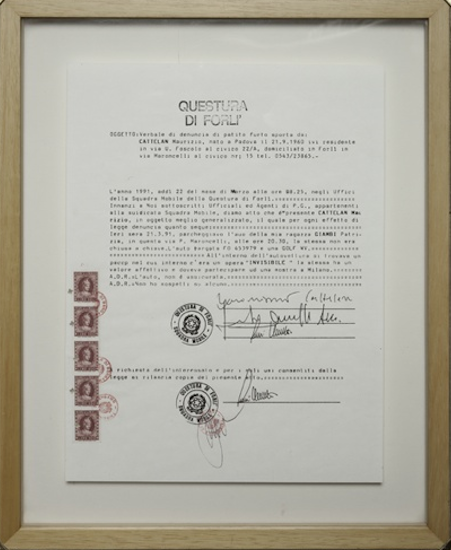
Maurizio Cattelan, Untitled (Denunzia), 1991

The idea of presenting an existing document as art – the essence of Keith Arnatt’s Notes from Jo – is something used in a very different way by Maurizio Cattelan. In this case the actual document is presented rather than a photograph; given that the document in question is a police report this seems like an important element of the work. This is a work that is all about the narrative it represents: in 1991, faced with not having produced the work for a forthcoming exhibition, Cattelan went to the police and reported the theft of an invisible artwork. He then presented the police report in the exhibition.

Continue reading