Drawing with light

Wolfgang Tillmans, Freischwimmer 26, 2003

The relationship between painting and photography is has also been explored by Wolfgang Tillmans in work made over the last decade or so. For Tillmans the work starts and ends with photographic process, but in making the images the fundamental notion of photography as drawing with light is used to make images that feel much closer to painting than photography. These are large-scale, painterly abstract pictures are made without a camera; the photographic paper simply records the light Tillmans directs at it.
Continue reading

Unmaking the readymade

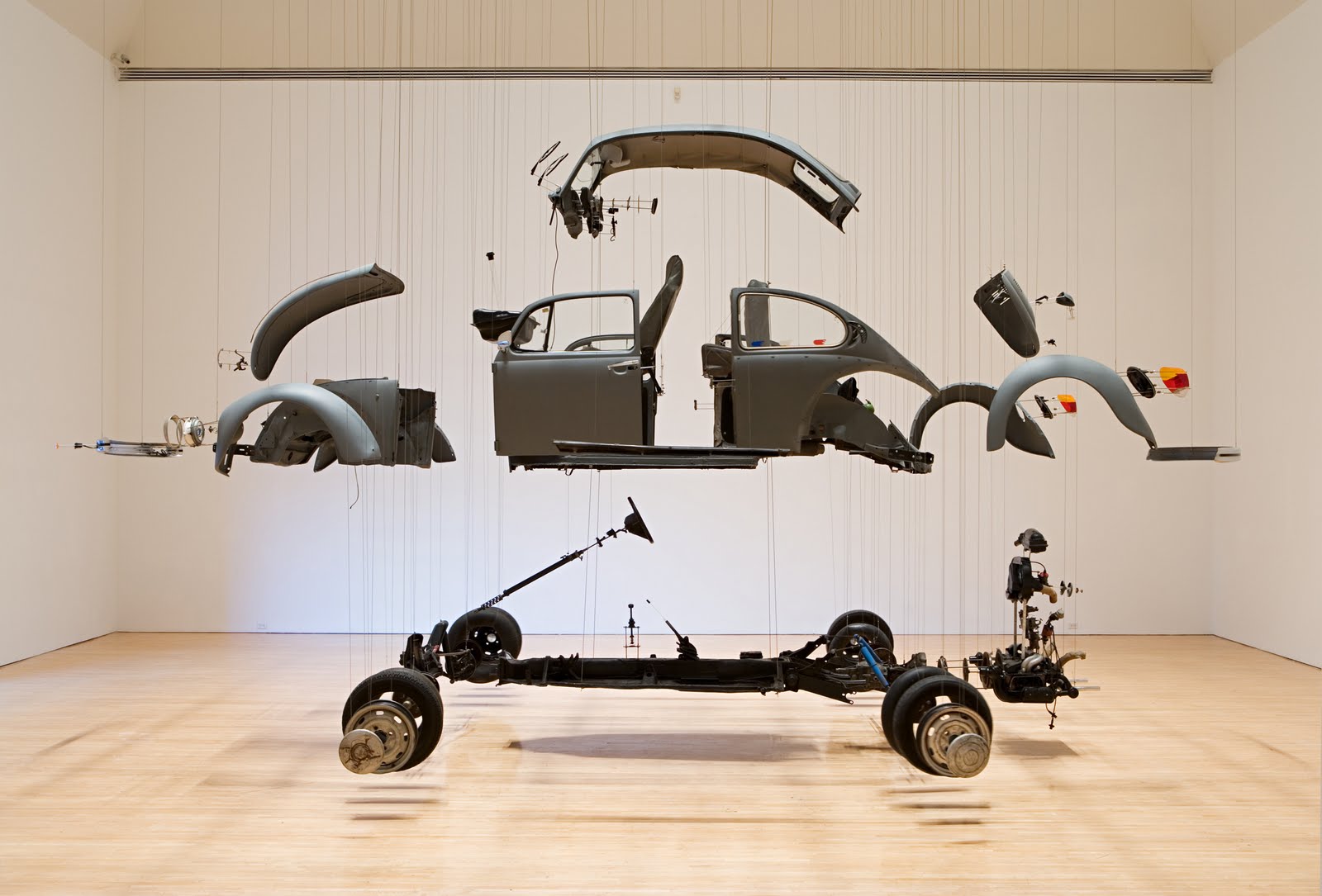
Damián Ortega, Cosmic Thing, 2002

No car maintenance manual would be complete without an exploded view diagram or two, so it seems appropriate that it should be a car that Damián Ortega chose to break apart and display as a kind of three-dimensional diagrammatic representation of itself; indeed Ortega based the car’s deconstruction on the diagram in the car’s repair manual. The car in question in Ortega’s sculpture Cosmic Thing is a 1989 VW Beetle. The Beetle is one of the Seen from the side – or the front, albeit to a lesser extent, as the picture after the jump will show – the car is immediately recognisable and the work seems like a drawing in many ways.

Continue reading

Drawing on the familiar

Tracey Emin, I didn’t say I couldn’t love you, 2011

I’ll start by owning up to the fact that I wouldn’t have gone to see She Lay Down Deep Beneath the Sea, Tracey Emin’s exhibition at Turner Contemporary in Margate, if there hadn’t been a couple of other things on show outside the gallery that I particularly wanted to see. Over the years, Emin has made quite a lot of work I really like but most of it has been video and, with a few exceptions, I’m not crazy about her drawings, prints and paintings. But I was there so it would have been foolhardy not to take a look. I’ve seen enough of Emin’s work to know that at its best it can be genuinely affecting and that sometimes even the small, almost throw-away, drawings can be funny and occasionally hit a nerve or tell some sort of universal truth.

Continue reading

I wanted to love you more

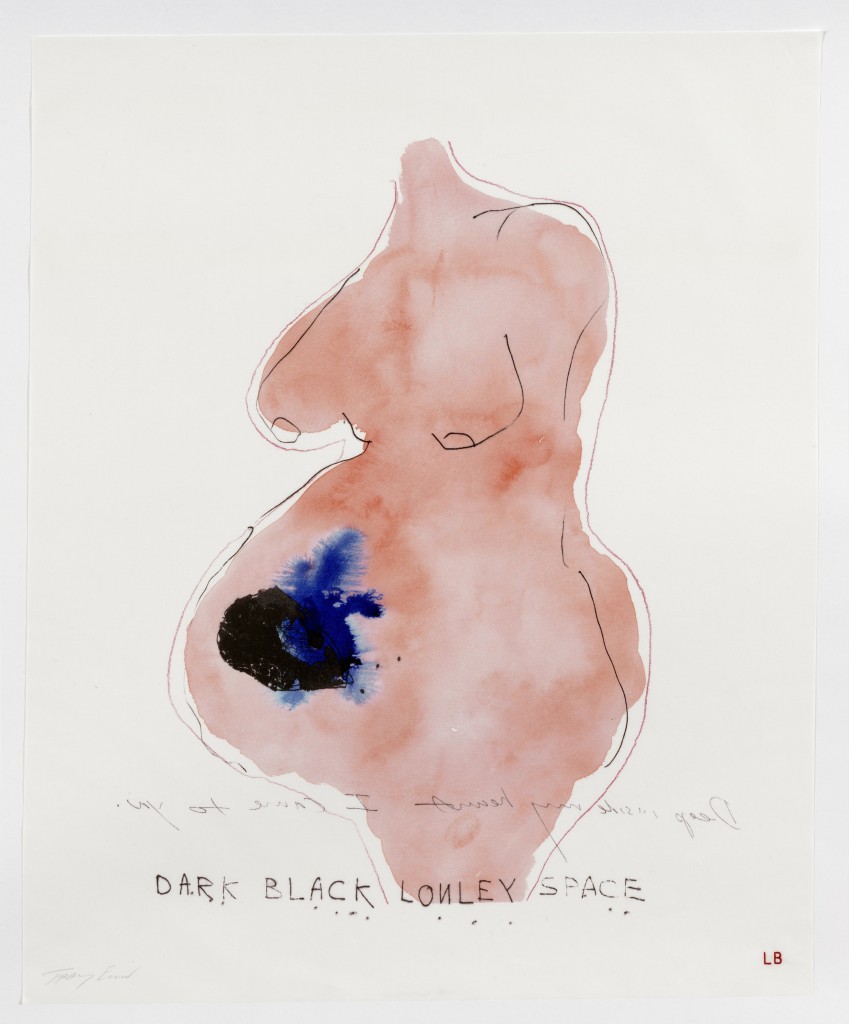
Louise Bourgeois and Tracey Emin, Deep inside my heart, 2009-10

Artists collaborating is hardly unusual. And, as the last few posts have shown, artists copy what’s gone before on a regular basis. And occasionally they go so far as to take someone else’s work and change it, like the Chapman brothers did when making Insult to Injury or like Robert Rauschenberg did, albeit with Willem de Kooning’s permission, when he rubbed out a drawing to make Erased de Kooning (1953). When Tracey Emin worked on top of a series of paintings by Louise Bouregois, she did so at Bourgeois’s behest, the two artists having met some years earlier and been in regular contact since; though Bourgeois wasn’t generally interested in collaborations, the two artists had shared preoccupations giving the idea of a joint work a certain appeal. As a collaboration what perhaps made this unusual was that Emin had the paintings for more than a year before deciding how to proceed. Do Not Abandon Me, the series of prints made from these images, was to be one of Bourgeois’s last works; although Bourgeois saw Emin’s additions – and was delighted with them – the work was not shown until after her death.

Continue reading

Drawing sculpture in the dark

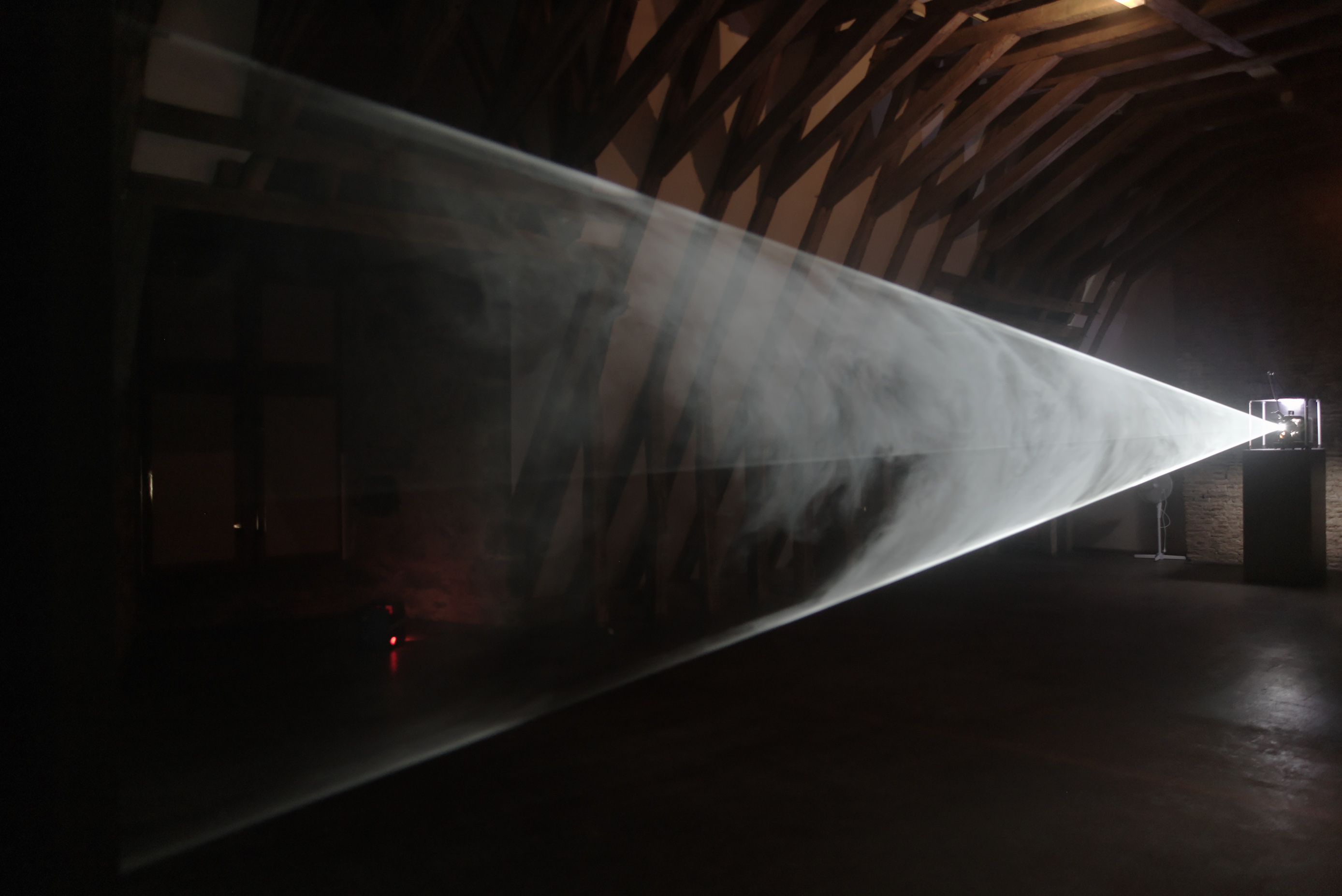
Anthony McCall, Line Describing a Cone, 1973

While I’m on the subject of almost non-existent sculpture, especially almost non-existent sculpture that might in some way be seen as drawing, it’s perhaps inevitable that Anthony McCall’s Solid Light Works should worm their way into my thoughts. I can remember the first time I saw Line Describing a Cone very clearly indeed. It’s just one of those works: astonishing, engaging, playful, uplifting even. There’s something about the way it plays tricks on both eye and mind. That first encounter was at an almost deserted Hayward Gallery – it was about two days before Christmas, which turns out to be a great time to see art almost in private – in the exhibition Eyes, Lies and Illusions which brought together a collection of magic lanterns, zoetropes and other optical devices with works by contemporary artists. It was a great show. And then, there was one final room just before the exit. When I went in it was empty and, my friend and me aside, it stayed that way for a good five minutes or so.

Continue reading

Half seen

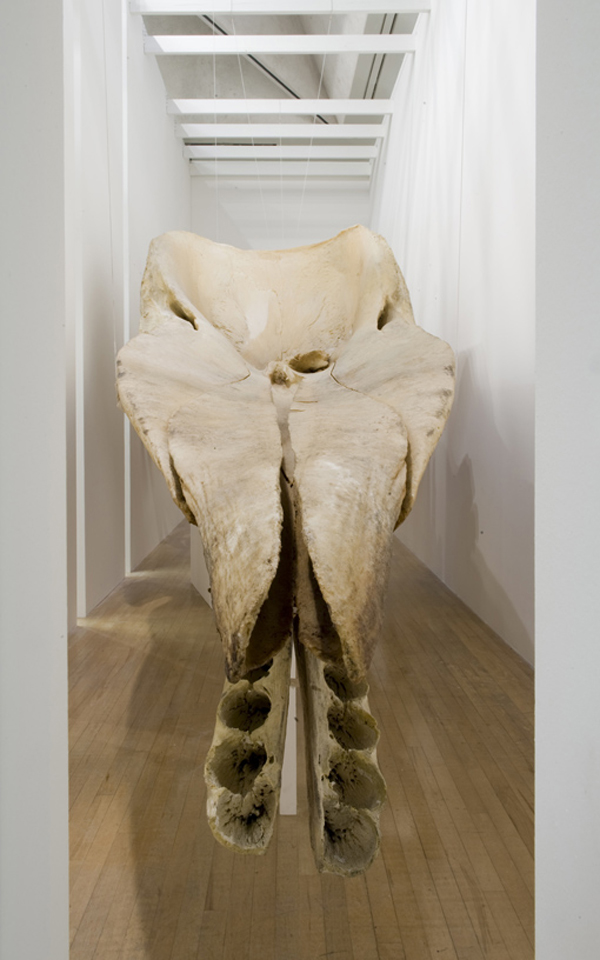
Lucy Skaer, Leviathan Edge, 2009Lucy Skaer, Leviathan Edge part of the installation Thames and Hudson, 2009

Since I’m on a bit of a skull theme, Lucy Skaer’s Leviathan Edge – the skull of a sperm whale borrowed from National Museums Scotland for inclusion in her installation Thames and Hudson – popped into my mind. The skull is rather larger than those adorned by Damien Hirst or Gabriel Orozco. By about 14 foot or so. The whale skull is vast and its shape utterly unfamiliar. It’s a curious object made all the more fascinating by Skaer’s tantalising presentation of it in an enclosed space so that we can only see small sections of it through narrow slits.

Continue reading

Right there in black and white

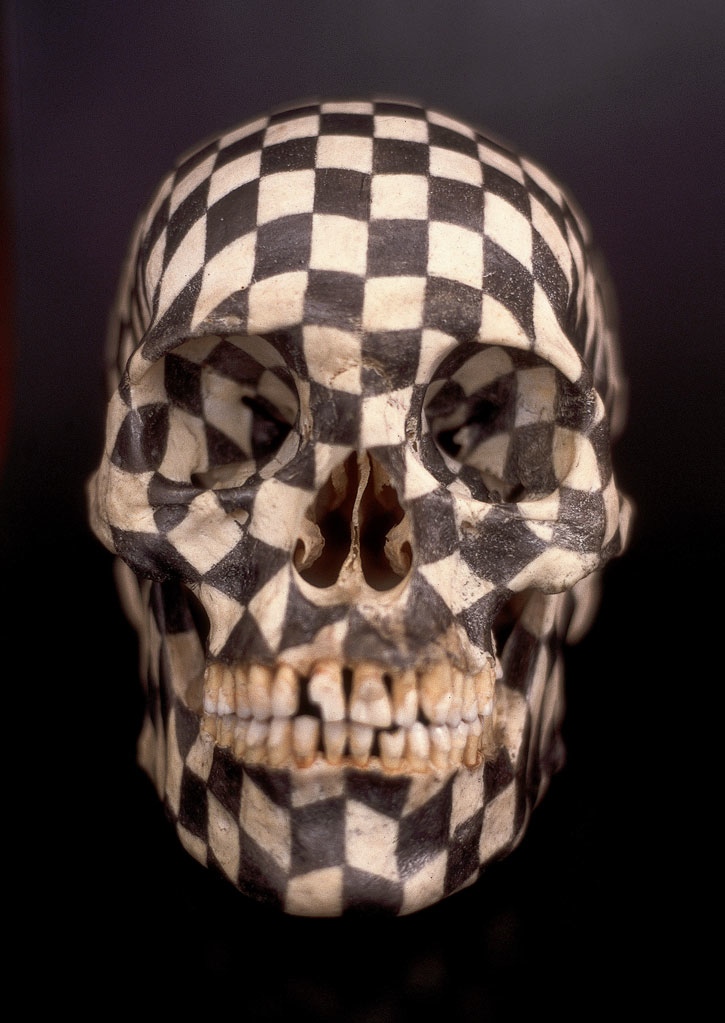
Gabriel Orozco, Black Kites, 1997

For the Love of God, Damien Hirst’s diamond encrusted skull, got me thinking about another – and in my view much more interesting – human skull that has become contemporary art. Gabriel Orozco’s Black Kites is an extraordinary three-dimensional drawing on a distinctly less than conventional ground. This is a work I found both moving and compelling.

Continue reading

This exhibition does not do you justice

David Shrigley, Untitled, 2011

I like David Shrigley’s work. It makes me laugh. Why then did I approach his Hayward Gallery exhibition with a sense of dread? Well now, let’s see. Firstly, the strength of Shrigley’s work lies in its simplicity and that’s something that can get wearing when seen en masse. Secondly, the Hayward Gallery is a very big space even allowing for the fact that Shrigley is sharing it with Jeremy Deller’s Joy in People (which warrants a post of its own at the very least). Thirdly – and this one’s the big one – I’ve yet to see a Shrigley solo show I properly liked. Despite that tinge of dread I tried to stay hopeful. With my expectations low, surely a pleasant surprise was in order? Well, yes. And, more importantly, no…

Continue reading

Without words

Alighiero Boetti, Mettere Al Mondo Il Mondo (Bringing the World into the World), 1975

There are three paying exhibitions at Tate Modern at the moment. The Damien Hirst exhibition is being widely advertised and has been the subject of a lot of media attention. Of the other two, the Yayoi Kusama seems to have generated the most discussion. Hirst is of course a household name and Kusama was already firmly in the consciousness of Londoners with an interest in contemporary art following Walking in my Mind at the Hayward Gallery in 2009 which was heavily centred on her work, indeed her polka dot wrapping of the trees along the South Bank ensured that her work also reached a signifcant non-art audience. The Hirst and Kusama exhibitions are also the ones making the most – visual – noise in the gallery, and while the Hirst was proved mercifully quieter than I had expected when I visited, they do seem to be attracting the bigger crowds.

There were things I liked about the Hirst – it was good to see those early works again and entertaining to stare in horror at the worst excesses of his more recent output – and I really liked the Kusama exhibition (at some stage I may well write about both) but it’s the other show – Alighiero Boetti: Game Plan – that I found by far the most inspiring.

Continue reading

The trouble with language

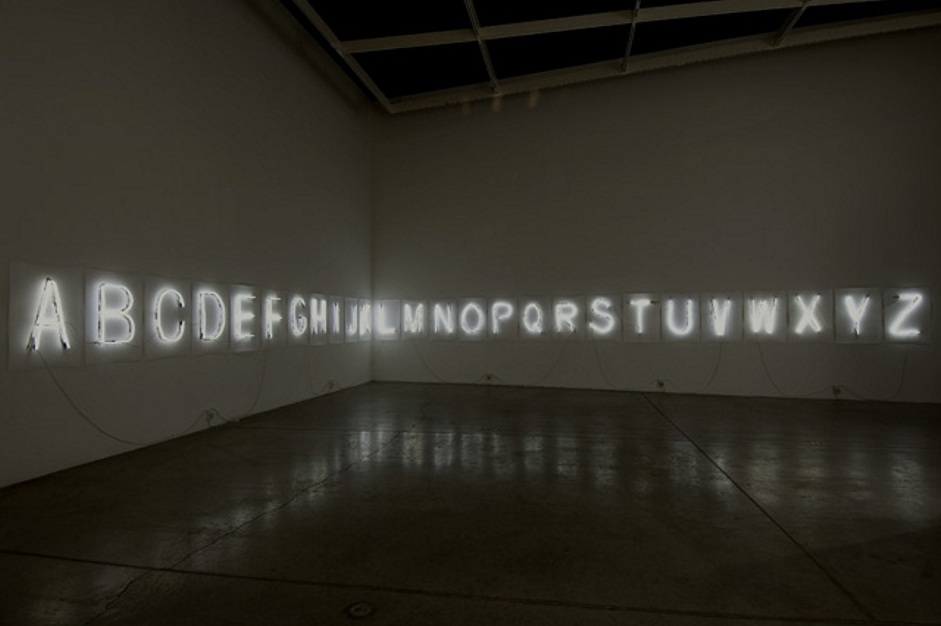
Fiona Banner, Every Word Unmade, 2007

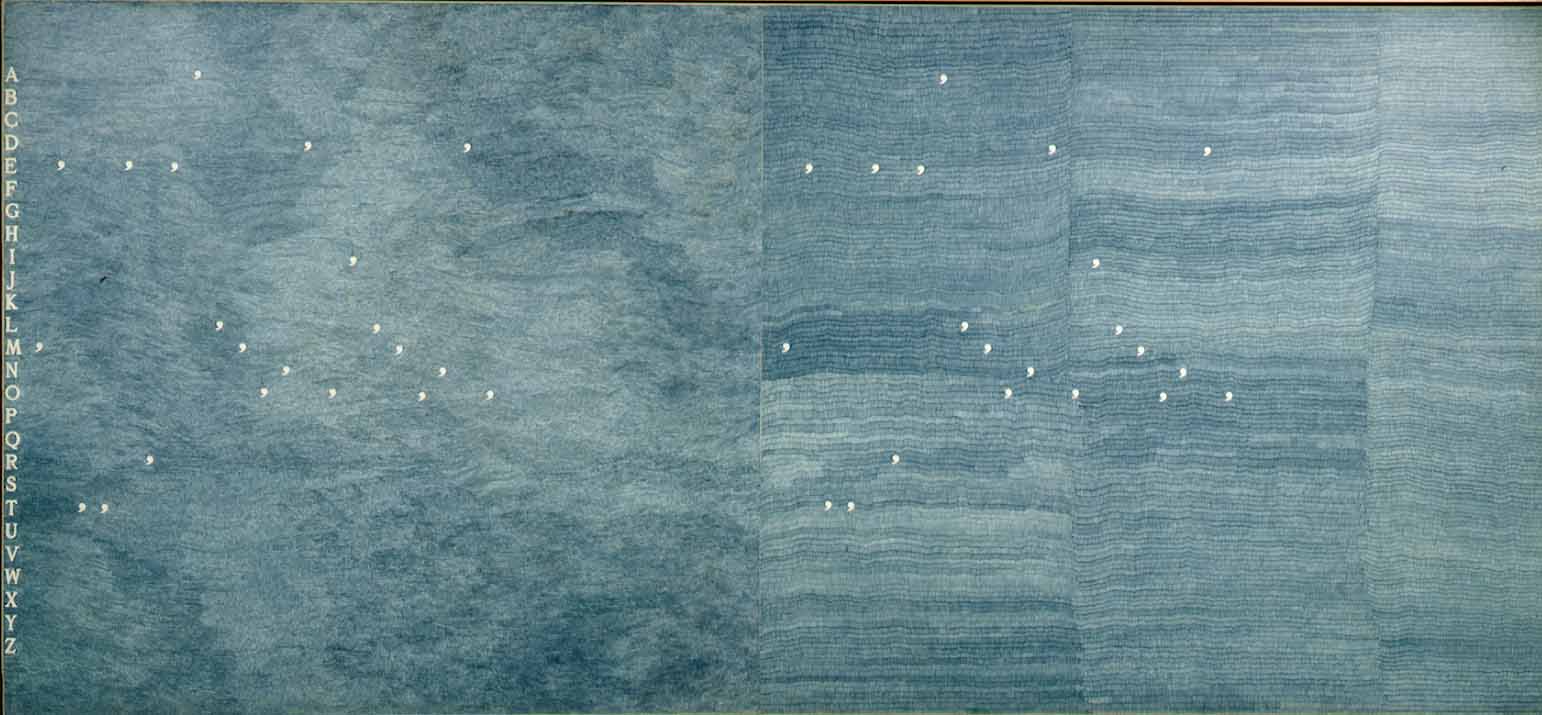
Before moving on from text and language – at least temporarily, there’s more I want to write about at some point – it seems like a good idea to go back to the basic building blocks of text: letters and punctuation.  Typography is more usually the domain of designers but given that lots of artists have concerned themselves with language as a sign system, it’s no great surprise that some have also worked with its constituent parts.

In Every Word Unmade, Fiona Banner presents the alphabet as an opportunity for communication; the basic letterforms have the potential to become words.

Continue reading