Unknown's avatar

About Ann Jones

London-based artist and educator who somehow seldom gets time to actually make any work, who writes about art, somewhat irregularly, at ImageObjectText.com and occasionally contributes to MostlyFilm.com – writing about art, mostly.

Collecting the set

Bernd and Hilla Becher, Cooling Towers Wood-Steel, 1959-77

It would, I suppose, be possible to see Bernd and Hilla Becher’s pictures of industrial structures as boring, particularly if one were to restrict one’s attention to one or two pictures, though for me I think fascination with the detail always wins out. These are perfect pictures. They record the appearance of industrial structures – water towers, gas holders, mine heads etc – with complete objectivity and in forensic detail. The pictures were made over a period nearly five decades – they started collaborating in 1959 and continued until Bernd Becher’s death in 2007 – using a large format camera in the neutral lighting of overcast weather. The structures are viewed straight on, so that verticals remain vertical; the large format camera helps here but the Bechers also worked from raised viewpoints so that we are looking at the structures as directly as possible.
Continue reading

The art of looking at art

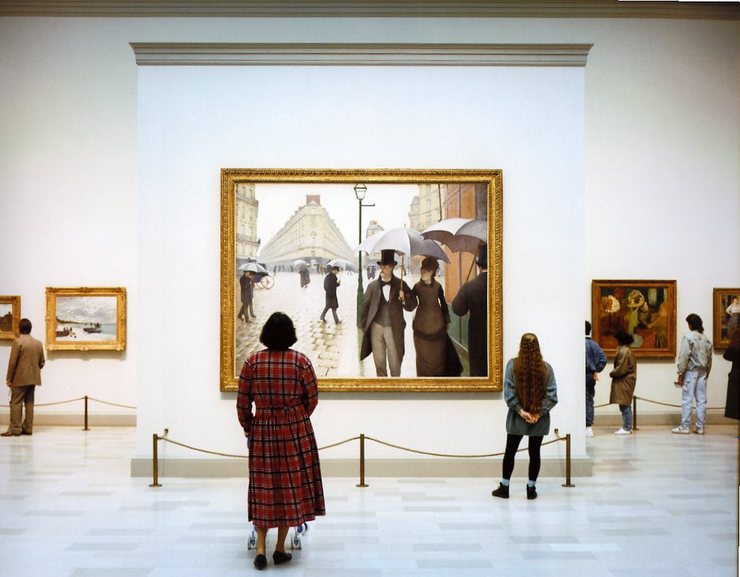
Thomas Struth, Art Institute of Chicago II, 1990

Given that this blog is essentially about looking at art, it seems like a good idea to think about how that happens. Thomas Struth’s museum photographs provide a fascinating insight into the way visitors behave in art museums. In most of the pictures, viewers are looking at historical paintings, or sometimes sculpture, and we are looking at them. Struth typically adopts a broadly objective viewpoint, for instance in Art Institute of Chicago II we are looking straight at Gustav Caillebotte’s Paris Street; Rainy Day (1877) and at the backs of those looking at it. The painting’s audience is two individual women, each seemingly lost in their own thoughts about the work in front of them.

Continue reading

Snow in April

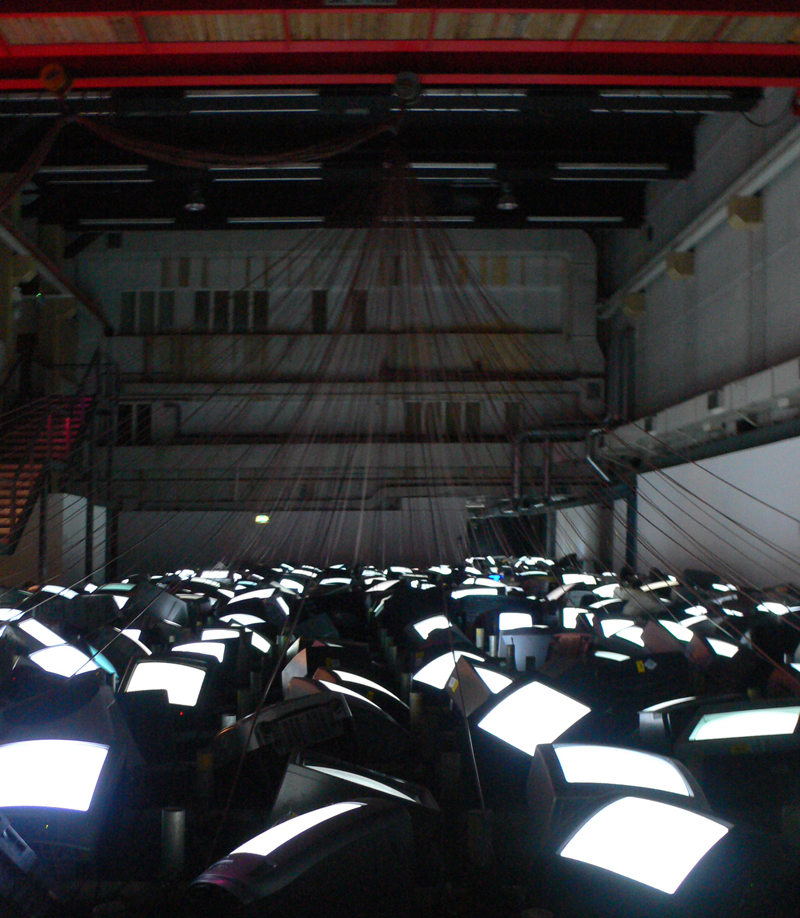
David Hall, 1001 TV Sets (End Piece), 2012

As of Wednesday, analogue telly is a thing of the past. Well okay, it’s clinging on for a few more months in a couple of parts of the country, but for most of us in the UK old tellies either need to be attached to a digibox or it’s all over. At Ambika P3, David Hall’s End Piece … exhibition (part of which I wrote about here a week or two ago) is a fitting way to mark its passing. The centrepiece of the exhibition is the extraordinary, descriptively titled installation 1001 TV Sets (End Piece). With the analogue switchoff on Wednesday the work went from being a bewildering jumble of images with a cacophonous soundtrack to 1001 different types of snow. The sound is still loud but it’s a constant static now rather than the chaos of five competing television channels.

Continue reading

Chance encounter

Christian Boltanski, Chance, 2011

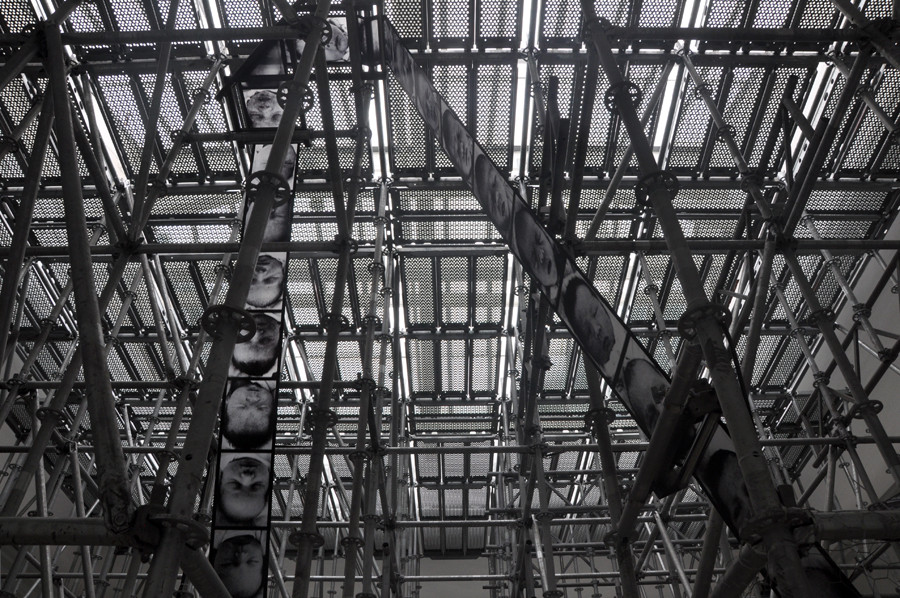
Since I seem to be stuck in mazes and cages this week, it’s perhaps no surprise that Christian Boltanski’s installation for the French pavilion at the 54th Venice Biennale last year has worked its way back to the front of my mind. For me, this was one of the highlights of the Biennale though admittedly I think I’ve yet to see a work by Boltanski that I haven’t liked. This work does feel quite different to most of Boltanski’s installations though, not least because it’s playful – literally, in that it includes a game – and open to a hopeful reading, though more sombre interpretations are also possible.

Continue reading

The sound of breaking glass

Cildo Meireles, Through, 1983-89/2008

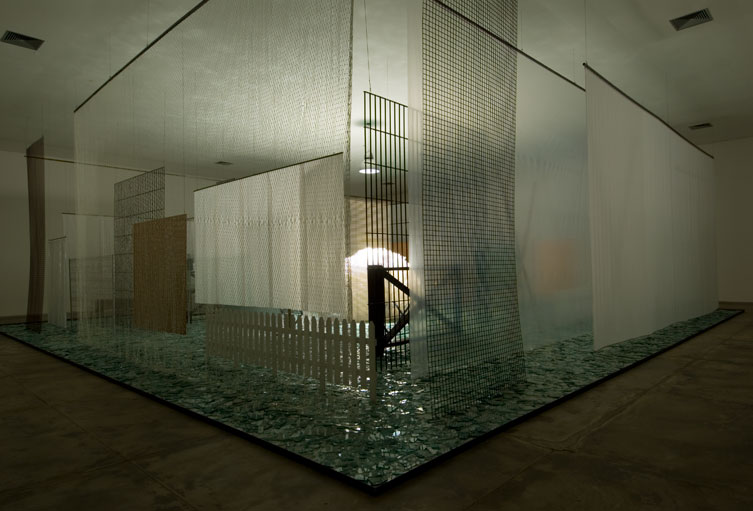
Installation art can be risky. It’s just that usually the risks are more about whether the pieece will work and whether viewers will respond as one hopes rather than whether they’ll stumble on a floor of broken glass. But having risked his own freedom by making overtly political work while living in a military dictatorship, Cildo Meireles was never likely to be put off by something like a slight – and largely theoretical – risk of an audience member sustaining a minor injury. Unlike the harmless threat of the long shadows and caged-in feeling of being in a Mona Hatoum installation, Meireles’s Through does involve a level danger, albeit a low one.

Continue reading

Casting a long shadow

Mona Hatoum, Current Disturbance, 1996

The whimsy of Noble and Webster’s use of shadows is witty enough but ultimately – for me at least – the work is unsatisfyingly slight. I enjoy it well enough at the time but the work never really gets under my skin. But shadow is a powerful force and it’s one that Mona Hatoum uses to really good effect.

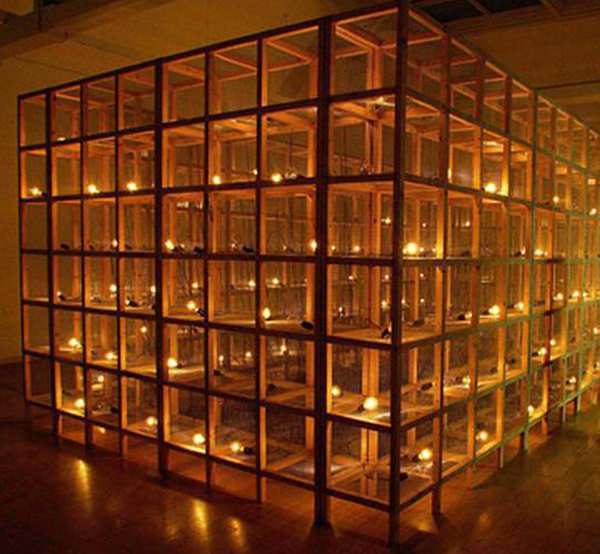
In installations like Current Disturbance – which I saw at the Whitchapel Gallery in 2010 – Hatoum uses shadow as a meaning force. The bare lightbulbs fade in and out and the crackle of an electric current gives a sinister edge to the changing light levels. The gridded structure – reminiscent of the cages occupied by battery hens perhaps – feels prison-like. The installation has an architectural feel, but if this is a city space it is a densely-populated and uncomfortable one.

Continue reading

Rubbish self-portraiture

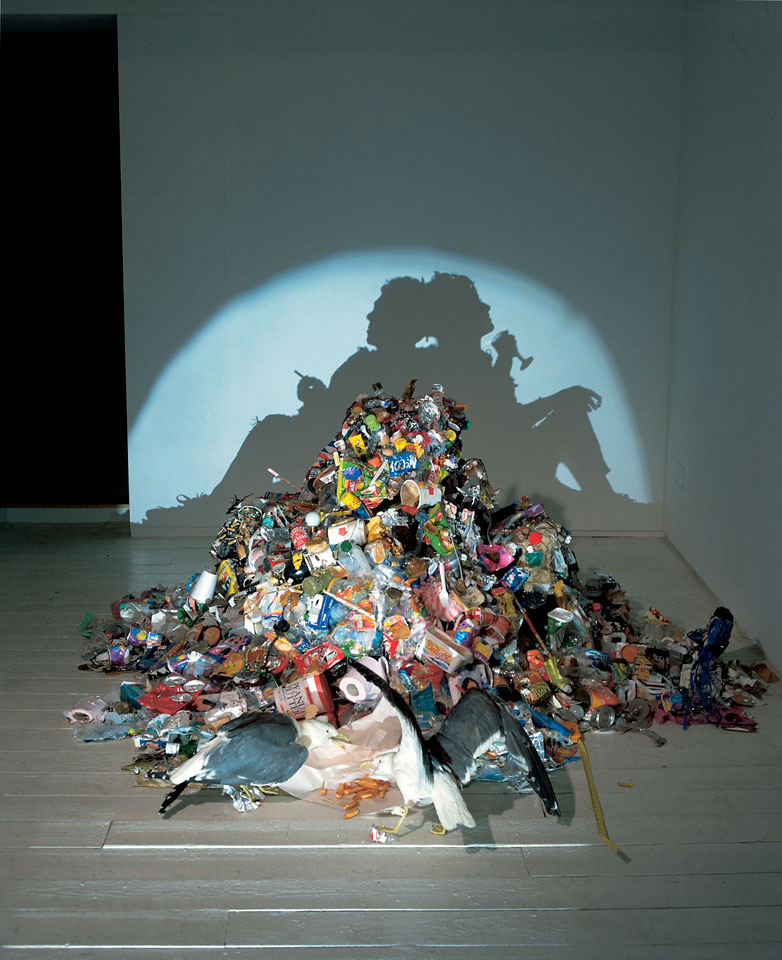
Tim Noble and Sue Webster, Dirty White Trash (With Gulls), 1998 ( months’ worth of artists’ trash, 2 taxidermy seagulls, light projector)

Tim Noble and Sue Webster make rubbish self-portraits. That’s not to say they made self-portraits that are rubbish (though of course that’s a matter of opinion). No. It’s that they make self-portraits from rubbish. If we are what we eat – as the old cliché susggests – then surely we’re also defined in some way what we throw away.

The materials for Dirty White Trash (With Gulls) six months’ worth of artists’ trash. Noble and Webster have assembled the trash into a pile that casts a shadow of the couple sitting back to back, smoking and drinking as seagulls seem to pick at the pile of rubbish that forms the image.

Continue reading

Gathering, listing and smashing

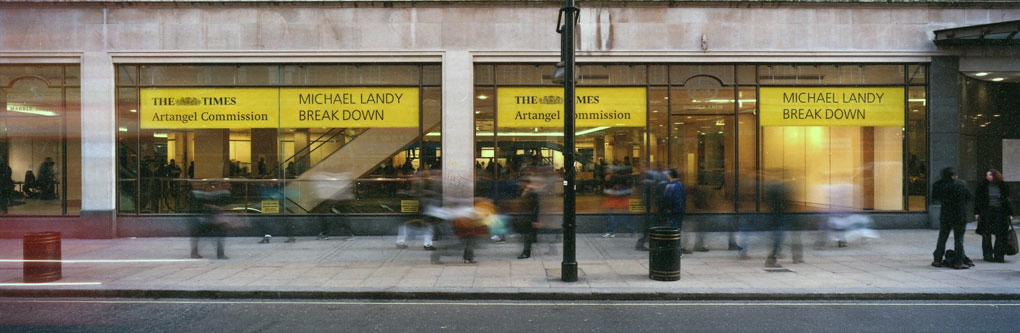
Michael Landy, Break Down, 2001

If I’m honest, I’m a bit of a hoarder. I know I really need to start throwing things out, but somehow I don’t get round to it. And being an artist gives me an extra excuse, or so I tell myself. I have all kinds of junk squirreled away as stuff I might sometime use to make work. Yeah, right. But however much I know I need a clear out and however much I like art that is driven by obsession – a lot, on both counts – I know I could never have made Break Down. The extremity of Michael Landy’s project fascinates and terrifies me in equal measure.

Continue reading

In mid air

Cornelia Parker, Cold Dark Matter, 1991

It started with a shed. It was full of all the sort of stuff that somehow gets collected in a shed over time. Sheds are useful. They are places to keep things that we want but don’t quite have space for and this one was pretty full. Cornelia Parker started by putting the shed in a gallery – Chisenhale in east London – before moving it to a field and getting the British Army to blow it up.

Parker then carefully gathered up the pieces and suspended them in the gallery around a central light bulbas though time had frozen mid-explosion.

Continue reading

Order and chaos

Kim Rugg, Ecstasy 7-7-7, 2008

For Kim Rugg, the chaos of a newspaper front page is something to be organised. I’m sure we’ve all seen publications we think could be better presented but few would go to Rugg’s lengths to create a different order out of the information on offer. Rugg painstakingly cuts up the page and reorganises the content according to her own system, so that here the letters in each section are in alphabetical order.

It’s easy to recognise the paper as the Guardian but harder to determine the news of the day and certainly impossible to make sense of it in any conventional way.

Continue reading