Art about art – Mel Brimfield: Between genius and desire at Ceri Hand Gallery

Mel Brimfield, Vincent (Portrait with Fur Hat and Bandaged Ear), 2012

Mel Brimfield makes art about art in a very different way to others that I’ve written about here before (the reworkings of Hogarth’s A Rake’s Progress by David Hockney and Yinka Shonibare or Gregory Crewdson’s remained Edward Hopper picture, for instance). As with Shonibare’s Diary of a Victorian Dandy, Brimfield’s work is performative but there’s a humour in the work that feels more connected to Nina Katchadourian’s Self-portrait as Sir Ernest Shackleton though in Brimfield’s work the performances are collaborations between artist and performer. The resulting works – photographs, videos and sculpture – reference not only the artists Brimfield is looking at but also our ideas about art and the way the artists have been represented in films. Brimfield’s exhibition Between Genius and Desire at Ceri Hand Gallery Project Space – the gallery’s first show in London – gave me a lot to both think and smile about.
Continue reading

Ready salted – Damián Ortega: Traces of Gravity at White Cube

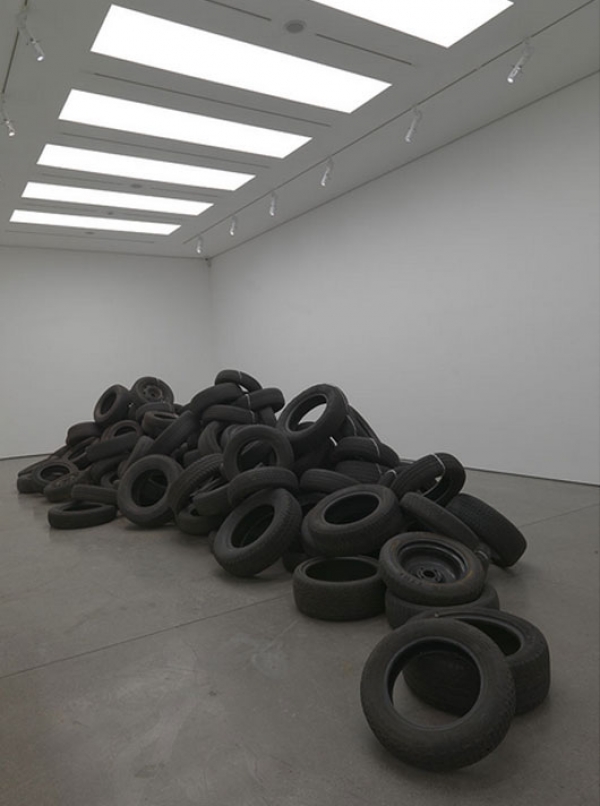
Damian Ortega, Congo River, 2012

Damián Ortega, Congo River, 2012

I seem to be looking at a lot of art made from other stuff at the moment. The journey from Bruce Lacey’s assemblages and robots at Camden Arts Centre to Damián Ortega’s sculptures at White Cube Mason’s Yard is a short tube ride and a big conceptual leap. Both exhibitions include sculpture made from ordinary objects but the two shows feel worlds apart.

Continue reading

Unseasonal encounters

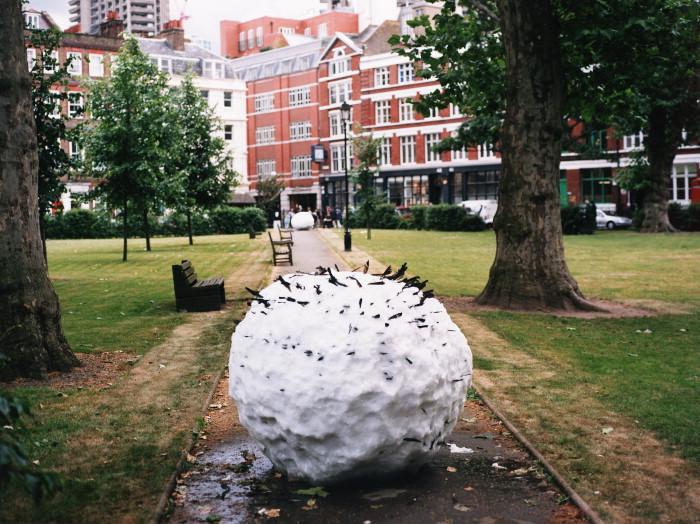
Andy Goldsworthy, Snowballs in Summer, 2000

Snow is one of my very favourite things. I might not like the inconvenience of it and I’m not keen on the slip hazard aspect but that fades into insignificance against the way it looks. So snow as art is something I might reasonably be expected to love, right? Well, as it turns out, not necessarily.

In the run up to his exhibition at the Barbican in 2000, Andy Goldsworthy brought thirteen giant snowballs to London, placing them around the city to be discovered on midsummer day. The snowballs, each weighing approximately a ton and approximately 2m across, had been made in Scotland during the previous two winters and kept in cold-storage in readiness. Embedded in them were reminders of the rural landscape from which they originated which would become more apparent as the snow melted leaving behind the twigs, pebbles, sheep’s wool, barbed wire and so on.

Continue reading

Slowly diminishing sculpture

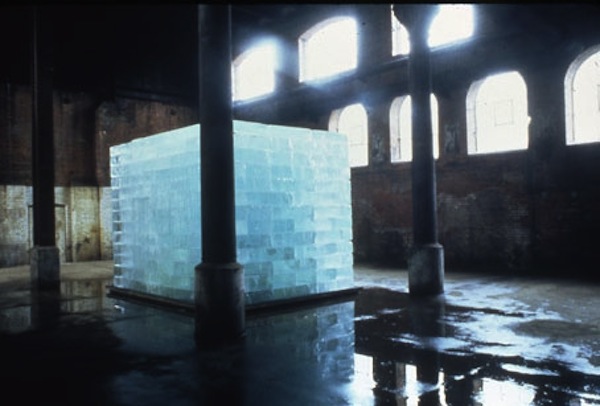
Anya Gallaccio, Intensities and Surfaces, 1996

Using ice as a building material for making art is pretty much always going to end in, well, if not tears, then puddles. In California that outcome will be comparatively speedy but in a London winter the process takes a bit longer. Anya Gallaccio’s Intensities and Surfaces, made in Wapping Pumping Station – the clue’s in the name: a former pumping station in, yes, Wapping, in London – took the form of a large scale ice construction at first glance not dissimilar to one of Allan Kaprow’s ice enclosures. But Gallaccio’s block was solid; it was also lit slightly from within (not apparent in any of the pictures I’ve been able to find of it but I’m almost certain I’m not misremembering) and with a block of rock salt within it and possibly, I think, layered between the ice bricks.

Continue reading

Coded messages

Cerith Wyn Evans, Astrophotography…The Traditional Measure of Photographic Speed in Astronomy…’ by Siegfried Marx (1987), 2006

Thinking about Kris Martin’s Mandi iii and its futile attempts to communicate information reminds me about Cerith Wyn Evans’s chandeliers, one of which – the snappily titled Astrophotography…The Traditional Measure of Photographic Speed in Astronomy…’ by Siegfried Marx (1987) – was in the Fade In/Fade Out exhibition at Bloomberg SPACE. Unlike Martin’s piece though, Wyn Evans’s did communicate its message, alebit in a way few could read without assistance. Astrophotography…The Traditional Measure of Photographic Speed in Astronomy…’ by Siegfried Marx (1987) is not just the title of the work but also of the text it is painstakingly spelling out in morse code.

Continue reading

Relentless information underload

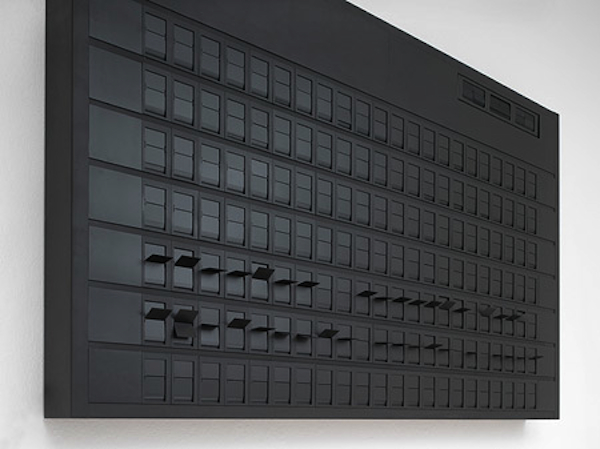
Kris Martin, Mandi iii, 2003

Writing about Bruce Nauman’s Days yesterday put the idea of sound and the way information is communicated firmly in my mind, so coming across a leaflet for Fade In/Fade Out – a show I saw at Bloomberg SPACE a few years ago – while sorting through a pile of random paperwork felt like a very good coincidence. There were a few great pieces in the exhibition, but the work that’s stayed with me most clearly is Kris Martin’s Mandi iii, a station information board loudly and relentlessly updating to make sure we have up to the minute information. But as the flaps clicked over the lack of information remained; every surface on the board was plain black.

Continue reading

Simple confusion

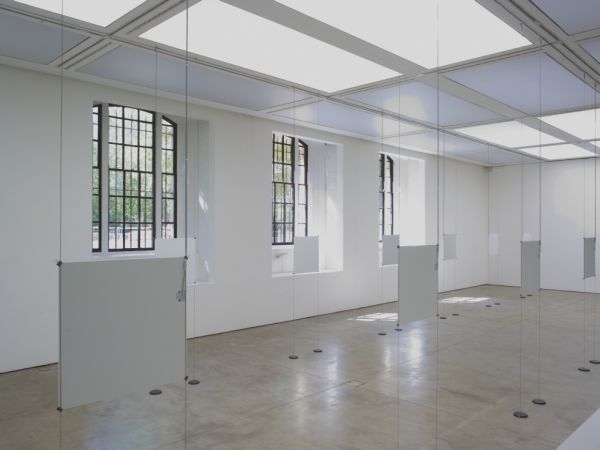
Bruce Nauman, Days, 2009

There is a beautiful simplicity to Bruce Nauman’s Days at the ICA. The space is empty but for two rows of plain white squares suspended at roughly head height. Walking between the white panels – seven in in each row – it’s clear that they’re loudspeakers and that from each a voice can be heard speaking the days of the week. So far, so simple. The space is almost empty and what’s in there is simplicity itself – my liking for art that’s minimal and preferably white can be no secret to anyone who’s been reading this on even a semi-regular basis – so predictably enough I’m in favour of  Days from the start.

Continue reading

Drawing on the familiar

Tracey Emin, I didn’t say I couldn’t love you, 2011

I’ll start by owning up to the fact that I wouldn’t have gone to see She Lay Down Deep Beneath the Sea, Tracey Emin’s exhibition at Turner Contemporary in Margate, if there hadn’t been a couple of other things on show outside the gallery that I particularly wanted to see. Over the years, Emin has made quite a lot of work I really like but most of it has been video and, with a few exceptions, I’m not crazy about her drawings, prints and paintings. But I was there so it would have been foolhardy not to take a look. I’ve seen enough of Emin’s work to know that at its best it can be genuinely affecting and that sometimes even the small, almost throw-away, drawings can be funny and occasionally hit a nerve or tell some sort of universal truth.

Continue reading

Remakes and revisions

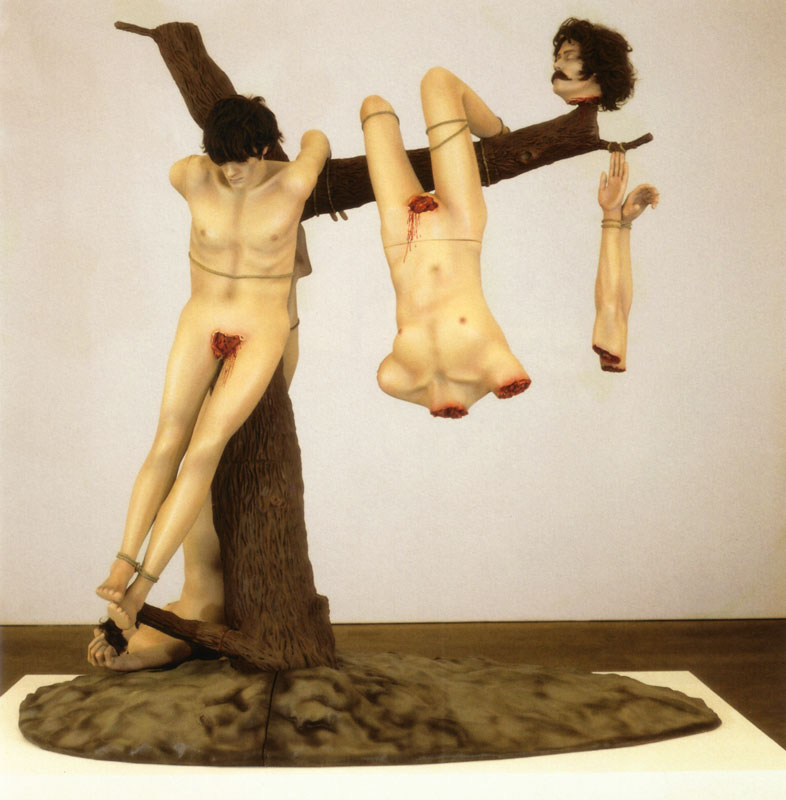
Jake and Dinos Chapman, Great Deeds Against the Dead, 1994

I’m sure there are other examples out there, but it seems to me it’s comparatively rare for reworkings of existing art to involve the move from two to three dimensions. Painting to photography, yes; printmaking to sculpture, no so much. But with a long-standing fascination with Goya’s portfolio of etchings The Disasters of War, that’s the approach Jake and Dinos Chapman took when making their sculpture Great Deeds Against the Dead.

Continue reading

Remaking the readymade

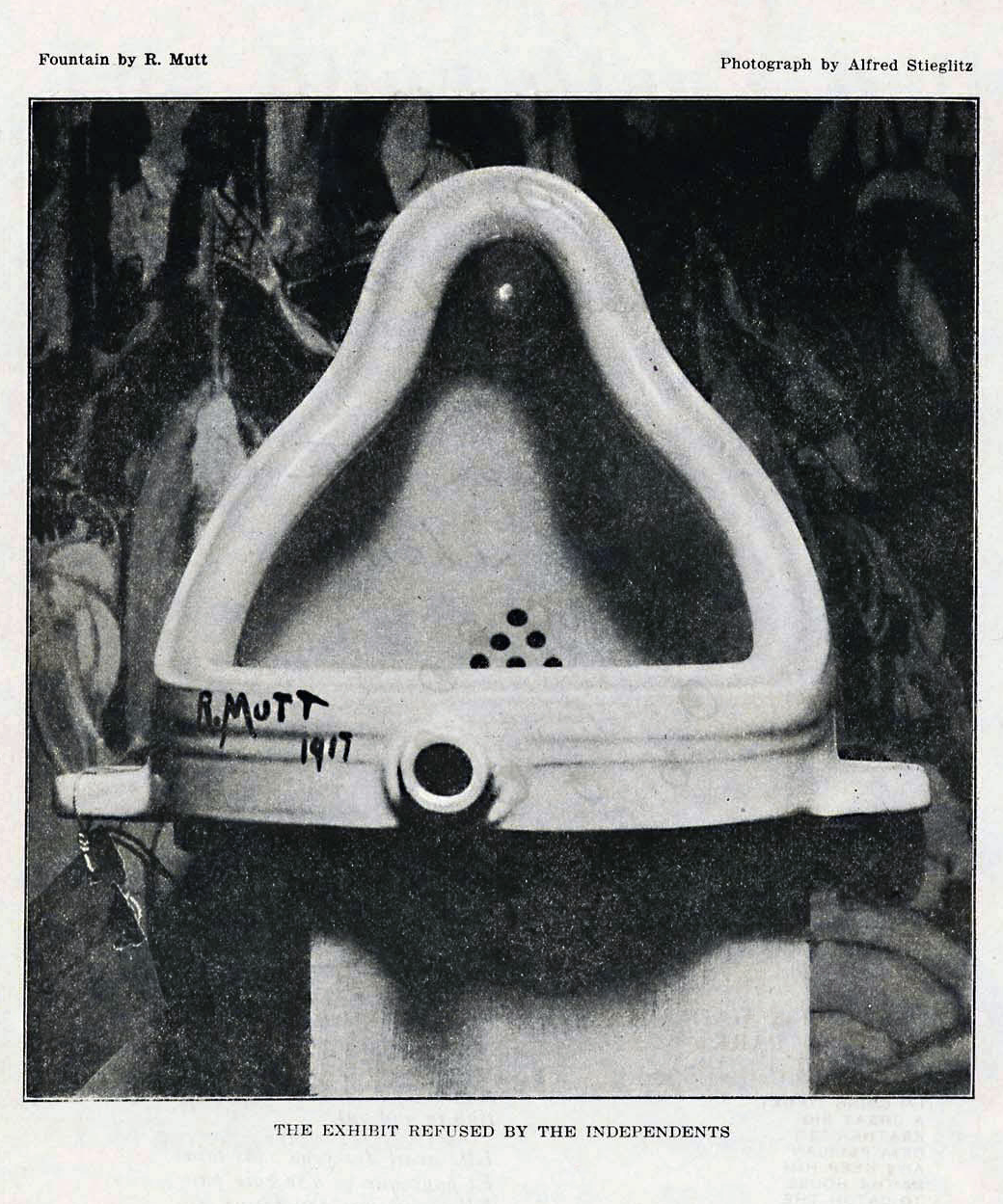
Alfred Stieglitz, Fountain by R. Mutt, 1917

In 1917, Marcel Duchamp bought a urinal, signed it in an assumed name of R. Mutt – the urinal had been bought from the J L Mott Ironworks – and submitted, with the title Fountain, it to the Society of Independent Artists in New York for inclusion in their annual exhibition. The rules stated that work by any artist who paid the fee would be accepted but the committee rejected Fountain. Much debate ensued. Eventually the board of the Society of Independent Artists – of which Duchamp was a member, but who in the main didn’t know he had submitted the work – decided that the work would be hidden from view for the show. Duchamp resigned in protest.

Fountain was photographed by Alfred Stieglitz but was subsequently lost. I think the prevailing view is that Stieglitz threw it out after making the picture.

Continue reading