On never knowing who might be looking

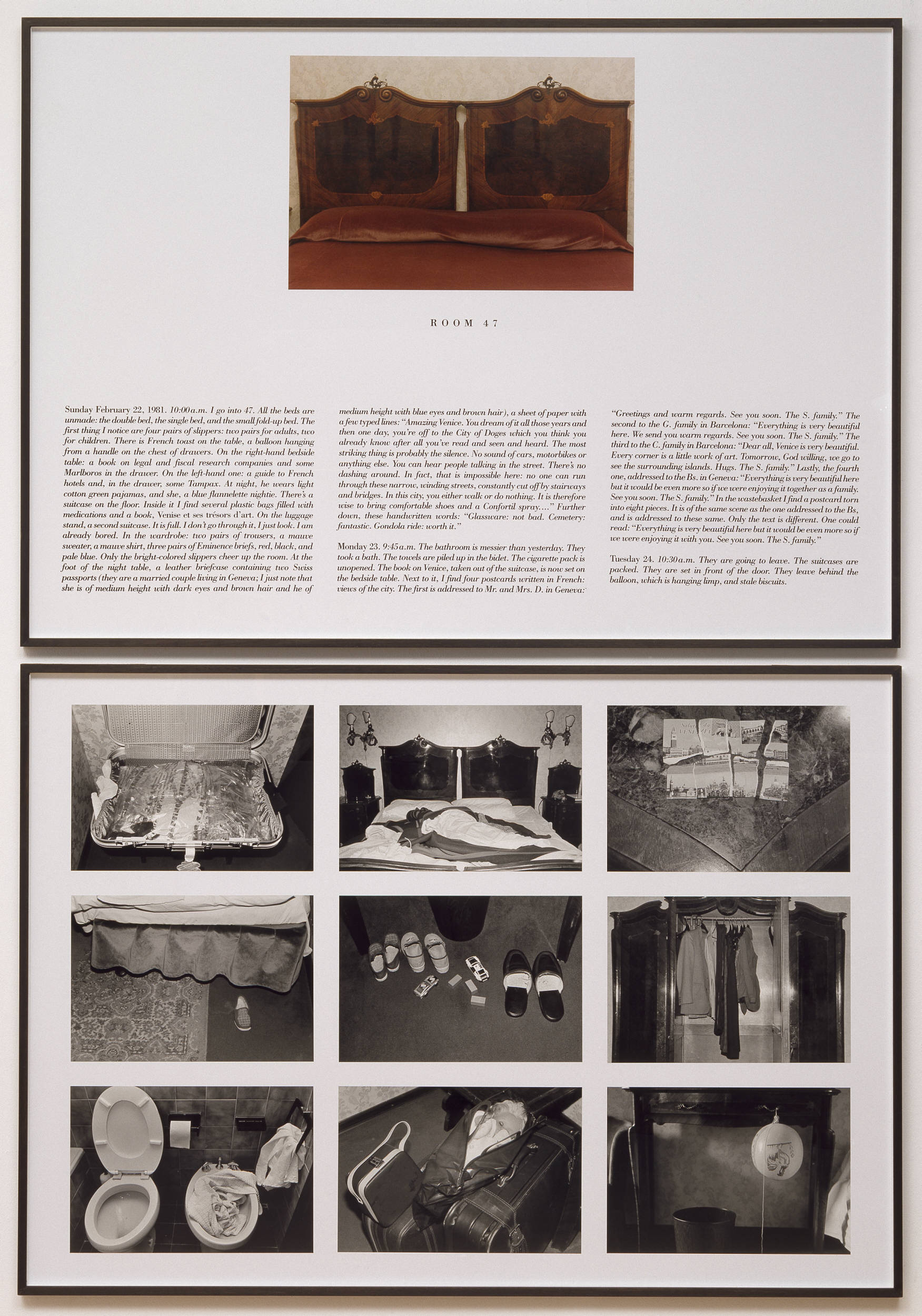
Sophie Calle, The Hotel, Room 47, 1981

When I think about Venice the artist who comes to mind first is Sophie Calle; two of her most intriguing projects – Suite Vénetienne and The Hotel – were made there. Both bodies of work fascinate me but it’s The Hotel that makes me feel the most uneasy. I’m pretty sure no-one’s ever likely to stalk me to make art, which is the basis of Suite Vénetienne,  but it seems entirely possible that a curious chambermaid might go through my stuff, albeit probably not with quite the same determination as Calle. Making up hotel rooms must be pretty boring work, why wouldn’t you amuse yourself by looking through whatever’s left on show?

Continue reading

Many bridges to cross

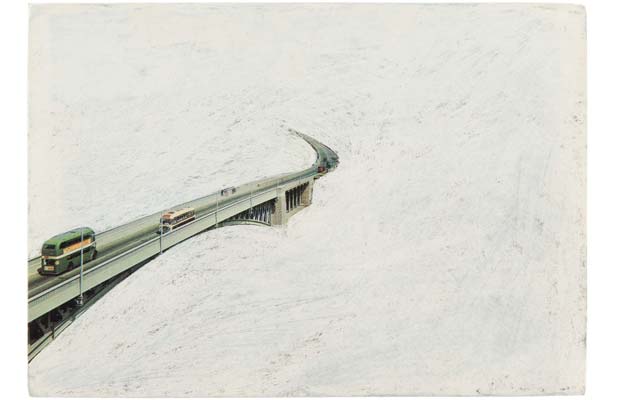
Tim Davies, from the series Bridges, 2009-present (sanded postcard)

I really like postcards. I like the way they represent a place without necessarily being anything like its day to day reality. They seem optimistic somehow. I don’t much like writing them – I tend to restrict myself to a few words and a good deal of flippancy – so can’t really claim to like sending them with any degree of conviction, but I like getting them (and if they arrive back ages after the sender so much the better, especially if they’ve followed a convoluted route) so I send them in the hope that their recipients might enjoy them in much the same way as me. When I choose postcards I aim for maximum cheesiness, as long as it’s authentic (whatever that means) – there is no place for knowing postmodern pastiche here – and often choose cards featuring photographs that aren’t exactly recent. Doubtless a good few artists have worked with postcards but two of the examples that have stayed with me as works I’ve particularly enjoyed are ones I first saw in the Venice Biennale (one in 2009, the second two years later). And, since I’m in Venice this weekend for too short a visit to warrant sending any postcards, I thought I’d write about them here in the form of one of those memorable works.

Continue reading

It’s all in the detail

Ambrosine Allen, Broad Flat Valley

At first glance, Ambrosine Allen’s pictures appear to be black and white photographs of a familiar but somewhat fantastic landscape; it’s only when one looks more closely that the structure of the images becomes apparent. The images are photographic in a sense but there is a strangeness to the surface. These are collages made of tiny scraps of photographs cut from books and used to build up the strange worlds Allen depicts. In the series Compendium to the New World, images from which are on show at Room, the world becomes a strange dreamscape in which odd geological features sit in uncomfortable proximity to one another under stormy skies or in the shadow of volcanic eruptions.

Continue reading

Time, light and completeness

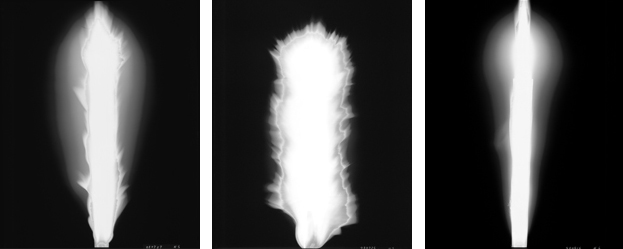
Hiroshi Sugimoto, In the Praise of Shadow, 1999

To a greater or lesser extent all photography is about time and light. A long exposure can make turn something ordinary into a softly unfamiliar image; a short exposure can freeze a moment in time giving a picture the naked eye could never isolate. For Hiroshi Sugimoto the duration of a photograph is often determined by its subject. In the series In the Praise of a Shadow all the light given out by candle is recorded in a single image; Sugimoto describes this as recoding ‘the life of a candle‘.

Continue reading

Mirror Signal Manoeuvre

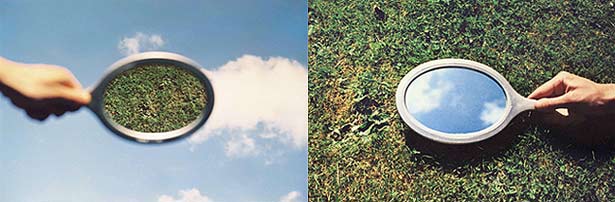
Hreinn Fridfinnsson, Attending, 1973

When I think about the role of art – if it can be said to have one – I think I fundamentally see it as holding a mirror up to the world. I guess this means art tells us stuff me already know, it just switches things around a bit, creating familiarity tinged with an oddness that somehow focuses the mind. Having just written that, I’m inclined to think it proves I probably shouldn’t think about the role of art at all. It just makes me spout art crap.

Continue reading

Moving pictures

Juan Fontanive, Quicknesse, 2009

When we think of moving image art it’s usually film and video works that spring to mind first, but artists like to play and there’s more than one way to make an image move. One of the works I’ve enjoyed the most in recent years is Juan Fontanive’s Quicknesse, a simple flipbook device which traps a hummingbird in a loop of hovering. The sound of the work conjures a sense of agitation and urgency; the bird is beautiful, trapped in our gaze.

There is something extraordinary about this work. Whether it’s the simplicity of the device or the touching beauty of the image, in which the bird is isolated from its surroundings (the background of the image is painted out in white so that the bird floats), I’m not sure, but it has stayed with me since the first time I saw it. Effectively  this is stop motion animation as sculpture. Juan Fontanive has another London show opening at Riflemaker Gallery next month. Can’t wait.

Continue reading

Uncanny likenesses

Wendy McMurdo, Helen, Sheffield from the series In a shaded place, 1996

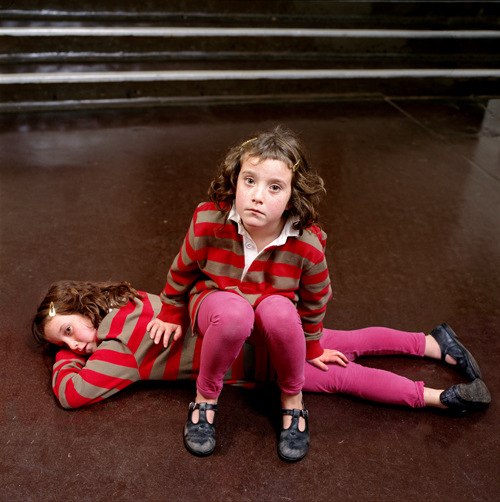
At first sight pretty much any of the pictures in Wendy McMurdo’s series In a shaded place could be a straight photograph. If what you see is what you get, these are twins, dressed the same as some twins are. There is a slight oddness, possibly from the exact similarity of the outfits, but nothing more. But the titles suggest a singularity that is absent from the image. Which twin is Helen?

Continue reading

Life through a very small hole

Steven Pippin, Self-Portrait Made Using a House Converted into a Pinhole Camera, 1986

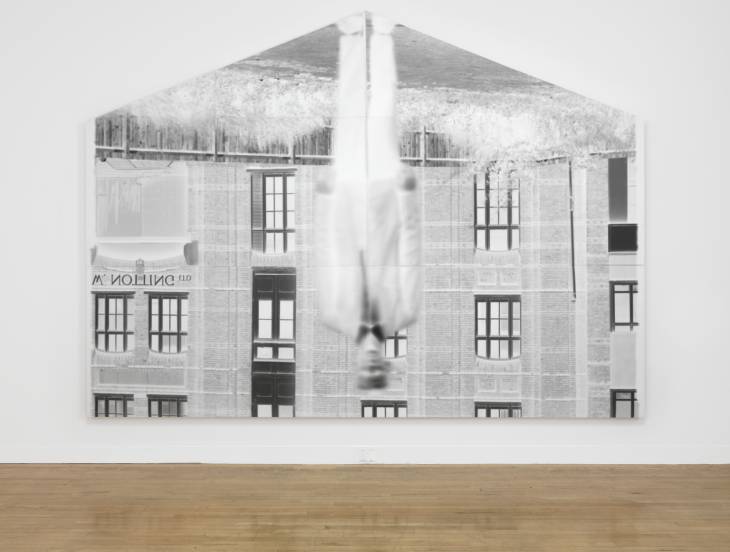
There are quicker and easier ways to take pictures. It’s not as though cameras aren’t readily available in shops. For Steven Pippin though, the process of making a picture usually starts with the process of making a camera. In itself that’s not so unusual. There are probably countless art teachers out there who have encouraged students to make pinhole cameras. Usually such undertakings begin with a box of some sort, often a biscuit tin. But that would be way too easy for Pippin.

Continue reading

Uneven surfaces

Calum Colvin, Robert Burns, 2002

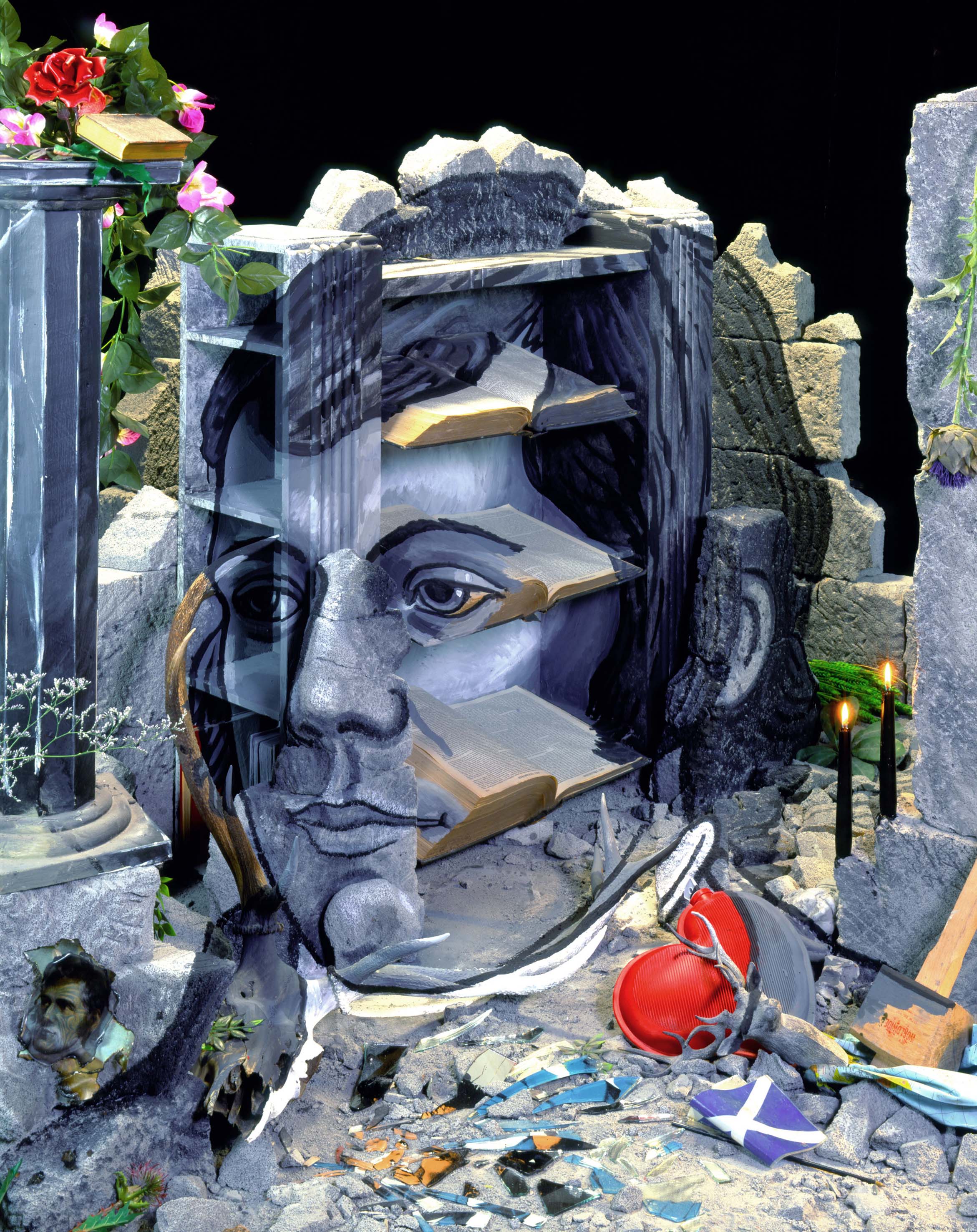
There are many artists who explore the relationship between painting and photography and plenty who use photography to render studio installations flat – Thomas Demand for instance, who I wrote about yesterday – what makes Calum Colvin’s approach unusual and why talk about his work now?

Continue reading