Suburban stories: tales of the unexplained

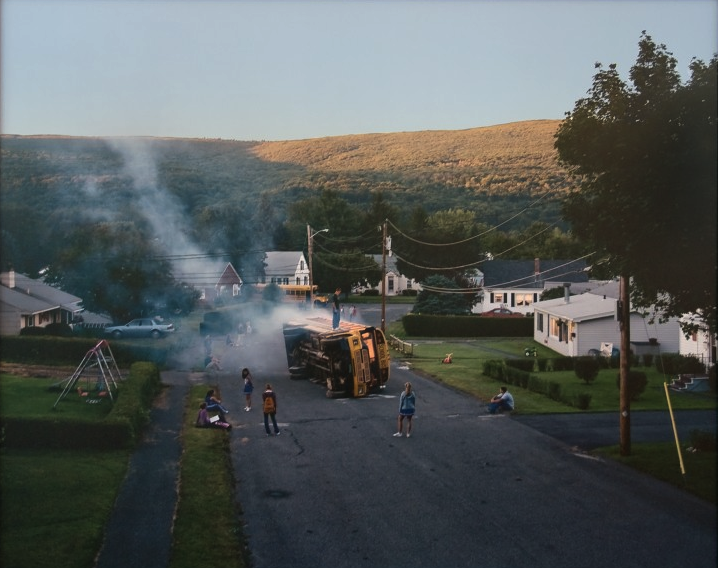
Gregory Crewdson, Untitled (Bus Fire), 2002 (from the series Twilight)

Given the cinematic feeling of Philip-Lorca diCorcia’s Hollywood series, it seems like a good time to look at Gregory Crewdson’s representations of American suburbia, a place that feels oddly familiar from films. In Crewdson’s suburbs, all is not well. The detached houses and neat front lawns might suggest otherwise but these are places where dystopian nightmares are more likely to be played out than the American dream. Of course, this is also familiar from the movies – think Blue Velvet – it’s just that here we have to fill in the gaps ourselves rather than watching the dream unravel on screen.
Continue reading

Laughter and passion

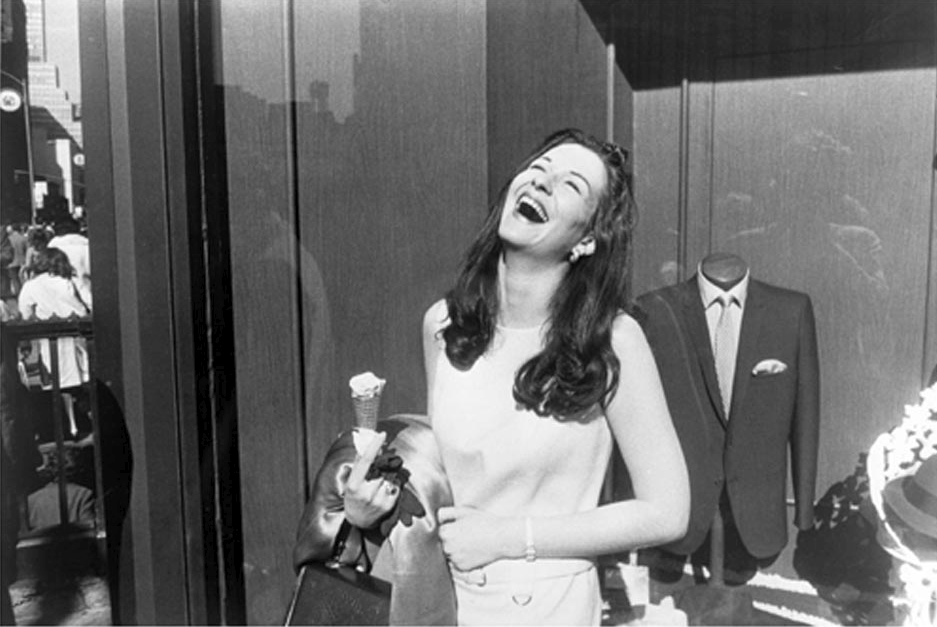
Garry Winogrand, New York City, New York, 1972

To find out what New York looked like in the 1950s or ’60s or up until his death in 1984, there are worse places to turn than Garry Winogrand’s pictures. A prolific photographer who not only recorded everyday life on the streets of America – and New York in particular  – but also got into many significant events of the day, Winogrand photographed the world around him as a way of understanding it, taking many thousands more pictures than he could ever hope to process. Indeed, at the time of his death he has something like 2,500 rolls of film waiting to be processed and even more processed but not yet contact printed. That’s hundreds of thousands of pictures. And those are just the ones he hadn’t really got round to looking at properly.

So, what of the actual pictures? Clearly they’re plentiful, but what are they actually like?

Continue reading

Strangers in the evening light

Philip-Lorca diCorcia, Brent Booth; 21 years old; Des Moines, Iowa; $30, 1990-92

If Philip-Lorca diCorcia’s Heads series tells us little of real substance about the people in the pictures then perhaps his Hollywood series tells us too much, though these are pictures that straddle that blurry line between fact and fiction. In Hollywood, as in Hollywood, anything is possible. The series – also known as The Hustlers – was made on a part Santa Monica Boulevard, Hollywood with a significant population of drug addicts and male prostitutes; for each picture, diCorcia prepared the scene including positioning camera and lights before looking for a suitable subject for the image. Those who agreed to be photographed were asked their name, age and where they came from and these details, along with how much diCorcia paid them to pose, became the titles for the pictures.

Continue reading

Seeking serendipity as a day job

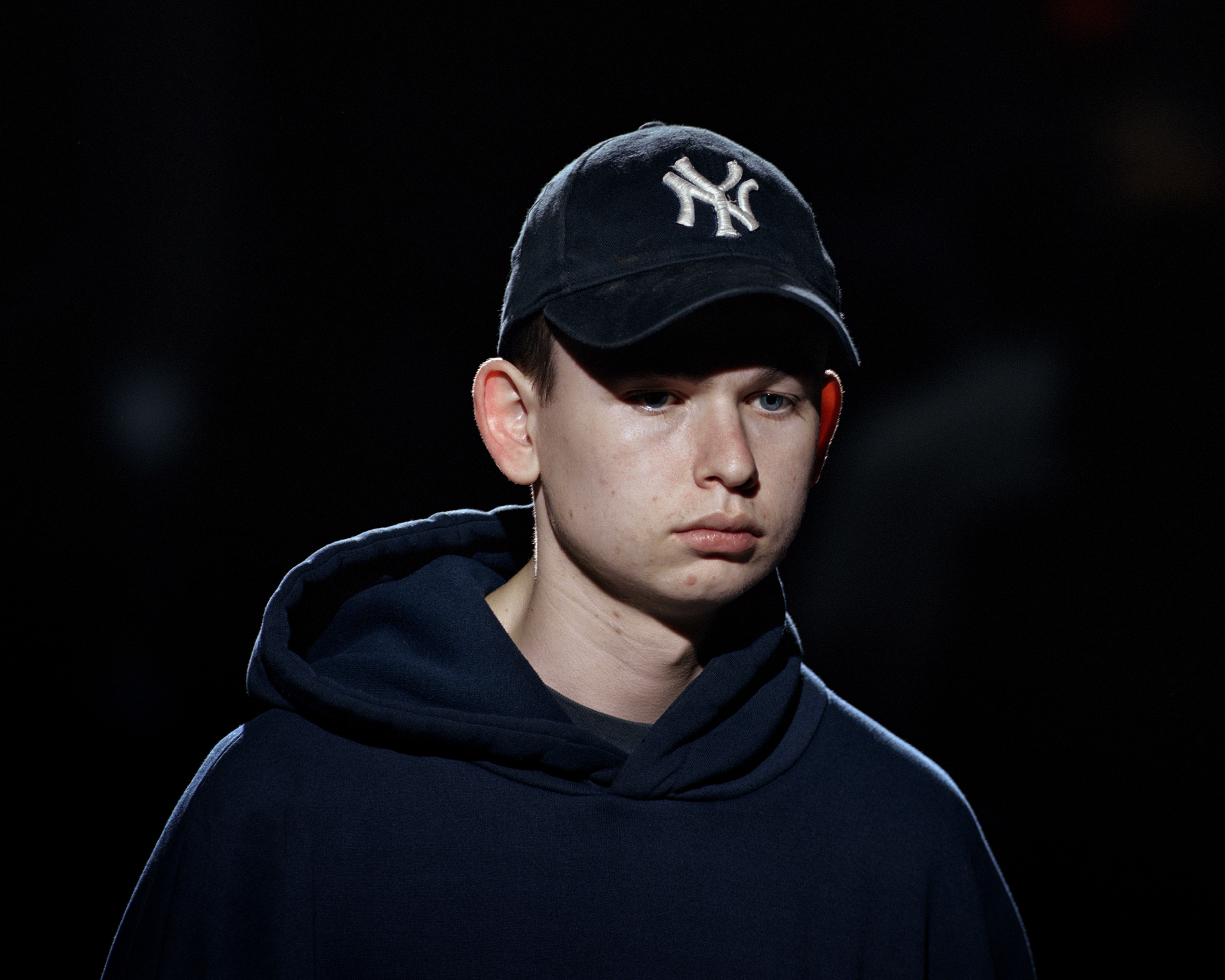
Philip-Lorca DiCorcia, Head #10, 2001

Philip-Lorca diCorcia, Head #10, 2001

A more recent approach to photographing strangers without permission – albeit a rather less surreptitious one – is that taken by Philip-Lorca diCorcia for his series Heads. This series was made in Times Square, one of the busiest places in New York City and a place where bright lights and tourist cameras go with the territory. DiCorcia rigged up lights, using portable flash synced to his camera which was focused on the area he was lighting, and stood twenty feet  or so away with a telephoto lens on his camera. When someone he wanted to photograph came into his zone of light and focus he pressed the shutter and recorded the head of his subject. Simple.

Continue reading

Subway secrets

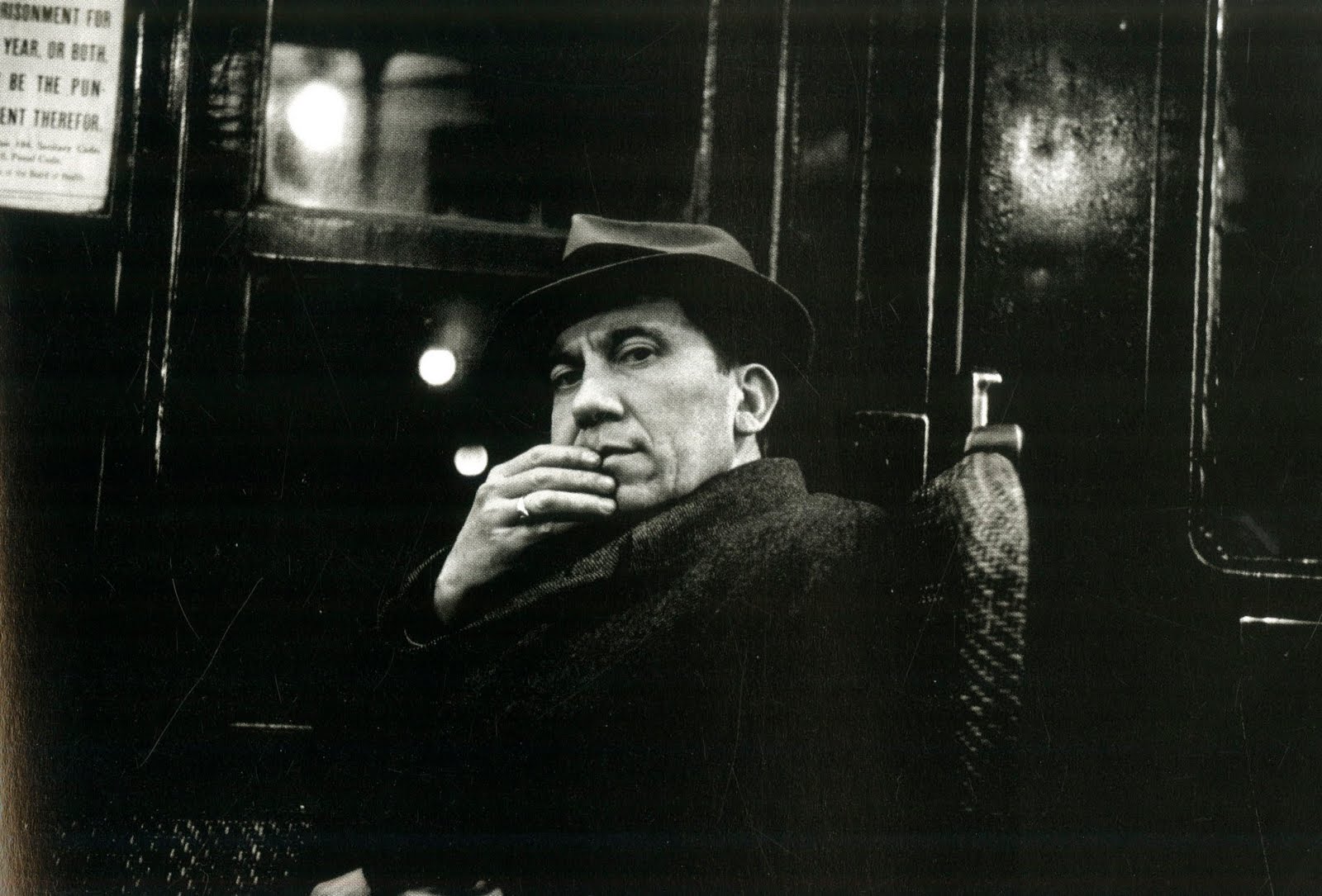
Walker Evans, Subway Portrait, New York City, 1938-41

As I seem to be back on portraiture this seems to be as good a time as any to think about some different approaches to photographing strangers (something that I’ve been following through several series on Richard Guest’s blog The Future is Papier Mâché recently). Anyone who photographs on the streets of London is liable to find themselves questioned about their motives from time to time, usually by security guards but sometimes by the police, making many wonder quite how much freedom of expression we still have in Britain and the degree to which supposed concerns about privacy or security are being used to mask a more insidious creeping state control. So, what’s it like elsewhere and does making art ever trump other issues?

Continue reading

Photography and the poetic

Julia Margaret Cameron, The Angel at the Sepulchre, 1866

Given Madame Yevonde’s use of photography to retell classical myths in the mid 1930s, the relationship between storytelling and photography clearly goes way back. But though Madame Yevonde’s use of colour was unusual and though her images were genuinely different, even eighty years ago the ides of using photography to represent old narratives wasn’t a new one. In fact it’s essentially as old as photography itself.

Continue reading

Vivid goddesses


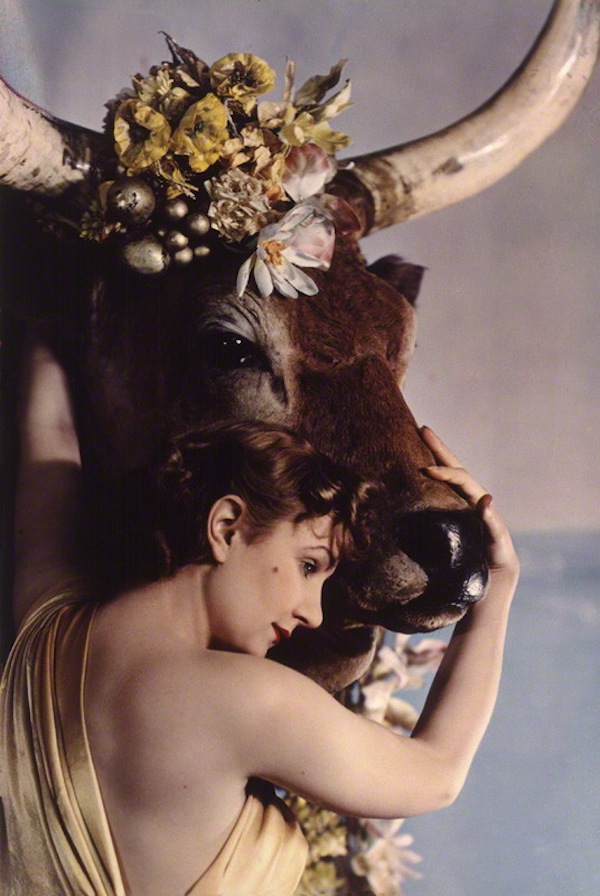
Madame Yevonde, Mrs Donald Ross as Europa, 1935

Something about the colour and the relationship between portrait and object in Urs Fischer’s Problem Paintings reminded me about Madame Yevonde’s Goddesses, a series of portraits of society women posing as figures from classical mythology made in the 1930s using the short-lived Vivex colour system. I’ll be honest, I have no clear idea what the Vivex system was but quick google suggests it involved separate plate negatives for cyan, yellow and magenta – which means it can’t have been easy to work with, especially given exposure times of a few seconds – and that Madame Yevonde used some sort of automated camera back to expose the three plates in succession. All the faff was clearly worth it though as the results are stunning.

Continue reading

Portraits and problems

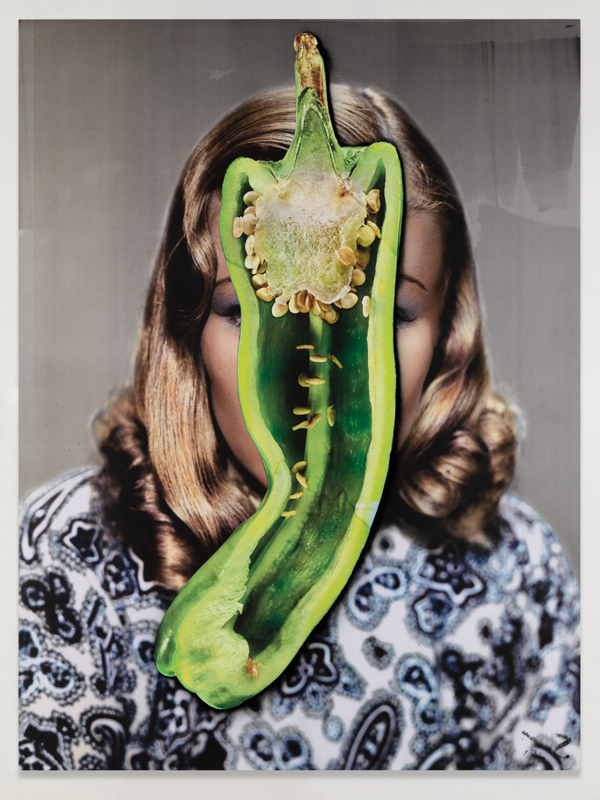
Urs Fischer, Problem Painting, 2012

After two consecutive posts about a body of work that – while not, in fact, devoid of laughs – is best described as thought-provoking and challenging and which raises questions about the worst aspects of twentieth century history, it seemed like time for a bit of light relief. It was thinking about seeing Yael Bartana’s work at the Venice Biennale that brought Urs Fischer to mind and though the Problem Paintings weren’t what I was initially planning to write about, they make me smile in just the right way so the work by Fischer I saw in Venice will just have to wait.

Continue reading

Playing all parts

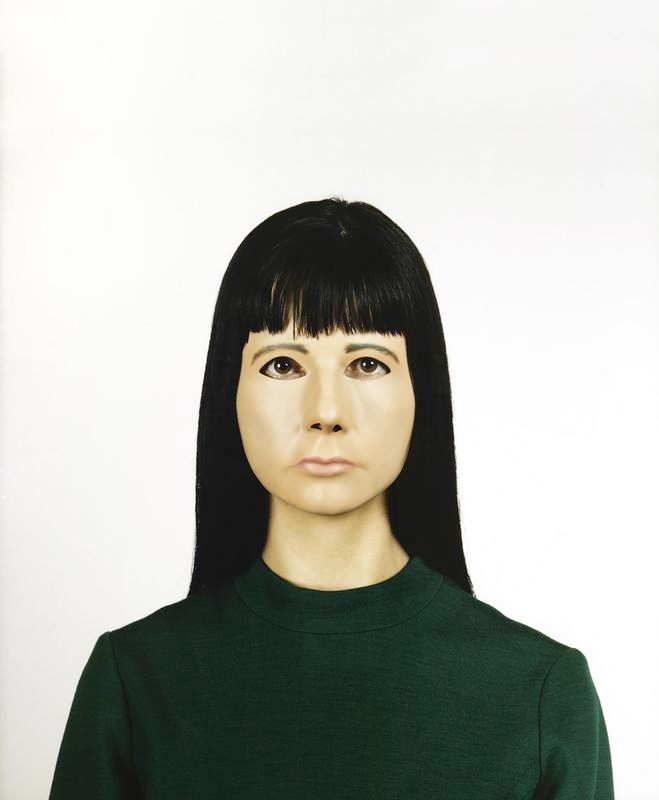
Gillian Wearing, Self-portrait, 2000

People take pictures for all sorts of reasons. The family album is the way we build shared memories as a family group. Our appearance is recorded for documents such as passports, driving licenses and the like. Artists make portraits for a host of reasons but often the aim is in some way to understand people and how we relate to one another or to the world around us. Self-portraits can provide an opportunity to pretend, to become someone else, perhaps to suggest a narrative in the way that someone like Cindy Sherman does.

For Gillian Wearing, self-portraits are usually made from behind a mask. While many of us put on what is effectively a mask-like expression for the camera, Wearing goes for a more literal and painstaking approach.

Continue reading

Taking confession

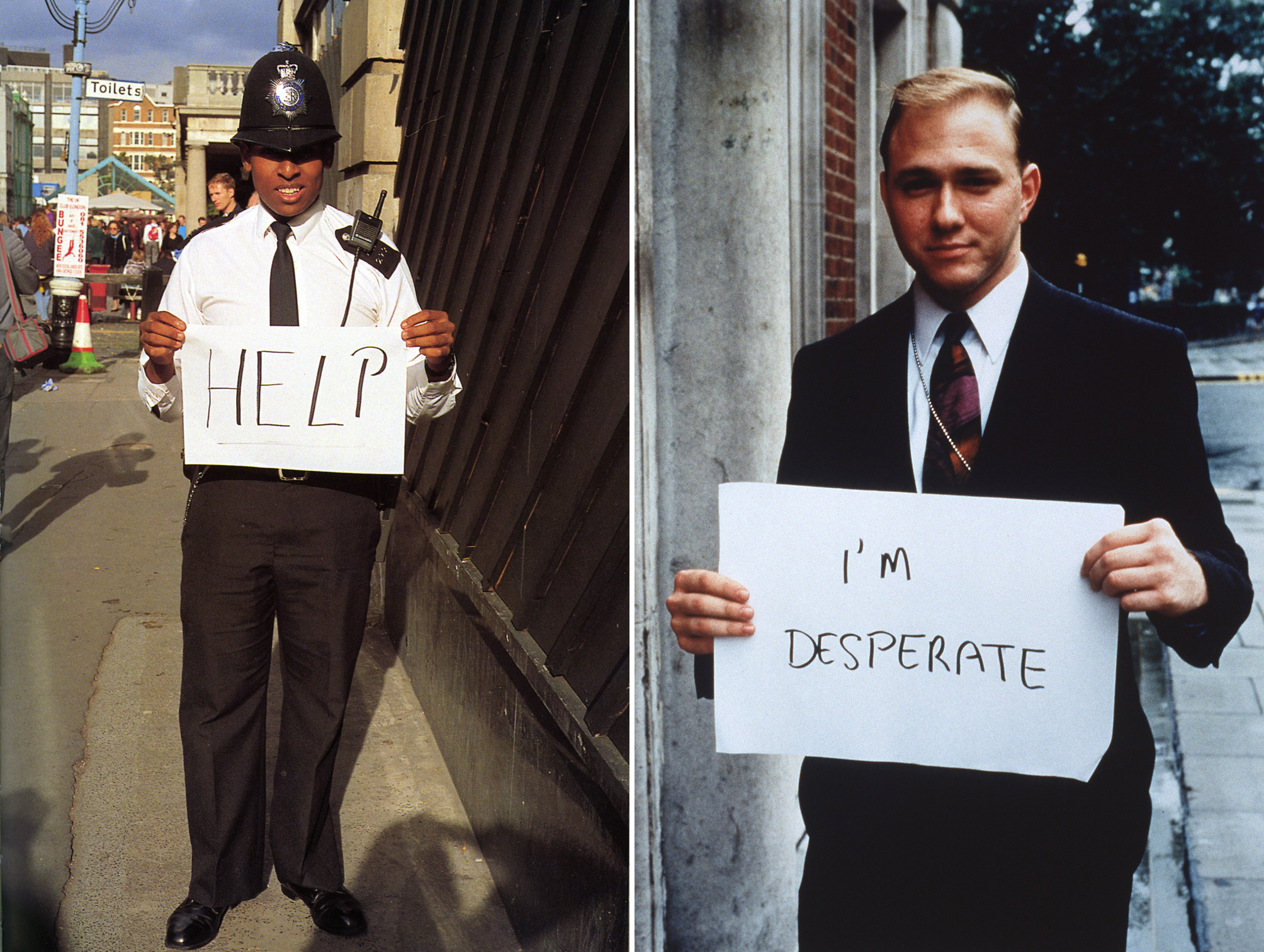
Gillian Wearing, Signs that say what you want them to say and not signs that say what someone else wants you to say (Help) and (I’m desperate), 1992-3

Though Gillian Wearing doesn’t re-enact the work of a scientist to make art, arguably she does nonetheless take on another role: that of the confessor. In a number of different works, Wearing allows those she encounters – either through approaching strangers on the street or by advertising – to express their innermost thoughts in one way or another.

For the series of photographs Signs that say what you want them to say and not signs that say what someone else wants you to say, made in 1992-3, Wearing asked people to write a sign that said something they really wanted to say and hold it up for the camera. Some of the signs comment on the wider political situation of the time – like now, Britain was in a recession – others expose the anxieties of those who made them, with the subjects’ inner thoughts often jarring with their images.

Continue reading