Uneven surfaces

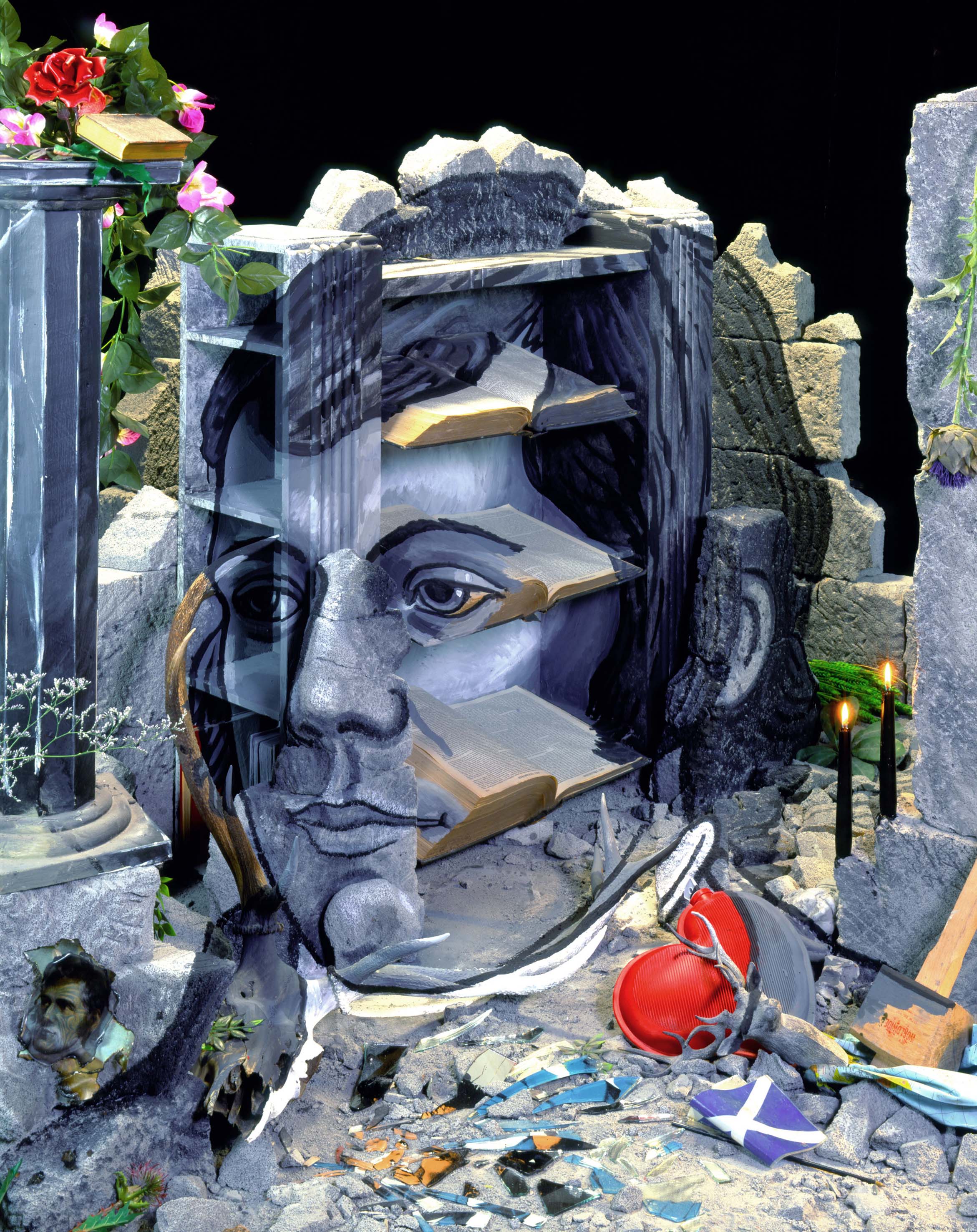
Calum Colvin, Robert Burns, 2002

There are many artists who explore the relationship between painting and photography and plenty who use photography to render studio installations flat – Thomas Demand for instance, who I wrote about yesterday – what makes Calum Colvin’s approach unusual and why talk about his work now?

Continue reading

What would you choose?

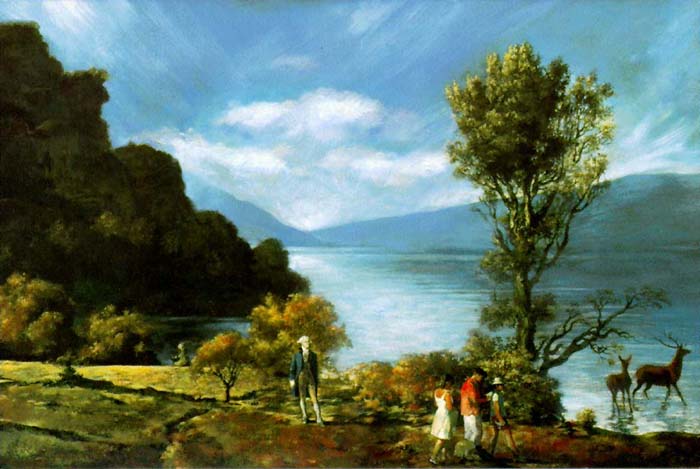
Komar and Melamid, USA’s Most Wanted, 1994-5 (dishwasher sized)

In a world increasingly driven by surveys and focus groups, what happens when market research meets art? In 1995, commissioned by the Dia Center for the Arts as its second artists’ project for the web, Vitaly Komar and Alex Melamid decided to find out. The results make for entertaining, yet predictably depressing, viewing

Continue reading

It’s who you know

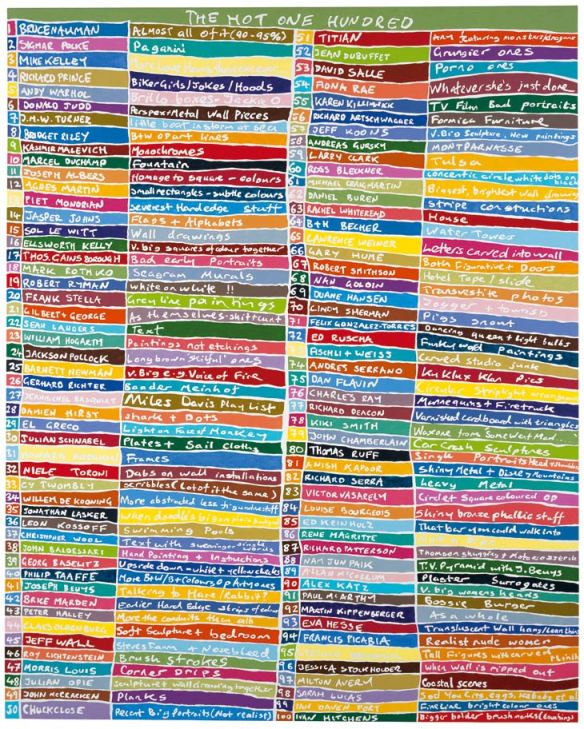
Peter Davies, The Hot One Hundred, 1997

You can learn a lot from looking at art.

Reading a Peter Davies painting is a bit like looking at someone else’s bookshelves or CD collection: a sneaky insight into their taste or knowledge. The Hot One Hundred tells me what art Davies rates; it feels like quite a random hierarchy but every time I look at the painting it reminds me about an artist or a piece of work I’ve forgotten about and Davies’s  descriptions of the work always makes me smile. Emma Kay’s The Story of Art – a list of every artist and art movement Kay can remember, made in 2003 for Tate Modern’s Contemporary Interventions series – has something of the same feel though it’s not as nice to look at.

Continue reading

Spots before the eyes

The world – well Gagosian Gallery, anyway – has gone dotty for Damien Hirst’s spot paintings. In an unprecedented move, Gagosian is showing a single artist across all its sites, and not just a single artist but a single strand of that artist’s work. The Complete Spot Pantings 1986-2011 is on now at all 11 Gagosian spaces globally. Why? What’s it all about?

Continue reading

Watching and waiting

Panorama, Gerhard Richter’s exhibition at Tate Modern, includes so many show-stoppingly great works – Aunt Marianne and Uncle Rudi (the juxtaposition of which I wrote about for MostlyFilm.com), the paintings of Richter’s daughter Betty, squeegee paintings both large and small to name but a few – that it’s a surprise when something quieter, seemingly simpler, works its way under my skin. But two rural landscapes, both painted in the mid-1980s, did just that. I was reminded of the time I spent with Barn and Meadowland last weekend at the Whitechapel Gallery when Wilhelm Sasnal’s rather larger argricultural lanscape Pigsty grabbed my attention and wouldn’t let go.


Continue reading