The sound of melting ice

Katie Paterson, Vatnajökull, 2007

Vatnajökull in Iceland is the largest glacier in Europe. But it’s melting into a lagoon, thanks, one assumes, to climate change. For a week in June 2007, artist Katie Paterson submerged a microphone, attached to a mobile phone, into the freezing waters of the ever expanding Jökulsárlón lagoon making it possible to listen to the sound of the ice melting.

For the work Vatnajökull (the sound of), Paterson displayed the phone number – in the form of a neon sign – at the Slade School of Fine Art in London as part of her MFA degree show.

Continue reading

The stuff of art (and life)

Vong Phaophanit Neon Rice Field 1993

Vong Phaophanit, Neon Rice Field, 1993

Rice is a staple. It’s a foodstuff a large portion of the world’s population depends on. For those of us with the luxury of choice whose diet has become mixed as a result of the movement of people, goods and traditions, it has less cultural significance but is nonetheless something we take for granted, while knowing we could survive without it. For us it could perhaps be argued that art is something akin to a staple. We could perhaps find a substitute if push came to shove but in its own way it nourishes us. Mix the two and you have Vong Phaophanit’s Neon Rice Field an extraordinary installation for which Phaophanit was nominated for the Turner Prize in 1994.

Continue reading

Everything and nothing at all

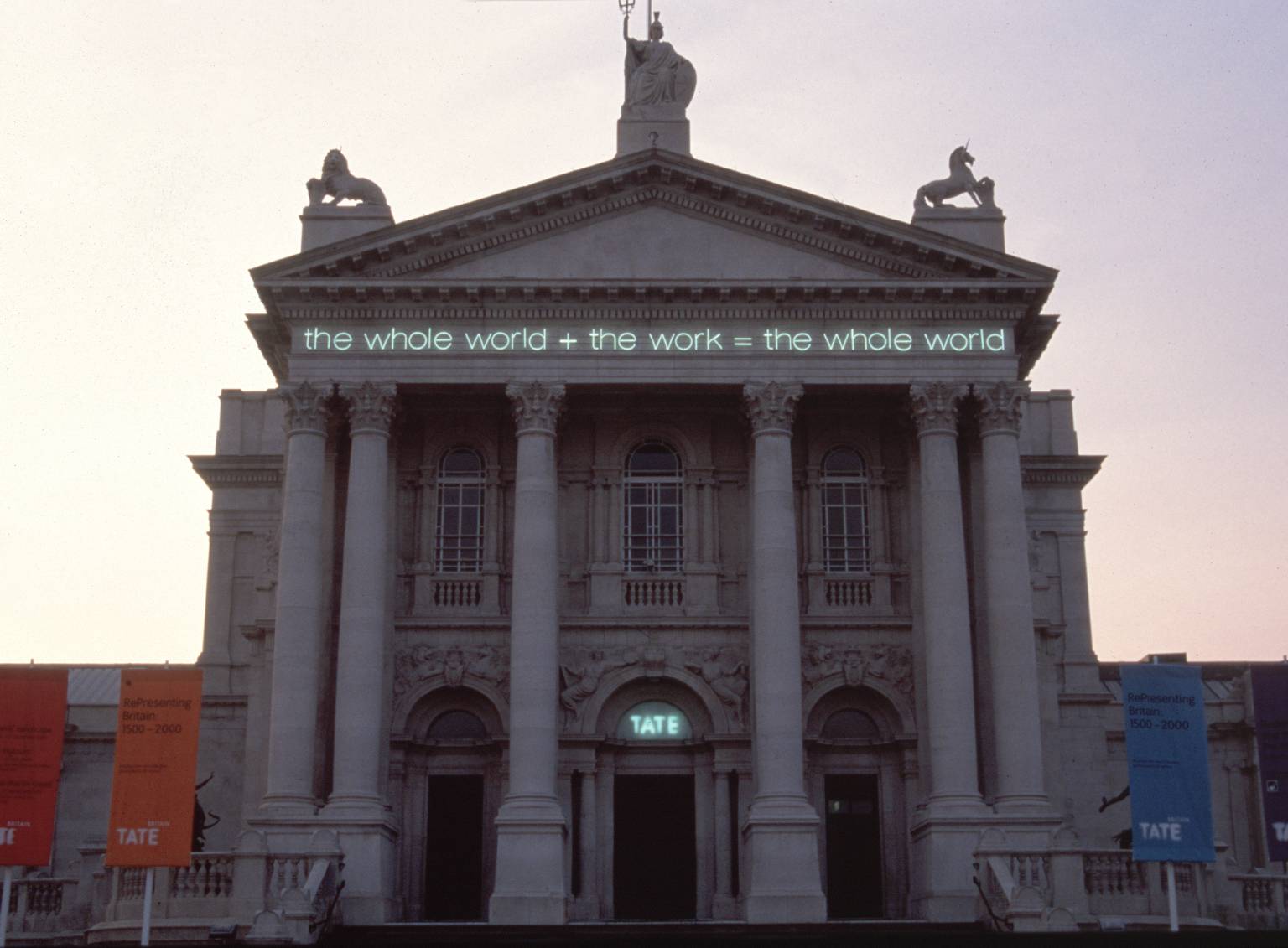
the whole world + the work = the whole worldMartin Creed, Work No. 232: the whole world + the work = the whole world, 2000

There are two ways to see this. Clearly if A + B = A then B = 0, so in Martin Creed’s equation the work can definitely be read as nothing at all. But is art really a big fat zero? And if it is, is the outside of a major art museum the place to say it? Well, let’s try again…

Continue reading

A web of enchantment

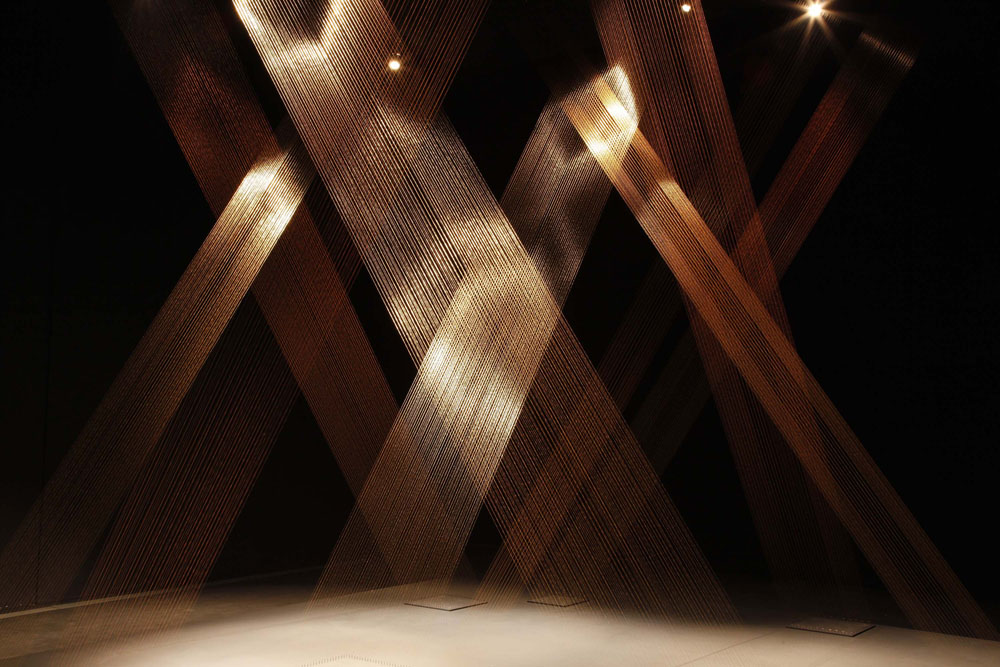
Lygia Pape, Ttéia 1, C (Web), 2011 (Installation view, Serpentine Gallery)

Perhaps it’s just my preoccupation of the week (or perhaps I’m desperate to make links here, no matter how tenuous), but seeing Lygia Pape’s beautiful installation of gold thread at the Serpentine Gallery put me in mind of a forest. The space is disrupted by thread that sparkles in the space rendering it unnavigable. The thread seems to form beams of light through the darkness, like sunlight penetrating a forest. Though the whole of Magnetized Space, Lygia Pape’s installation at the Serpentine Gallery, is fascinating and though this may be the only work I’ve seen in real life before, Ttéia 1, C is definitely the highlight for me.

Continue reading

Shadows in the forest

Loris Gréaud, Gunpowder Forest Bubble, 2008

There is something enchanted about Loris Gréaud’s Gunpowder Forest Bubble (currently installed in Palazzo Grassi as part of the exhibition The World Belongs to You). By the light the moon, which hangs low in the shadowy forest, I can see that I am alone. The trees are bare and dark; they loom above me. There is a sense of theatre about the installation, albeit without a predetermined narrative. This is the forest as a fairytale space where anything is possible, and anything – perhaps especially – danger might be revealed. And there is danger here, notionally at least, for the stark carbonised trees are coated in gunpowder. Rationally I might know that the risk is minimal to non-existent, but still: gunpowder! That hardly seems safe.

Continue reading

Looking efficiency in the eye

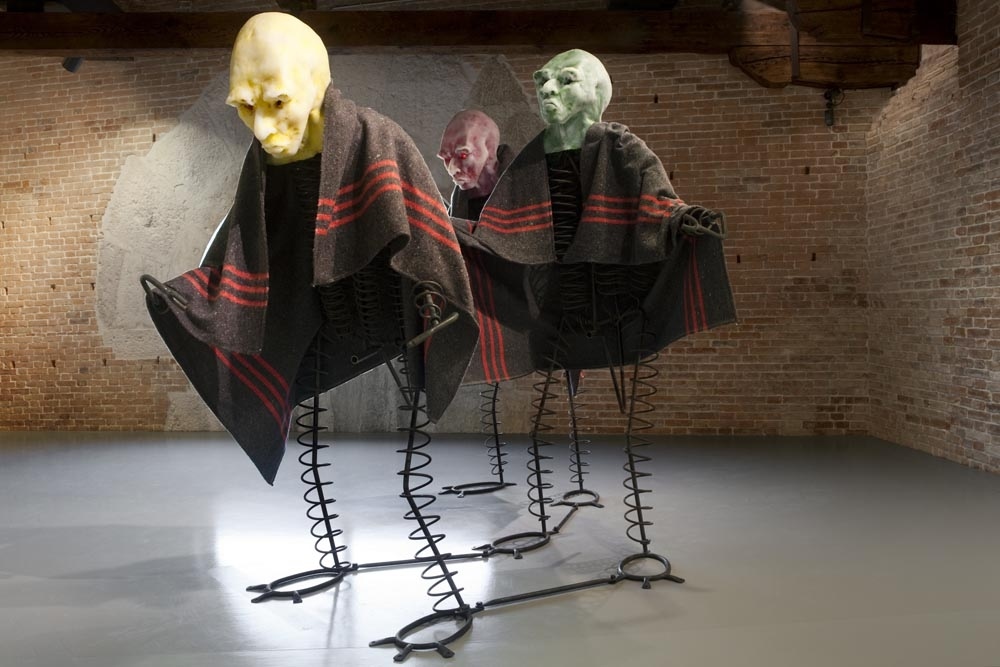
Thomas Schütte, The Efficiency Men, 2005

There is something slightly terrifying about Thomas Schütte’s The Efficency Men. The metal frame bodies are strange and the blankets round their shoulders give an air of pathos but ultimately it’s the eyes in their oversize heads that get me. Staring into the eyes of one of the figures isn’t at all comfortable.

Continue reading

Are you sitting comfortably?

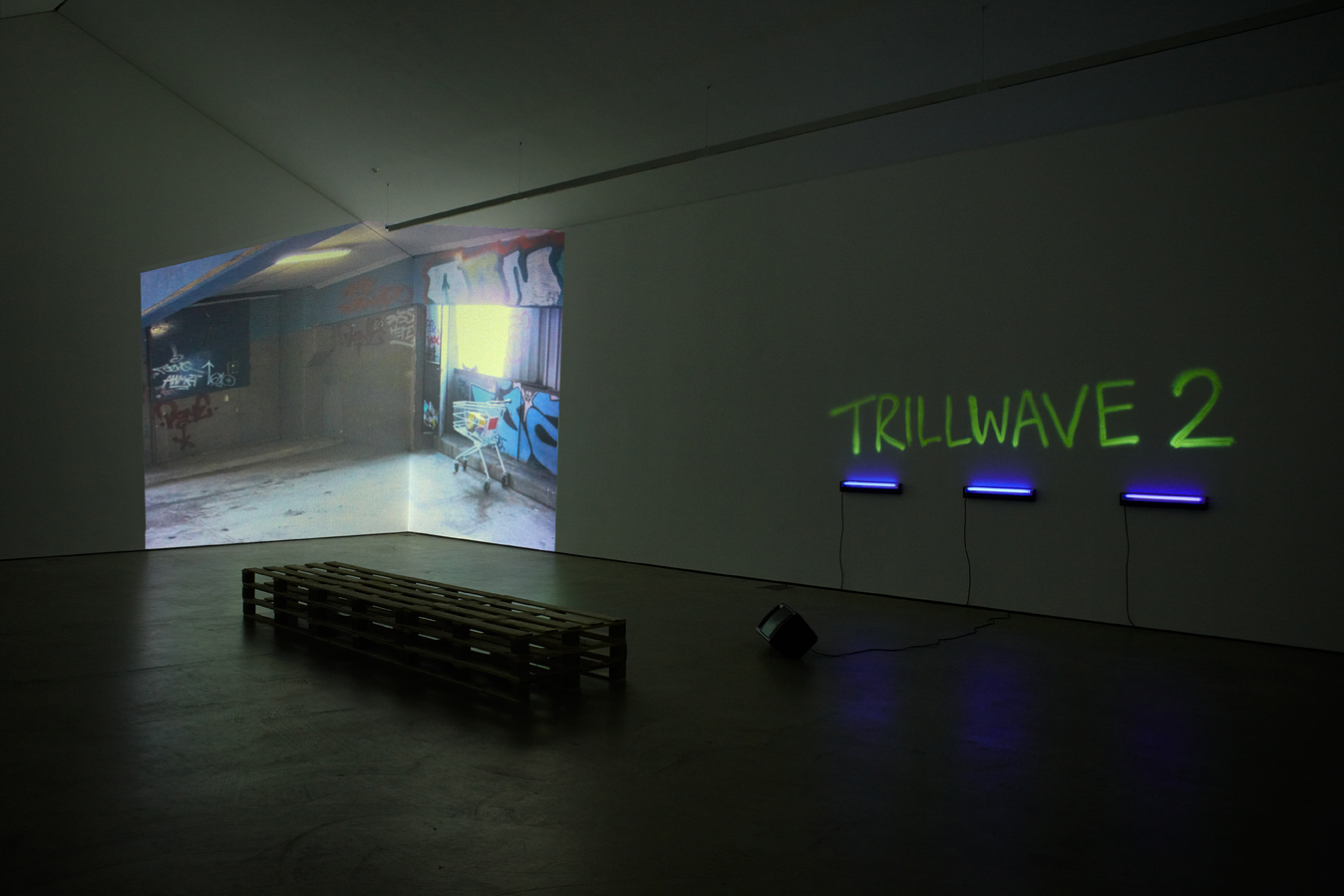
Ilja Karilampi, installation view at Wilkinson Gallery

I’ve been preoccupied with seating recently and in particular with the way film and video is shown in gallery spaces. It turns out that my attention span is much reduced if I’m not sitting comfortably. (Well, durr.) A particular low is the woefully inadequate seating at the ICA for the Lis Rhodes: Dissonance and Disturbance exhibition. When I came to write about that exhibition for MostlyFilm, all I could think about was how uncomfortable I’d been. So visiting galleries in east London yesterday it was pleasing to come across a couple of more interesting approaches.

Continue reading

Watching the sky

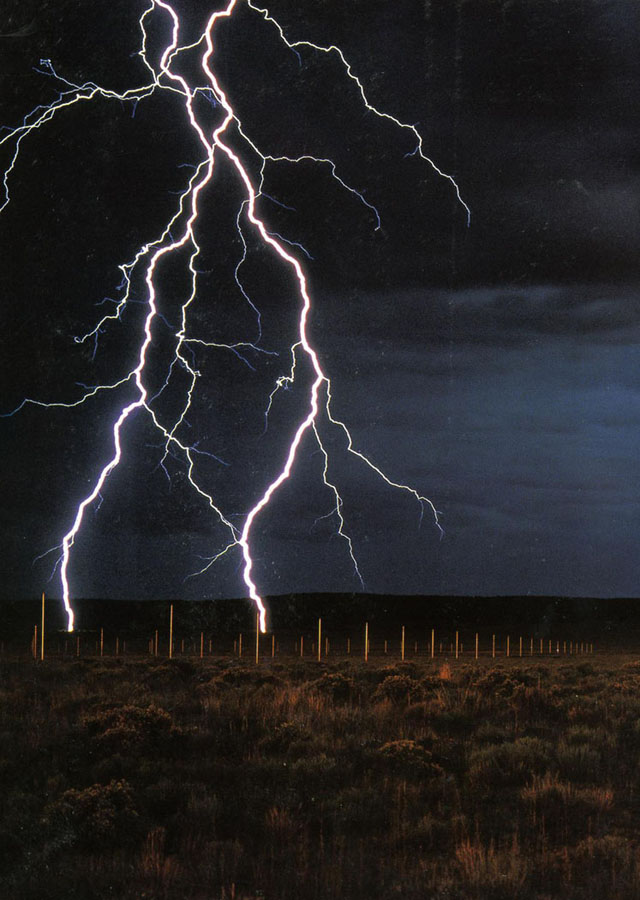
Walter De Maria, The Lightning Field, 1977

The list of art works I really want to see is quite a long one, but somewhere towards the top – and part of an as yet imaginary art holiday that includes other pieces of American land art  – is Walter de Maria’s The Lightning Field. In the middle of nowhere, about three hours drive from Albuquerque, The Lightning Field is, um, basically a field. With, if you’re very lucky (and most who visit it won’t be), some lightning.

Continue reading

Daily rituals

Hadrian Pigott, Instrument of Hygiene (Case 4), 1995

I’ve always been interested in the way we muddle through life and the daily routines most of us construct – at least, I don’t think it’s just me – to get through the day and feel vaguely in control of something, anything, however mundane. We are, by nature, creatures of habit to a greater or lesser extent. Before you know it, routines become rituals and it becomes unthinkable to break the sequence. One of the most ritualised aspects of daily life is often personal hygiene.

Continue reading

Lost in a world of lost people

Mike Nelson, Coral Reef, 2000

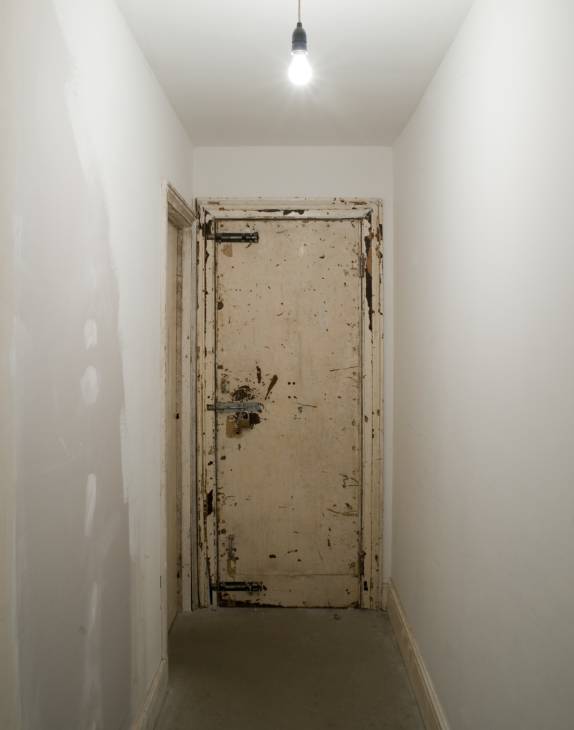
There’s a slightly shabby door in Tate Britain that leads into another world. It’s a world that allows me in but never makes me feel welcome. It’s a world I wouldn’t want to live in, or even be in when anyone’s home, but one I love to visit. And, if the Tate website is accurate (not something that can guaranteed given its longstanding confusion about the whole thing), it’s a world that is only accessible until Sunday.

Continue reading