Street scenes

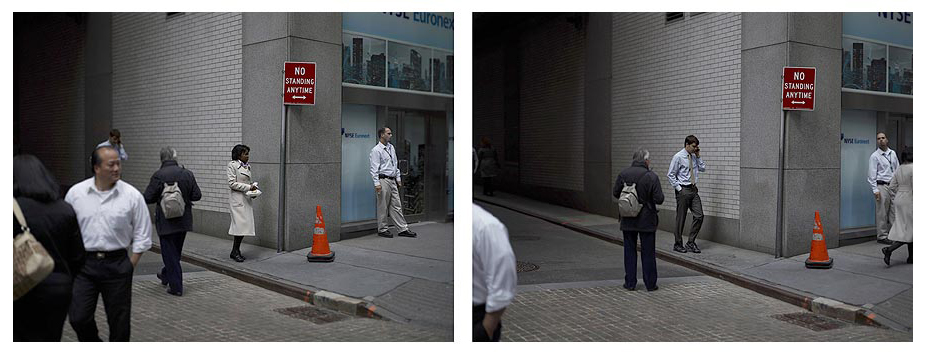
Paul Graham, Wall Street 19th April 2010, 12.46.55 pm, 2010

Though my preference is almost always for what might best be termed fine art practices, when it comes to Paul Graham’s work it’s generally been his documentary work that has interested me most and, though his work looks great in galleries, books like Beyond Caring and Troubled Land have moved me more. It’s not that I don’t like Graham’s later work – certainly I found a lot to like in his 2011 Whitechapel Gallery exhibition – it’s just that the books he produced in the 1980s seem exceptional. With this in mind, I approached his exhibition at The Pace Gallery as someone who needed to be won over.

Continue reading

Reimaginings

Dionisio González, Nova Ipiranga III, 2004

My knowledge of the favelas of Brazil is somewhat limited. I imagine them as shanty towns similar to those in other parts of the world with buildings made from whatever is available and built in a ramshackle way. From Dioinisio Gonzáles’s digitally manipulated photographs that looks to be a good guess. Sort of.

Continue reading

New York stories: pictures of Gotham

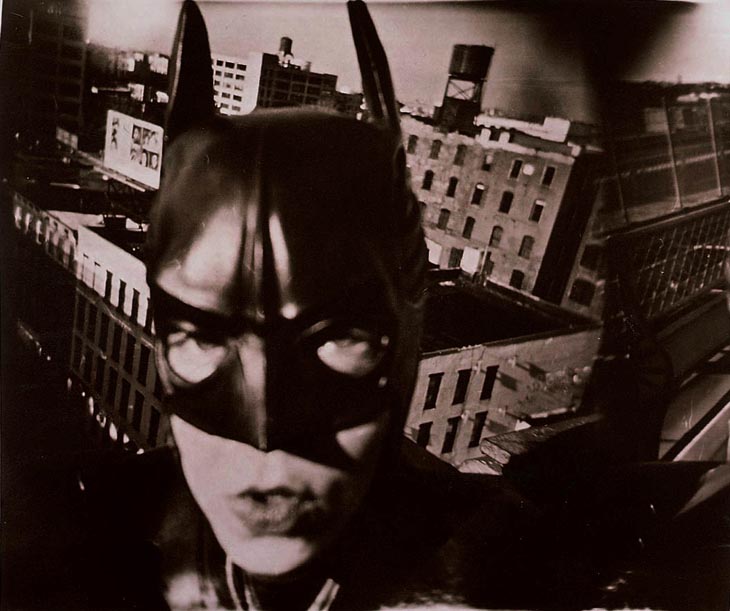
Katia Liebmann, Gotham City, 1997

One of the aspects I enjoy the most when visiting New York is the city’s familiarity from film and television. No matter how often I visit – not often enough and never for long enough – the connection with the movies won’t ever completely fade. New York has played itself and pretended to be other, often imaginary, places. It’s great backdrop after all. Katia Liebmann’s 1997 series Gotham City uses New York as a backdrop to a series of masked self-portraits.

Continue reading

New York stories: tales from the city

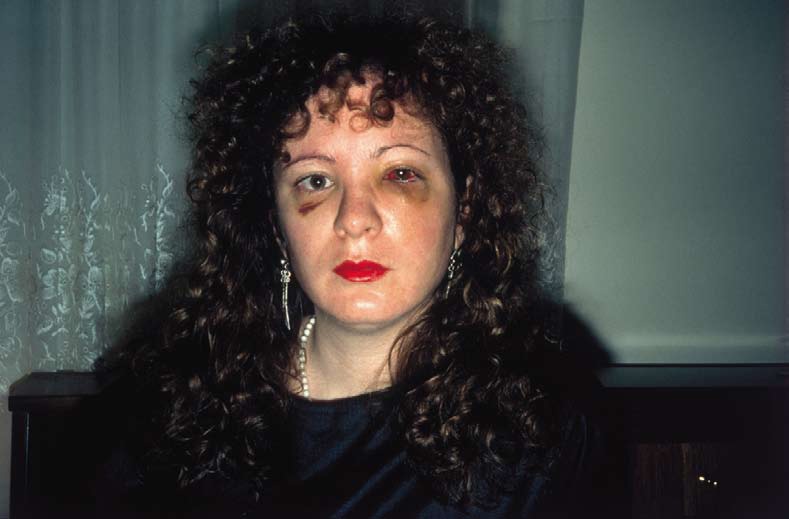
Nan Goldin, Nan One Month after Being Battered, 1984
Nan Goldin’s pictures from the late 1970s and 1980s provide a unique record of a slice of New York life at a time when hedonism was giving way to tragedy. The body of work she titled The Ballad of Sexual Dependency focuses on those who hung out around the Bowery where a hard-drug subculture met an emerging gay scene.

As a student in Boston, Goldin had shown her work in the form of Cibachrome colour prints; moving to New York she switched to showing work as slide shows often with a soundtrack and shown in clubs. The pictures were made using available light and most have a snapshot aesthetic. They document sexuality, drug use, domesticity and the sometimes violent relationships of Goldin and those she hung out with.

Continue reading

New York stories: walking the line

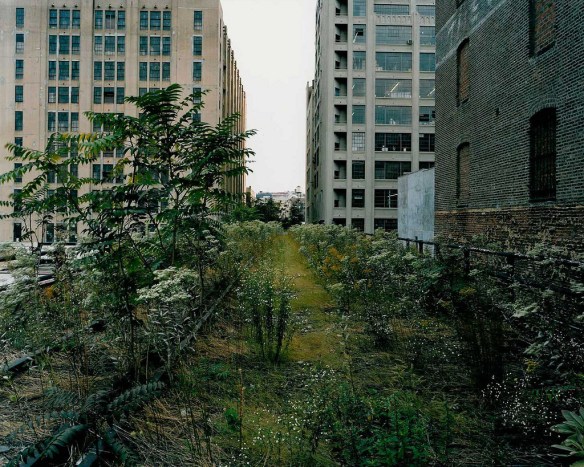
Joel Sternfeld, Looking South at 27th Street, September 2000 from Walking the High Line, 2002
Most cities have their forgotten spaces, but it still somehow surprises me that the High Line, the elevated railway that carried goods through Manhattan from the 1930s until 1980 was allowed to decay for more than two decades in a city where space is at such a premium. Thanks to a campaign by New Yorkers eager to see the derelict tracks reborn as a park the future of the High Line as a public space now seems secure.

Continue reading

Tales from a (perfectly straight and very expensive) riverbank

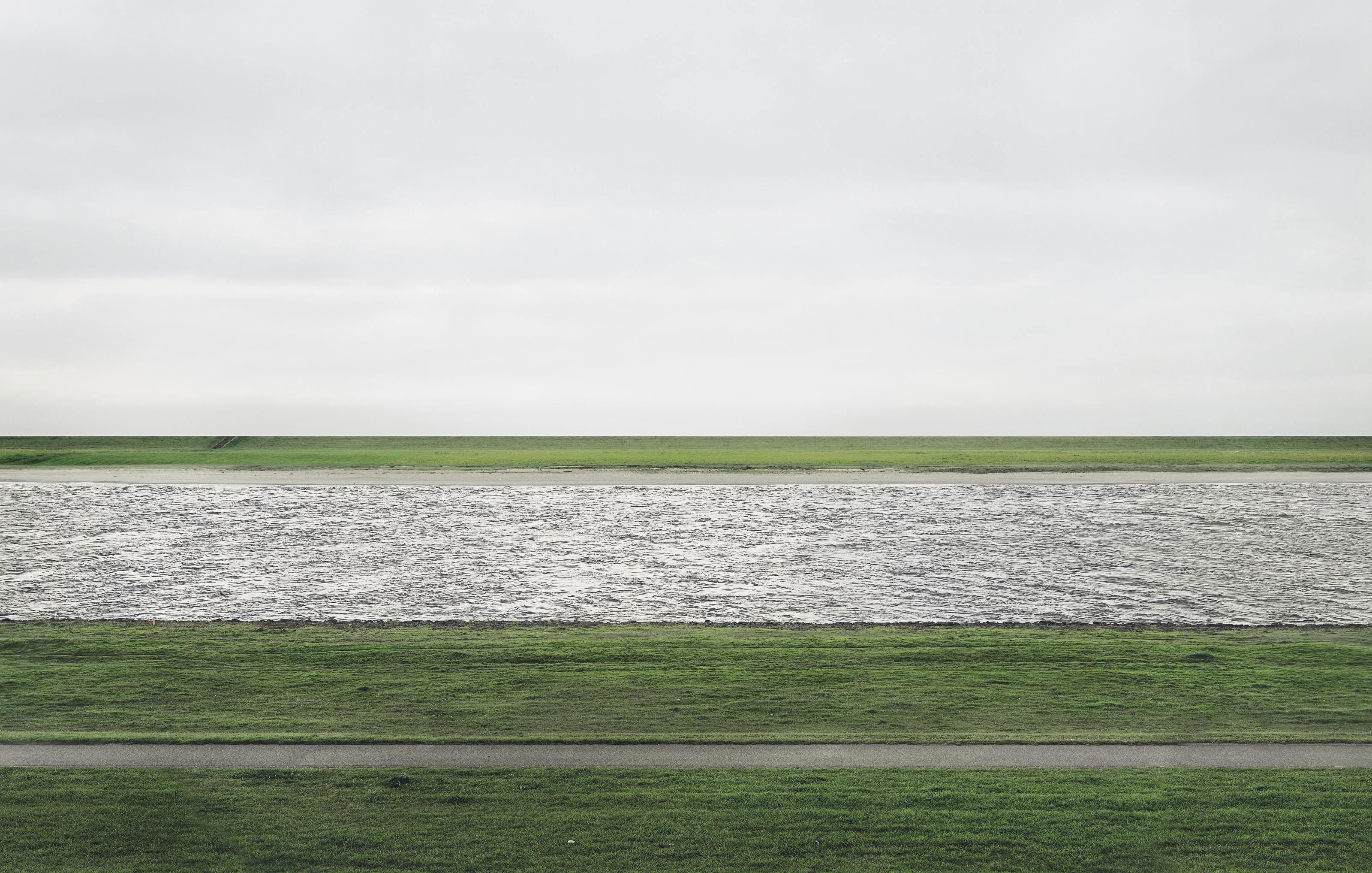
Andreas Gursky, Rhine II, 1999

More than a decade later, I still vividly remember seeing Andreas Gursky’s 1996 photograph Rhine for the first time. I knew Gursky’s work quite well – though it was, and is, always exciting to see them in real life – but I didn’t know this picture and there was just something about it. I still haven’t quite worked out what that something is but I do know that at that first viewing I stood in front of it for about 20 minutes, utterly mesmerised. Subsequent viewings of it and of Rhine II, made three years later and a subtle reworking of the image which has exactly the same hold over me and which is now the most expensive photograph ever sold at auction, having reached a price of $4.3m in November of last year, have been no briefer.


Continue reading

Day-dreaming of sleep

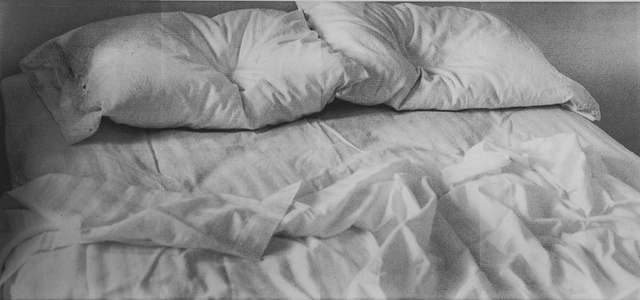
Félix González-Torres, Untitled (Bed), 1991

I love my bed. Most mornings while on my stupidly long commute, I find myself wishing I was still in it. So while I while away my journey day-dreaming of still being curled up under the duvet, here are some other beds both occupied and empty.

The bed in Félix González-Torres’s photograph is, in a way, simulataneously occupied and empty. The bed looks newly vacated – ready to welcome its occupants back before they have to face the day – but the picture is a memorial to the artist’s partner, Ross Laycock, after his death from AIDS. The crumpled sheet and pillows still bearing the indentations of the heads of those who slept there are both the trace of its occupants and reminder of the bed’s emptiness.The whiteness of the picture gives it a delicate beauty.

Continue reading

Machines for living

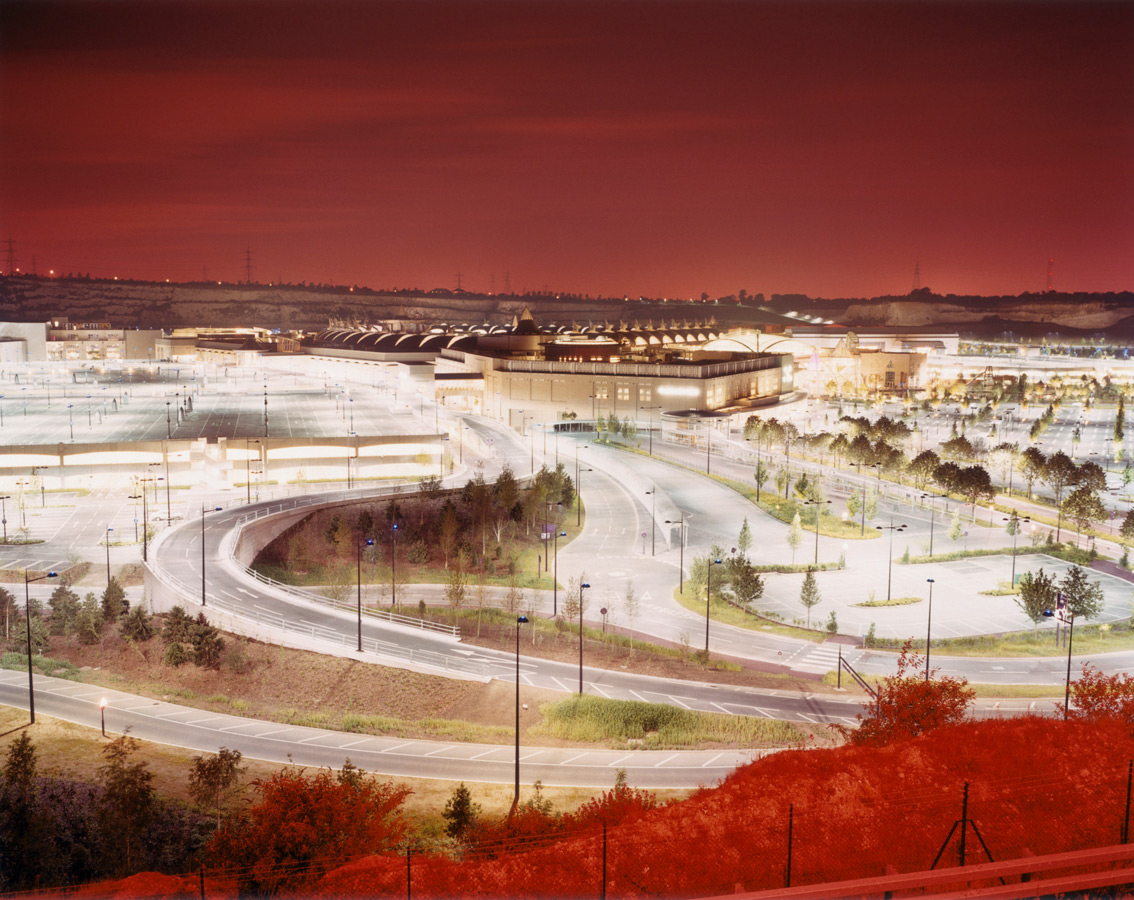
Dan Holdsworth, Untitled (A Machine for Living), 1999

In Dan Holdsworth’s long-exposure photographs the landscape – and the structures built within it – takes on a strange other-worldly quality. This comes in the main from the effect of artificial light, which pollutes the scene giving a strange, toxic glow. Bluewater shopping centre, recorded at night in the bright glow of its own streetlights, seems far removed from the consumerist mecca we might expect.

Continue reading

Fading away

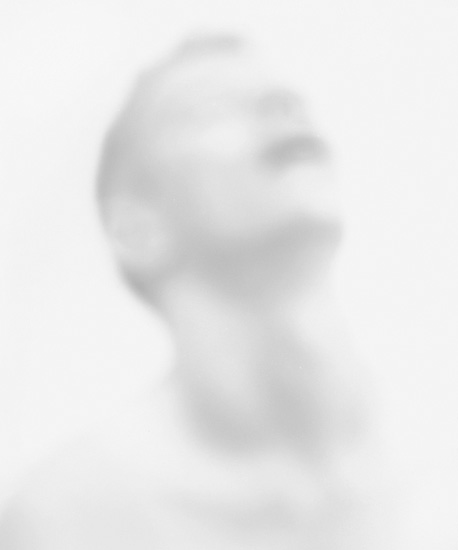
Bill Jacobson, Interim Portrait #378, 1992

Like all media, photography has its conventions and focus is one of the most firmly entrenched of these. Photographs are mean to be in focus. They’re meant to be sharp. It’s in the rules. But then, as any fool knows, rules are meant to be broken.

Bill Jacobson, then, is a serial breaker of rules.

Continue reading