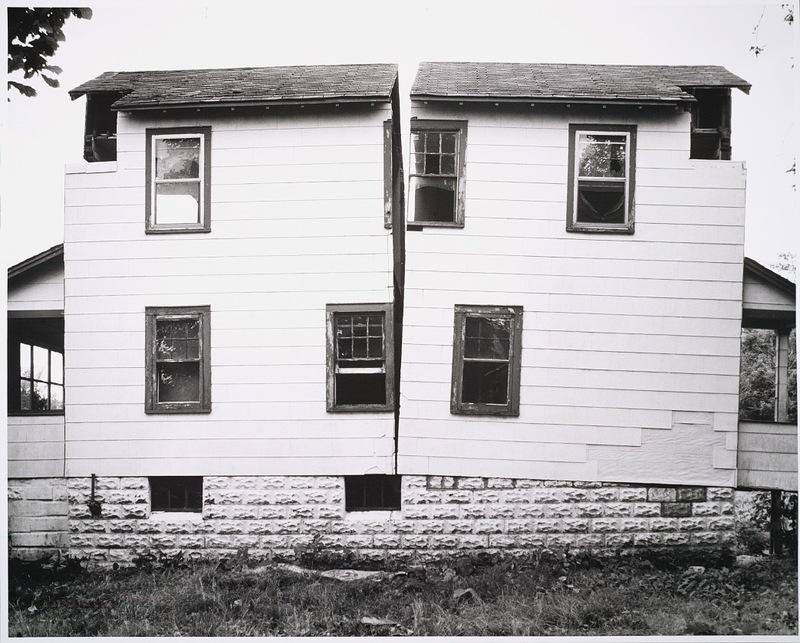
Dividing the space

Gordon Matta-Clark, Splitting, 1974

One of my main preoccupations over the last couple of weeks while preparing for the end of year exhibition is how to divide up the space. Obviously for me this involves figuring out where the walls should go and what should go where to make the exhibition make as much sense as possible. But, you know, a bit of literal mindedness and it’s only a small leap from how to divide the studio to Gordon Matta-Clark and the chainsaw and sledgehammer approach to redefining architectural space.

The 1970s may have a lot to answer for in all sorts of ways, but some pretty ground-breaking – or in Matta-Clark’s case building-breaking – art was made then and it’s work that still resonates and that continues to influence subsequent generations of artists.

Continue reading

Everyday art

Jeremy Deller, Open Bedroom, 1993 (reconstruction)

Like David Shrigley, Jeremy Deller is an artist whose work doesnt always fit easily into the gallery space. Unlike Shrigley though, when his work is brought together as an exhibiton it exceeds expectations. Joy in People at the Hayward Gallery is a show that is much more than the sum of its parts. And there are some pretty great parts.

In 1993, while others were holding open studios, Deller staged Open Bedroom, his first exhibition, in his parents’ house while they were on holiday. The work, his teenage bedroom presented as art, is reconstructed here as the route into both the show and the head of the artist. We get to open drawers and cupboards and explore the ideas, images and objects that fascinated the young Deller. It’s a great start and a useful grounding for a show that picks up these enthusiasms and makes them art.

Continue reading

Mutton dressed as lamb

Cindy Sherman, Untitled 359, 2000Cindy Sherman, Untitled #359, 2000

Cindy Sherman started making her Untitled Film Stills thirty-five years ago. I suppose it’s part of the nature of that project that though the images are now very familiar and though others have moved into Sherman’s territory in the meanwhile, her images don’t seem dated. In mimicking different film genres, Sherman created a body of work that has a certain level of timelessness built in. Nonetheless, thirty-five years is a long time and the Cindy Sherman who appears in the pictures in the on-going Untitled series over the past decade or so is very different from the young woman who appeared in the Untitled Film Stills. Sherman is now middle aged and the work she’s made in recent years reflects this; she is a woman of a certain age.

Continue reading

Gathering, listing and smashing

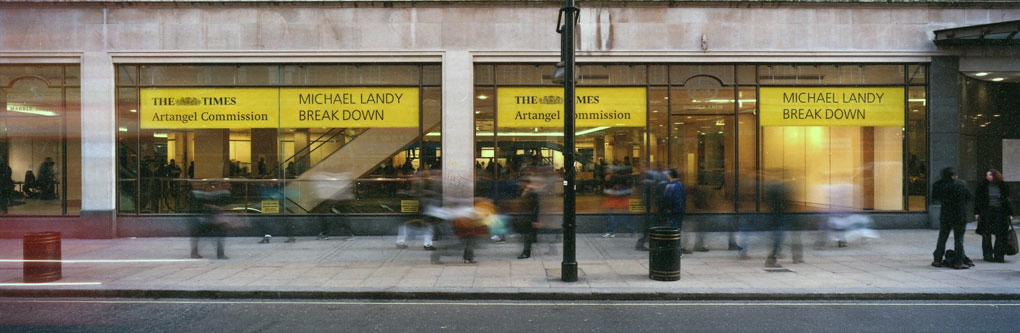
Michael Landy, Break Down, 2001

If I’m honest, I’m a bit of a hoarder. I know I really need to start throwing things out, but somehow I don’t get round to it. And being an artist gives me an extra excuse, or so I tell myself. I have all kinds of junk squirreled away as stuff I might sometime use to make work. Yeah, right. But however much I know I need a clear out and however much I like art that is driven by obsession – a lot, on both counts – I know I could never have made Break Down. The extremity of Michael Landy’s project fascinates and terrifies me in equal measure.

Continue reading

Artful eating

Janine Antoni, Gnaw, 1992

What better time than Easter Sunday to be thinking about chocolate. Lots of chocolate. And having posted about artists working with their own body the last couple of days, today I’m all about an artist who uses her body not as the source of the image but as the tool to make the work. In Gnaw, Janine Antoni gnawed away at a 600lb block of chocolate and another of lard, using the blocks as two parts of a three part installation. The work is a strange one. On the one hand chocolate is delicious, but lard?! Okay, so I’m a vegetarian, a block of lard is never going to be something I enjoy being faced with in a gallery or anywhere else, but I think disgust is a pretty universal response.

Continue reading

The art of advertising / the advertising of art

Chris Burden, Promo, 1976

For Chris Burden, best known at the time for difficult and dangerous performances such as Shoot (1971), television offered an appealing platform. His initial proposals for performance works having been turned down, his first television appearance was a 1972 interview that he – literally – hijacked to pursue his own agenda, turning the interview into a performance called TV Hijack. It’s not this that I want to write about though, mostly because I find the idea quite hard to contemplate but also because I find his subsequent strategy of buying advertising time rather more interesting.

Art isn’t usually advertised on television – the Damien Hirst retrospective at Tate Modern notwithstanding – and the idea of an artist working with the format of a 10 second advert is an intriguing one.

Continue reading

A stitch in time

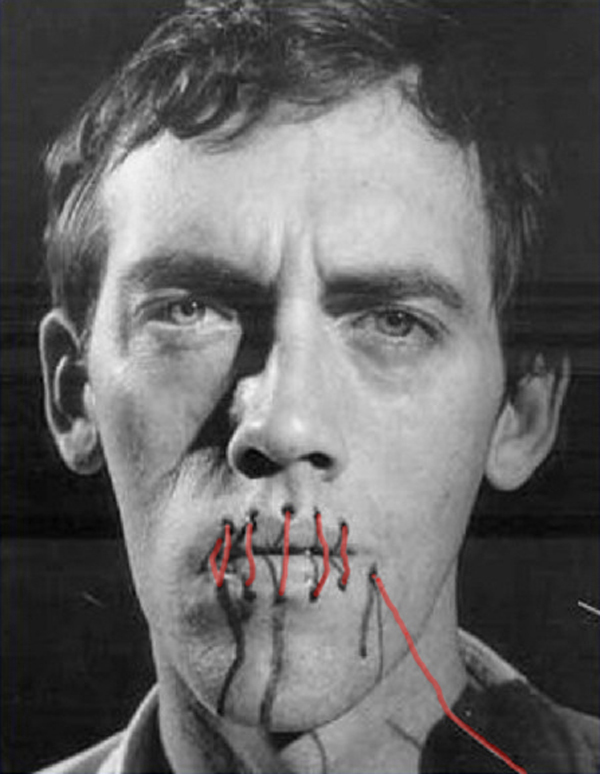
David Wojnarowicz, image from A Fire in My Belly, 1989

David Wojnarowicz is one of those artists. I find his work really interesting and immensely powerful but I haven’t seen very much of it in real life. One day I hope to get the chance to rectify that but in the meanwhile I’ll carry on looking at his work in reproduction. I like his approach to putting images – and often text – together in collages, prints and paintings but it’s his film work that interests me most, in part because it’s here that everything comes together.

And in terms of this blog and the way I let my attention move from one artist to the next by following the most literal of connections – I’m all about the unashamedly clunky segue after all – the use of read thread in his film A Fire in My Belly is more than a little convenient.

Continue reading

Repeat cycle

Sofia Hultén, Fuck It Up and Start Again, 2001 (one guitar smashed and mended 7 times

The idea of auto-destructive art may to a very large extent be of its time, something that fitted with other forms of protest – particularly the anti-nuclear movement – of the late 1950s and the 1960s, but its influences continue to be felt. And, of course, the idea of smashing guitars has long since gone from shocking indication of the state of young people and their music to rock cliché.

Continue reading

New York stories: pictures of Gotham

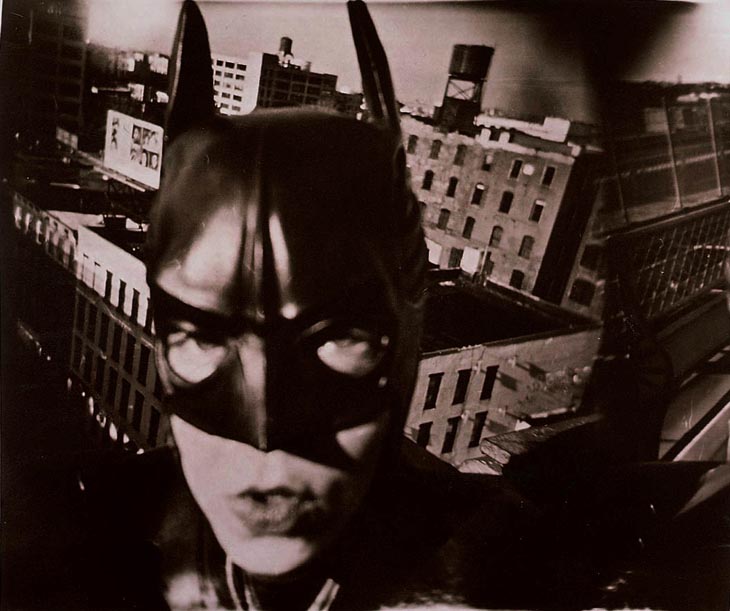
Katia Liebmann, Gotham City, 1997

One of the aspects I enjoy the most when visiting New York is the city’s familiarity from film and television. No matter how often I visit – not often enough and never for long enough – the connection with the movies won’t ever completely fade. New York has played itself and pretended to be other, often imaginary, places. It’s great backdrop after all. Katia Liebmann’s 1997 series Gotham City uses New York as a backdrop to a series of masked self-portraits.

Continue reading