Projections of power

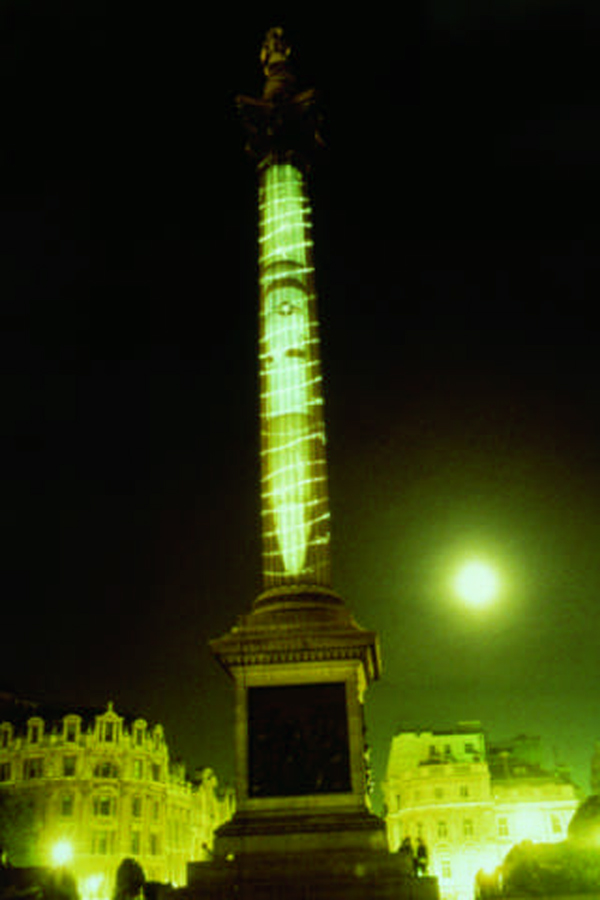
Krzysztof Wodiczko, City Projections – Nelson’s Column, 1985

Commissioned to make a projection onto Nelson’s Column in Trafalgar Sqaure for two nights in 1985, Krzysztof Wodiczko focused on the military aspects of the square and decided to project an image of a missile wrapped in barbed wire. But while in London for the event, Wodiczko realised that the square, as home of South Africa House, also played host to a longterm protest against the apartheid regime still very much in charge of South Africa and supported by then British Prime Minister, Margaret Thatcher.

Redirecting his projector, Wodiczko changed the image…

Continue reading

The whole story

Fiona Banner, Apocalypse Now, 1997

Stories can be told in many different ways, words on the page and images on a cinema screen being two of the most common. It’s when the means of story-telling becomes words on a cinema screen that things start to get confusing. I’m not sure how easy it’d be to try to follow the story of Apocalypse Now from Banner’s piece of the same name, but the narrative is all there. It’s just that it’s there as a hand-written text on a page the size and shape of a cinema screen. And only yesterday there I was claiming Sean Landers choice of line length seemed excessive!

Continue reading

Fragments and feathers

Alan Rath, Yes, Yes, Yes!, 2012

Spending a week in New York is a great way to see a lot of art. There’s all the stuff you expect to see of course – great exhibitions at MoMA, the Met, the Guggenheim etc – and there are the big name commercial galleries that are always worth a visit and then there are the galleries you just wander into because something catches your eye. By the end of this visit, I felt – as usual, I suppose – that there was so much I’d wanted to see but hadn’t managed to get to. I could happily spend a week wandering round Chelsea and probably the same again elsewhere.

Aware of how little I’d seen I snuck a last quick visit to Chelsea into my final morning, in the main wandeing at random, and just as I really needed to start thinking about getting back to the hostel – oh, this glamorous life! – I spotted Alan Rath’s work in Bryce Wolkowitz and had to take a look.

Continue reading

Like a sex machine

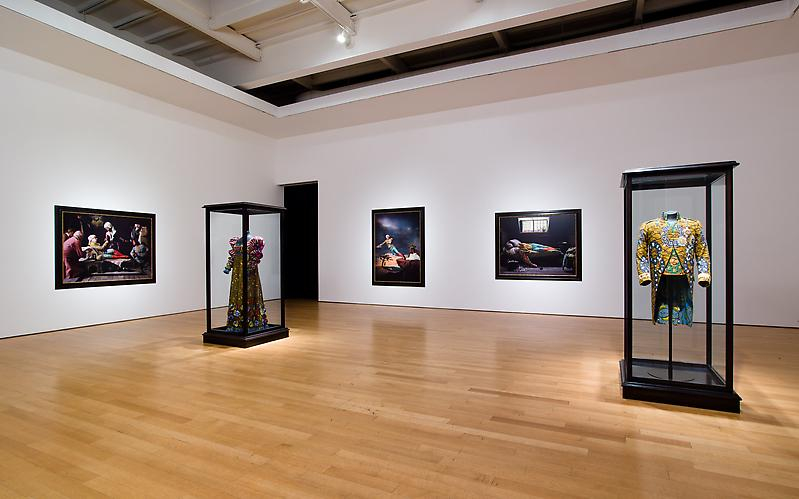
Yinka Shonibare MBE, Addio del Passato at James Cohan Gallery

The key characteristic of Yinka Shonibare’s work is his use of Dutch wax fabric. Based on Indonesian batik fabrics but manufactured in Europe by the Dutch, who then exported it to West Africa when it failed to catch on in the Netherlands, and bought by Shonibare from Brixton market in London, the fabric has connotations of colonialism, post-colonialism and the movement of cultures thereby engendered and of the multi-culturalism of contemporary London. Thus it neatly connects the different aspects Shonibare’s own background as a British-born, Nigerian-raised Londoner and has allowed him to build a practice that is simultaneously coherent and diverse and both serious and playful. These complexities and contradictions are reinforced by Shonibare’s adoption of the letters MBE after his name when he was given the honour in 2005: an artist whose work could be seen as commenting on empire accepted and uses an honour that makes him a Member of the Most Excellent Order of the British Empire.

It’s not surprising then the work in Shonibare’s exhibition Addio del Passato at James Cohan Gallery is by turns beautiful and fascinating and very, very funny. Equally unsurprising perhaps is that the work I especially want to write about is all of these things. And also really rather rude…

Continue reading

Laughter and pain

Adel Abdessemed, Mémoire (still), 2012

I should have known from the start that there would be more to Adel Abdessemed’s Mémoire than was apparent at first glance. After all, his work is never quite as it seems and there is almost always a degree of violence and pain somewhere in the work. But watching Mémoire, my first response was laughter. This was a baboon spelling words out on an magnetic whiteboard. Maybe if I watched long enough it would start writing Shakespeare. Isn’t that what monkeys are meant to do given time?

Continue reading

Are you sitting comfortably?

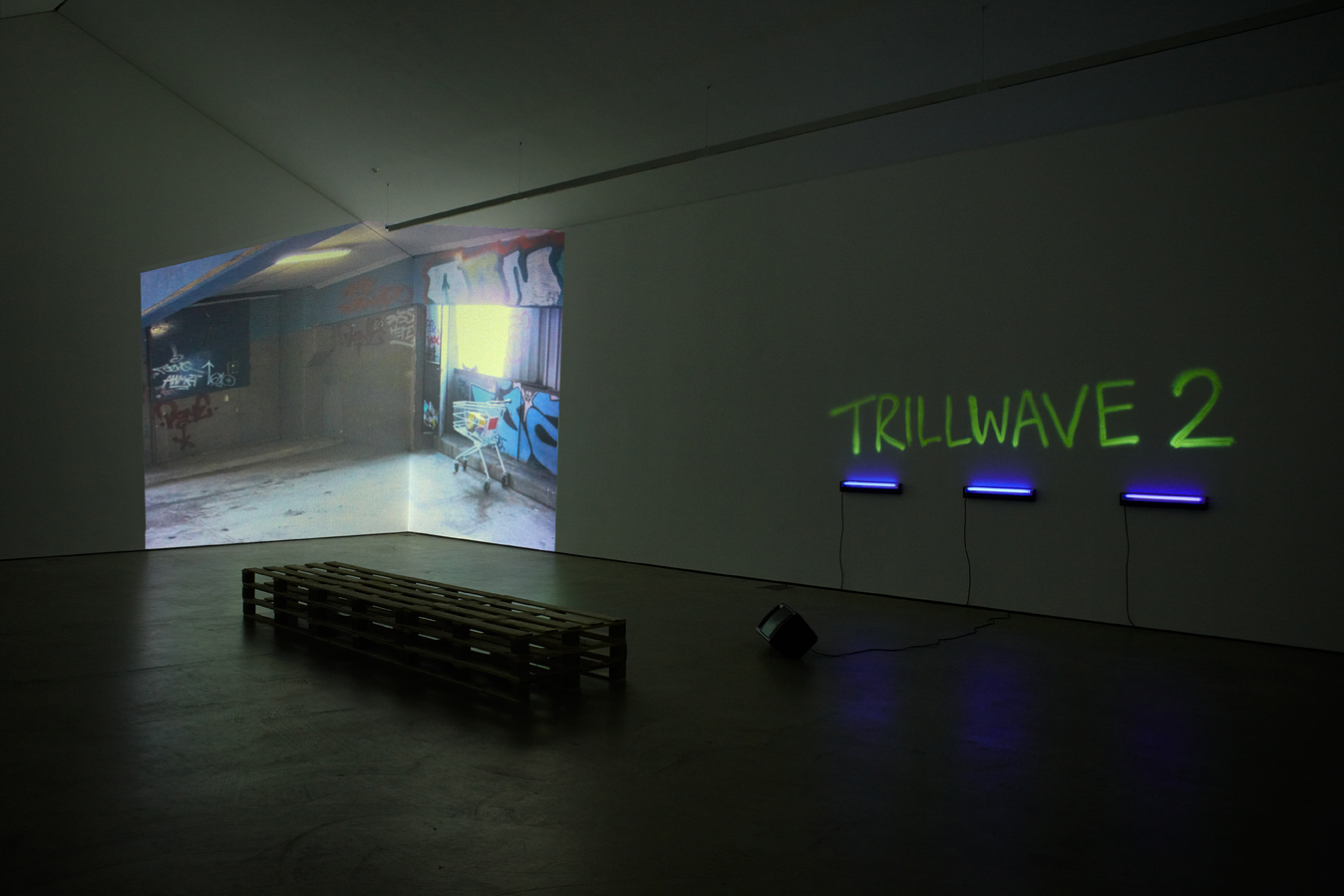
Ilja Karilampi, installation view at Wilkinson Gallery

I’ve been preoccupied with seating recently and in particular with the way film and video is shown in gallery spaces. It turns out that my attention span is much reduced if I’m not sitting comfortably. (Well, durr.) A particular low is the woefully inadequate seating at the ICA for the Lis Rhodes: Dissonance and Disturbance exhibition. When I came to write about that exhibition for MostlyFilm, all I could think about was how uncomfortable I’d been. So visiting galleries in east London yesterday it was pleasing to come across a couple of more interesting approaches.

Continue reading

Seeing is believing

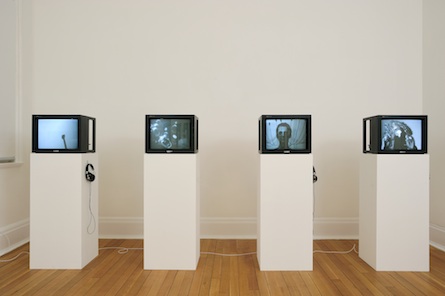
Tony_morgan_5Tony Morgan: Some films (and videos) – 1969-1973, at Thomas Dane Gallery

One of the things I know about Thomas Dane Gallery – apart from stuff like where it is and that I’ve seen some great shows there – is that it closes at 4pm on a Saturday. I know this because I am disorganised and find 4pm a bit too early. On my way in to town last weekend I double-checked the website just in case and noticed that the gallery was open until 6pm which made it possible to both have a late lunch and get to the Tony Morgan show. This was cheering news.

Continue reading

In the kitchen with Martha

Martha Rosler, Semiotics of the Kitchen, 1975 (video still)

They took things very seriously in the 1970s. Well, some things anyway. And two of those things were video art and feminism. In art terms, there was the whole postmodern emphasis on parody and pastiche going on. With video, though artists might have enjoyed the playfulness of exploring a new medium and freeing performance art from the one-off event, the resulting work was often somewhat po-faced. And of course, challenging the longstanding notion that a woman’s place was in the home, where she should be chained to the kitchen sink, metaphorically at least, wasn’t to be taken lightly.

Continue reading

The art of the fall

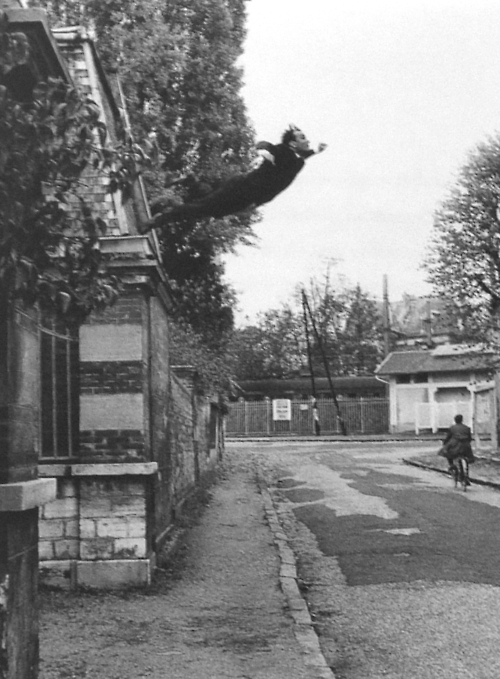
Yves Klein, Leap into the Void, 1960

Is art really as easy as falling off a log ledge (roof, canalside, whatever)? The evidence is plentiful.

In Leap into the Void, Klein certainly makes it look easy, no matter how much our common sense tells us all is not as it seems. Though I love the mix of an earnest look and a preposterous act in Yves Klein’s photograph, his is not the fall that makes me smile the most.

Continue reading

The process of play

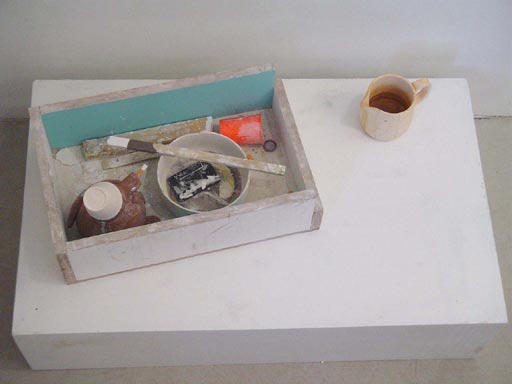
Peter Fischli and David Weiss, In the studio

With term starting tomorrow, my thoughts turn to the work my students will be making over the next few weeks in the studio and in particular to seeing them explore a range of different processes (exploring different approaches to making art, putting materials through a number of different processes – be they physical, chemical or whatever – for instance, or making work that involves following a particular conceptual process etc). To help things along, colleagues and I will show them some art and introduce them to some processes, materials and possible ways of working. Which means that this week my preoccupation will definitely be process…

Continue reading