Unknown's avatar

About Ann Jones

London-based artist and educator who somehow seldom gets time to actually make any work, who writes about art, somewhat irregularly, at ImageObjectText.com and occasionally contributes to MostlyFilm.com – writing about art, mostly.

In the spotlight

Lygia Pape, Tteia 1, B (prata-lunar), 2000/12 at Frieze Masters

Lygia Pape, Ttéia 1, B (prata-lunar), 2000/12

I’ve written about Lygia Pape’s web installations here before, I know, but having seen her exhibition at the Serpentine Gallery last spring seeing Ttéia 1 again – albeit a slightly different, silvery, version – in the Galeria Graça Brandão space of Spotlight at Frieze Masters was a welcome chance to interact with the work in a rather different way.

Here too, the light catches the thread and makes it sparkle and standing in front of what seem to have become criss-crossing beams of light carries the same sense of enchantment. But whereas in the Serpentine Gallery the work was effectively put on a pedestal (albeit in the form of a slightly raised floor), as something to wonder at rather than interact with, here it simply criss-crosses a corner of an art fair stall.
Continue reading

Learned behaviour

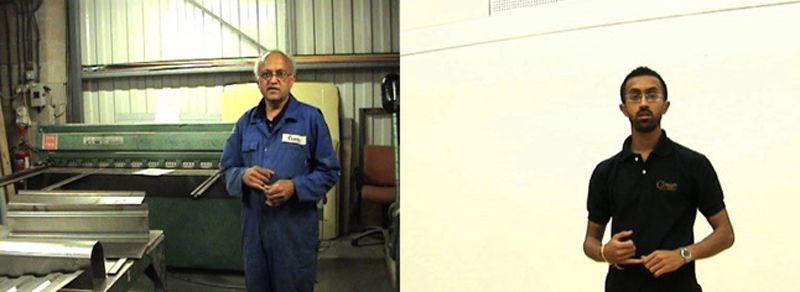
Hetain Patel, Dance Like Your Dad, 2009

Hetain Patel, To Dance Like Your Dad, 2009

At some point, all children copy adults. Admittedly, this doesn’t usually take the form of restaging a parent talking about their work, but that’s the basis of Hetain Patel’s To Dance Like Your Dad, a simple but effective video work shown at Frieze by Chatterjee and Lal. Shown on two screens, the work consists of Patel’s father showing us round his place of work and explaining what happens. Patel himself appears on the right hand screen, performing his father’s role in sync with the original. The parent and child relationship is seldom simple and while we may be fiercely proud of our parents they also have the capacity to embarrass. Here there is a sense of pride and respect in the act of restaging – and in filming Patel senior at work in the first place – but the notion of potential embarrassment is right there in the title. Dad dancing is generally not a good thing, after all.

Continue reading

On hand

Gillian Wearing, My Hand, 2012 (mixed media)

Gillian Wearing, My Hand, 2012

Thinking back at work seen over the past few months obviously brings Frieze Art Fair back to mind and thinking about Paul Noble’s work in the Turner Prize 2012 exhibition has made me think about sculpture by someone who I mainly associate with two dimensional work, all of which brings me to Gillian Wearing. I’ve written about Wearing a couple of times on this blog (about her work with the confessions of others and the works for which she becomes other people) but I haven’t mentioned her sculpture, in the main because I find it less interesting, I think. Nonetheless, My Hand, shown at Frieze by Maureen Paley, has stayed in my thoughts for some reason and I now find myself wondering why I find this piece engaging.

Continue reading

A world fit for turds

Paul Noble Pauls Palace 1996

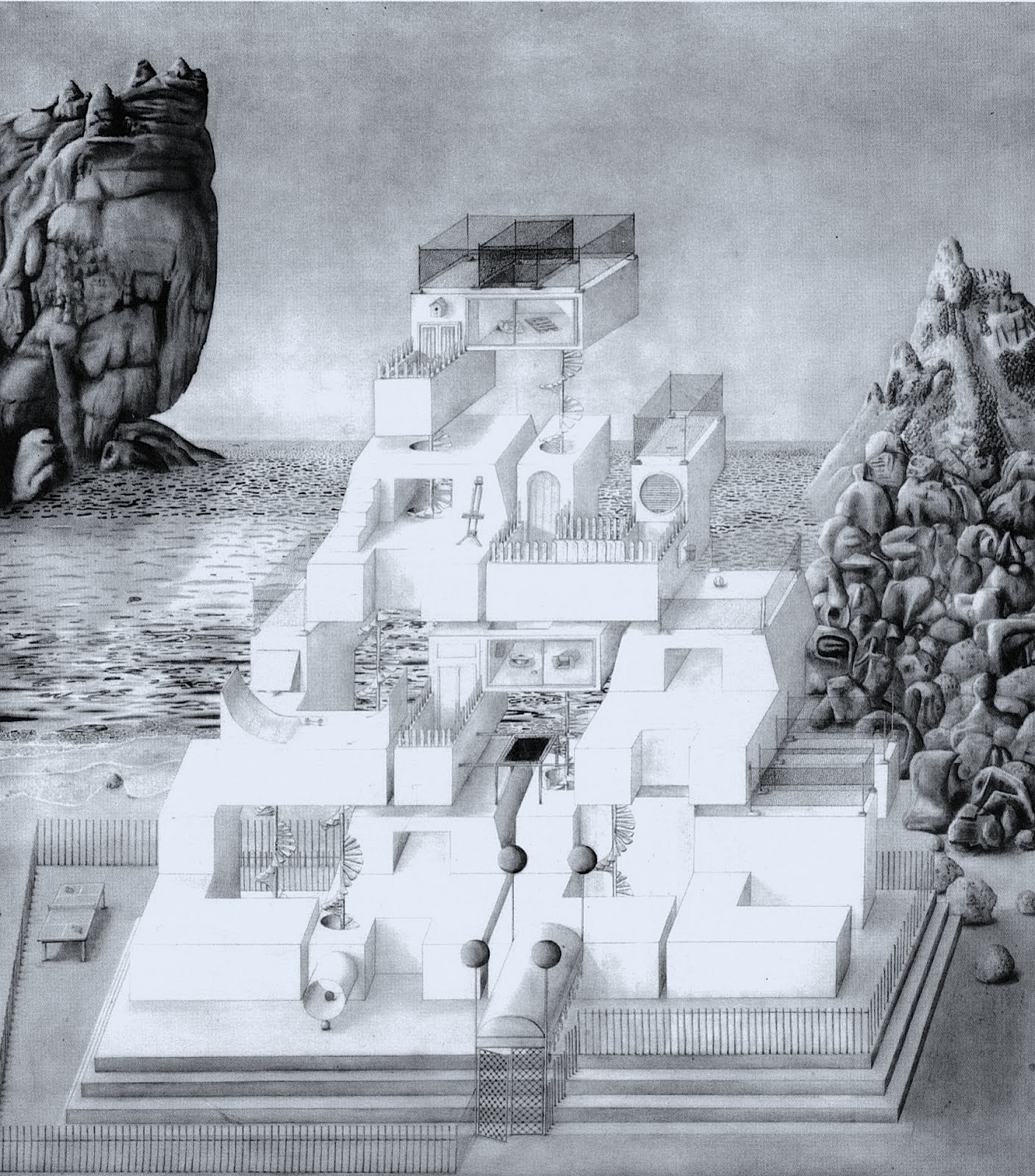
Paul Noble, Paul’s Palace, 1996

When the Turner Prize shortlist is announced I generally have an opinion about who I want to win. When the actual Turner Prize exhibition opens, even before I get to see the show myself, that opinion often changes based on snippets seen on the news or reviews in the paper. And of course when I finally get round to seeing the show, more often than not my opinion shifts yet again. By then there are often two names in my head: the artist I want to win and the one I think will take the prize.

In a way, from the safe distance of not having seen the exhibition yet, I really wanted Paul Noble to win the 2012 Turner Prize, not for the work on show at Tate Britain but for the preposterous totality of the Nobson Newtown project: two decades, give or take a bit, of incredibly detailed drawings of an often dystopian world populated by strange turd-like creatures (as a description that does somewhat beg the question of quite what a utopia for turds would look like but this isn’t something I plan to consider further, or certainly not here).

Continue reading

Taking stock: The Perfect Place to Grow at the Royal College of Art

The Perfect Place to Grow - RCA - 2012 view1

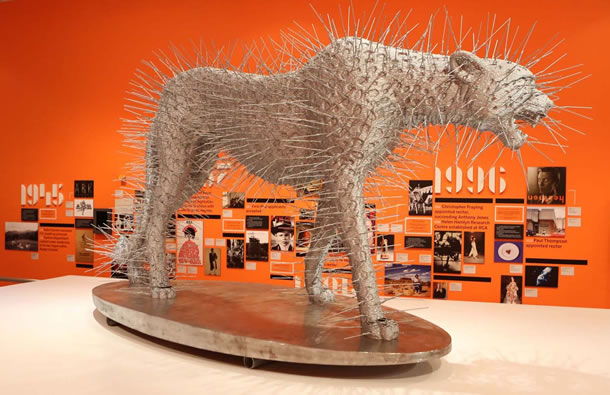
David Mach, Spike, 2011

How time flies! When I was a student at the Royal College of Art it celebrated its centenary. That the college is now celebrating its 175th anniversary either means that I am a lot older than I thought or that the powers that be at the RCA can’t count. Or that they really like big birthdays. As it turns out, it’s this last option that sees the college celebrating 175 years as an art school a mere sixteen years after celebrating its centenary: the then Government School of Design was founded in 1837, becoming the National Art Training School in 1863 and the Royal College of Art in 1896.

The exhibition charts the history of what is apparently the world’s oldest art and design school in continuous operation and it’s an illustrious and fascinating history. Given the pool of alumni (and staff, past and present) from which the curators could select work, there were always going to be surprises both in terms of inclusions and omissions but this is a show that amply demonstrates the impact of RCA alumni on our cultural and day to day lives.

Continue reading

Closing the gaps

Elizabeth Price, The Woolworths Choir of 1979, 2012

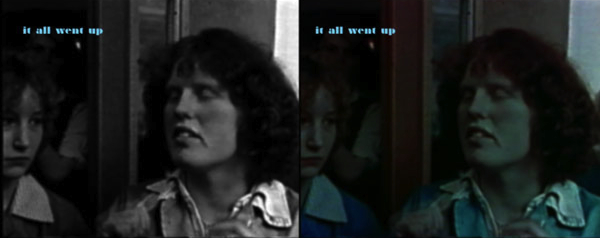
Elizabeth Price, The Woolworths Choir of 1979 (still), 2012

With the end of the year rapidly approaching and with the start of the academic year having provide rather too hectic for me to manage regular blogging as well, now seems like a good time to close some of the gaps by looking back at some of the art I’ve seen but not written about this in 2012. And where better to start than with the Turner Prize – which in fact I have already written about but for MostlyFilm rather than here – and with the work I correctly predicted would win. Of the work in the Turner Prize exhibition, other than Paul Noble’s Nobson drawings which I’ve seen from time to time over the years that he’s been making them, it was Elizabeth Price’s The Woolworths Choir of 1979 and that I was most familiar with having seen it quite by accident at MOT International earlier in the year. That encounter was an intriguing one; I’d headed to Bond Street to see, I think, Nancy Holt or maybe Jamie Shovlin at Haunch of Venison and had a enough time to spare to pop in to MOT without having checked what was on there.

Continue reading

Party pieces

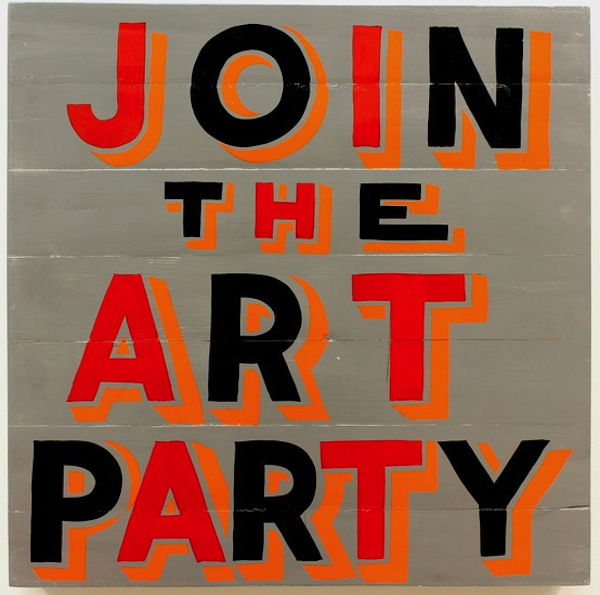
Bob and Roberta Smith, Join the Art Party, 2012

Bob and Roberta Smith knows how to make a point. In the exhibition The Art Party USA Comes to the UK at Hales Gallery at the moment (okay, not for much longer but there’s still a chance to catch the show if you’re quick), he’s in full-on soap box mode – he’s even made his own soap boxes for the occasion – in a bid to entice us to join the Art Party of the USA. The starting point for the Art Party was Bob and Roberta Smith’s May 2011 letter to Michael Gove, which he published to encourage others to write in to emphasise the importance of art in the school curriculum. Not a political party in any traditional sense, according to the website in order to join one simply needs to “make some art and encourage others to do so!”

Continue reading

Small sculptural conundrums

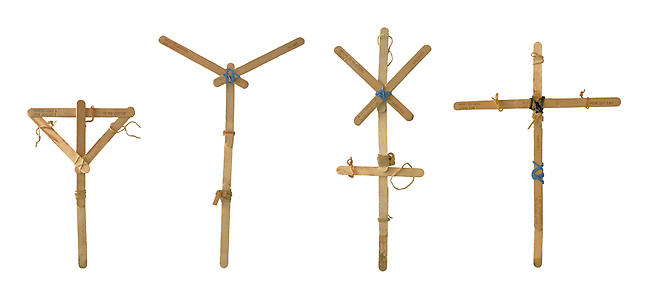
Marcus Coates, Crucifixes for Various Amphibians, 2000

It was flicking though a book at the Grizedale Arts installation at Frieze Art Fair that alerted me to the existence of Marcus Coates’s Crucifixes for Various Amphibians, a simple but intriguing work made of lolly sticks, elastic bands and paper clips. At a time of year when I often get students to make work from a limited range of basic materials – with lolly sticks a popular choice – this was a real find. I’m always happy to come across work that backs up my assertion that art can be made of anything but what makes this work especially pleasing is quite how much Coates has managed to say with a couple of dozen lolly sticks and a few elastic bands and paper clips.

Continue reading

Fairground attractions

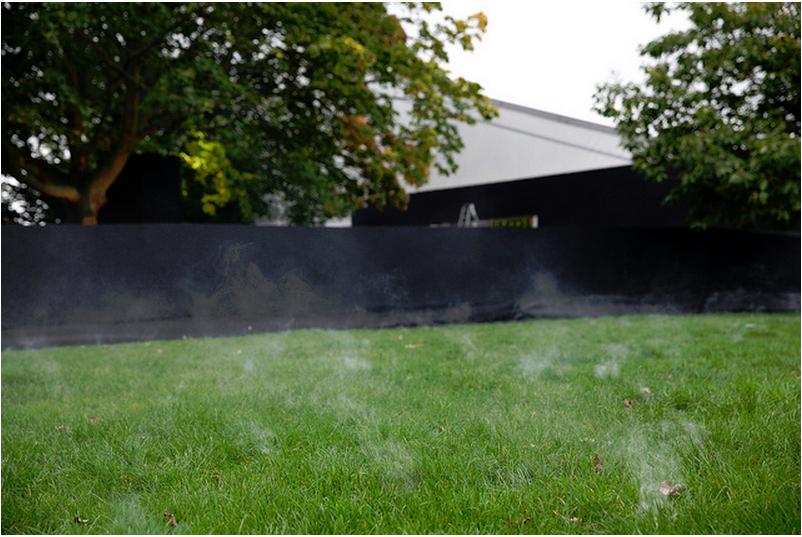
Joanna Rajkowska, Forcing a Miracle, 2012

One of the things I usually enjoy about Frieze is strength of the commissioned projects; indeed Pierre Huyghe’s Recollection remains my strongest – um, sorry – recollection of last year’s fair. So what of Frieze 2012?

Well, sadly the first of this year’s Frieze Projects was somewhat lost on me. Though I like the idea of Joanna Rajkowska’s Forcing a Miracle – transforming an area of the park into a gently smoking field of incense – my engagement with the piece was reduced to, well, pretty much zero really by having a cold and not being able to smell anything. Incense in the open air is never going to have the intensity it achieves in a confined space, but even so under other circumstances this might have made rather more of an impact on me.

Maybe things would pick up once I got inside…

Continue reading

Mastering the art of old and new

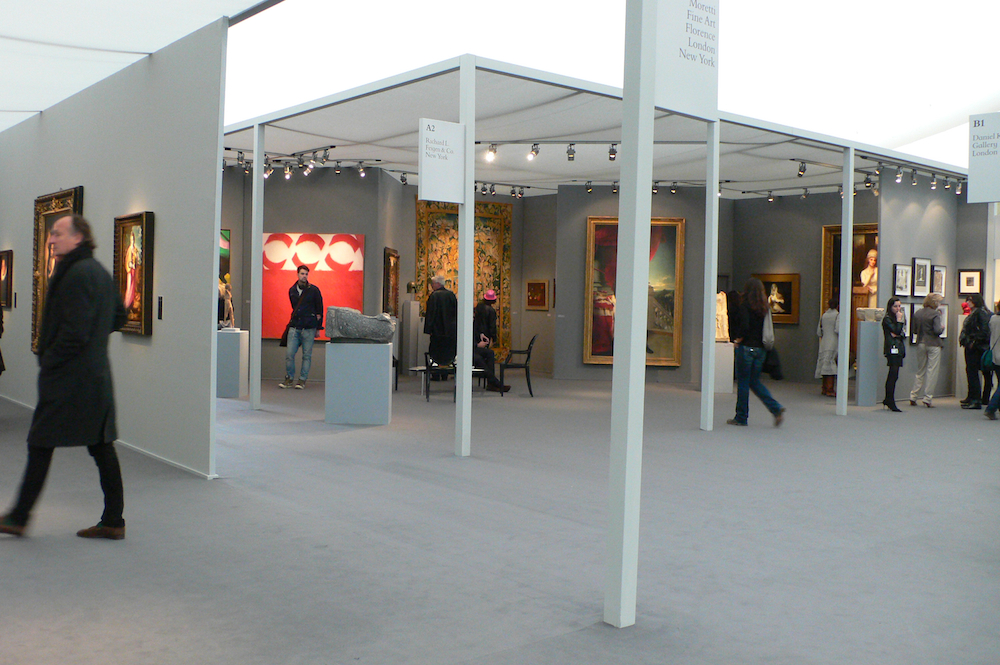
Frieze Masters, Regent's Park, London

Frieze Masters 2012

Frieze Art Fair has always been about the new. It’s a space for contemporary work and though there have always been slightly older works on show it’s never been a space for the truly old. But then it’s rare to see contemporary art along side antiquities or old masters. It’s not that commonplace to see recent works sharing a space with art made even a century ago. There are all sorts of reasons why but nothing that amounts to a hard and fast rule and anyway rules are made to be broken*, right?

So, in parallel with the tenth Frieze Art Fair in another tent at the other end of Regent’s Park, this year saw the first of what I’m guessing I’m not alone in hoping becomes a regular feature: Frieze Masters. A showcase for art made before the year 2000, Frieze Masters saw a gathering of around ninety to a hundred galleries showing work from ancient to modern, giving, according to the press release, ‘a unique contemporary perspective on art throughout the ages’.

Continue reading