We interrupt this broadcast…

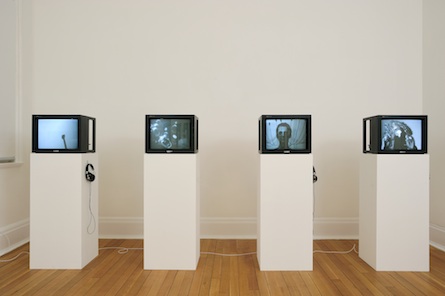
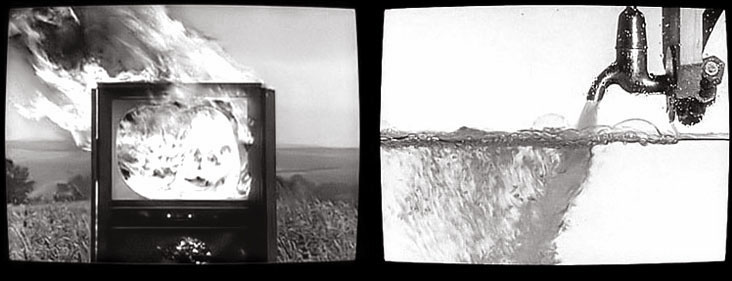
David Hall, Interruption piece and Tap piece from TV Interruptions (7 TV pieces), 1971

Art and television don’t have much of a relationship. There are programmes about art, of course, but even though video art is pretty common in galleries, there’s not much actual art on TV. To an extent, it was ever thus. But there are some interesting examples, and as the analogue switch-off approaches here in London, it seems like a good time to think about them, especially as the occasion is being marked at Ambika P3 with a timely exhibition of David Hall’s work.

Trained as a sculptor, David Hall turned his attention to experimental film at the start of the 1970s, ultimately becoming a pioneer artists’ film and video in Britain, and coining the phrase time-based media. In 1971, Hall was commissioned to make a series of works to be broadcast on Scottish television. This series of TV interruptions were broadcast unannounced and uncredited to what must have been a somewhat baffled audience.
Continue reading

A stitch in time

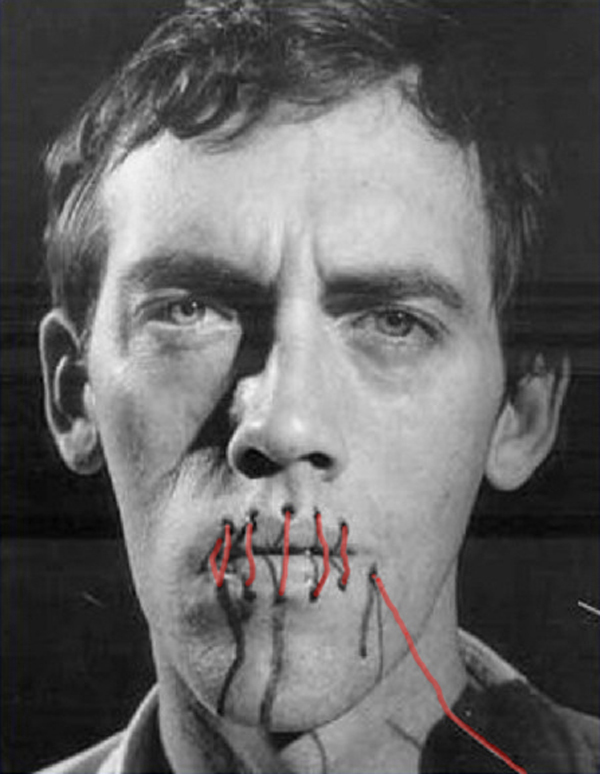
David Wojnarowicz, image from A Fire in My Belly, 1989

David Wojnarowicz is one of those artists. I find his work really interesting and immensely powerful but I haven’t seen very much of it in real life. One day I hope to get the chance to rectify that but in the meanwhile I’ll carry on looking at his work in reproduction. I like his approach to putting images – and often text – together in collages, prints and paintings but it’s his film work that interests me most, in part because it’s here that everything comes together.

And in terms of this blog and the way I let my attention move from one artist to the next by following the most literal of connections – I’m all about the unashamedly clunky segue after all – the use of read thread in his film A Fire in My Belly is more than a little convenient.

Continue reading

Repeat cycle

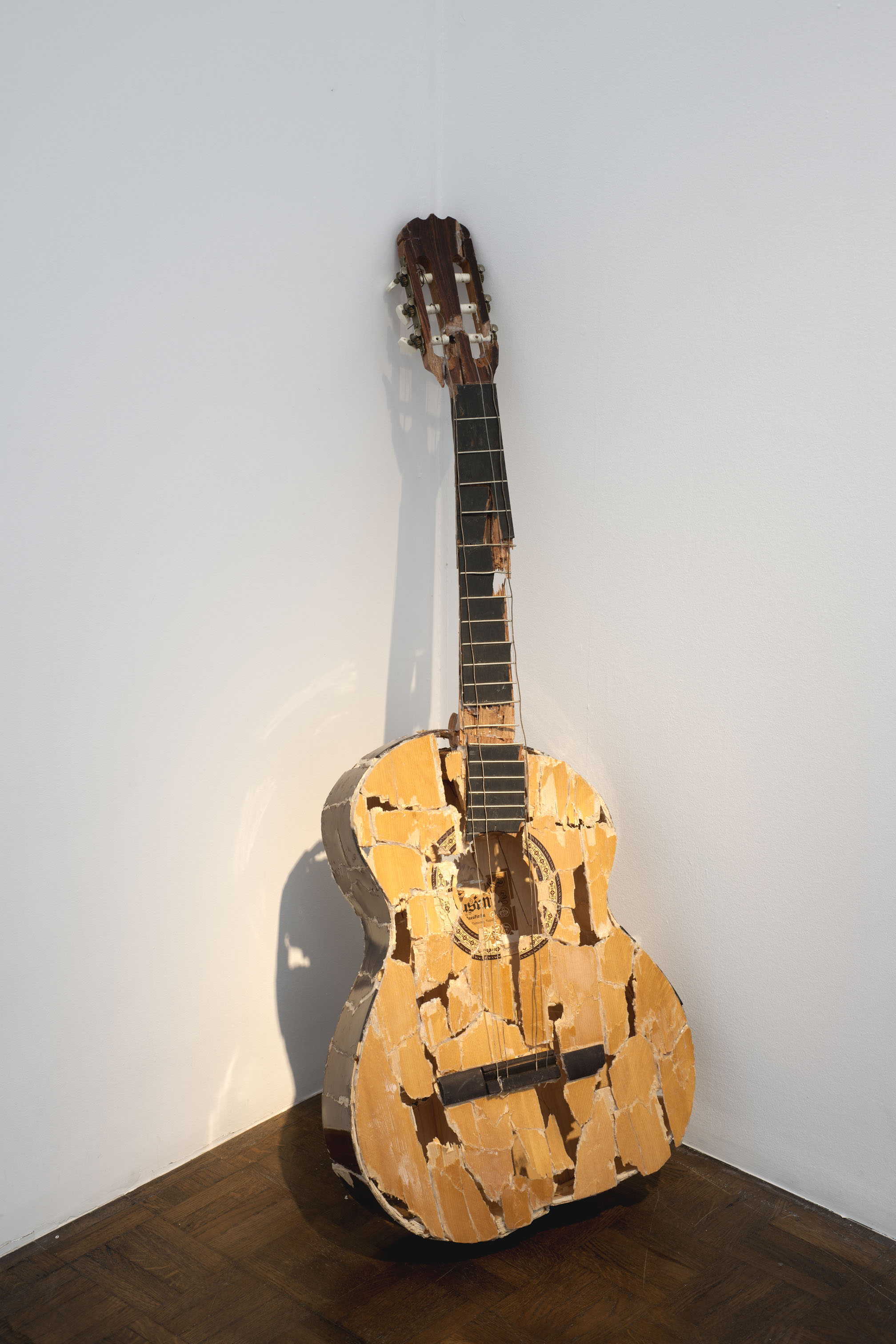
Sofia Hultén, Fuck It Up and Start Again, 2001 (one guitar smashed and mended 7 times

The idea of auto-destructive art may to a very large extent be of its time, something that fitted with other forms of protest – particularly the anti-nuclear movement – of the late 1950s and the 1960s, but its influences continue to be felt. And, of course, the idea of smashing guitars has long since gone from shocking indication of the state of young people and their music to rock cliché.

Continue reading

Projections of power

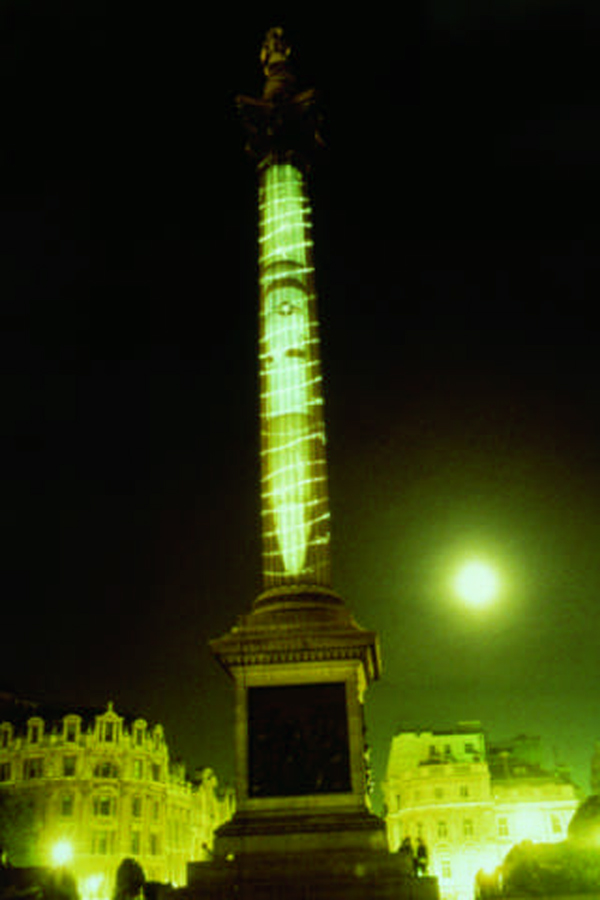
Krzysztof Wodiczko, City Projections – Nelson’s Column, 1985

Commissioned to make a projection onto Nelson’s Column in Trafalgar Sqaure for two nights in 1985, Krzysztof Wodiczko focused on the military aspects of the square and decided to project an image of a missile wrapped in barbed wire. But while in London for the event, Wodiczko realised that the square, as home of South Africa House, also played host to a longterm protest against the apartheid regime still very much in charge of South Africa and supported by then British Prime Minister, Margaret Thatcher.

Redirecting his projector, Wodiczko changed the image…

Continue reading

Laughter and pain

Adel Abdessemed, Mémoire (still), 2012

I should have known from the start that there would be more to Adel Abdessemed’s Mémoire than was apparent at first glance. After all, his work is never quite as it seems and there is almost always a degree of violence and pain somewhere in the work. But watching Mémoire, my first response was laughter. This was a baboon spelling words out on an magnetic whiteboard. Maybe if I watched long enough it would start writing Shakespeare. Isn’t that what monkeys are meant to do given time?

Continue reading

Are you sitting comfortably?

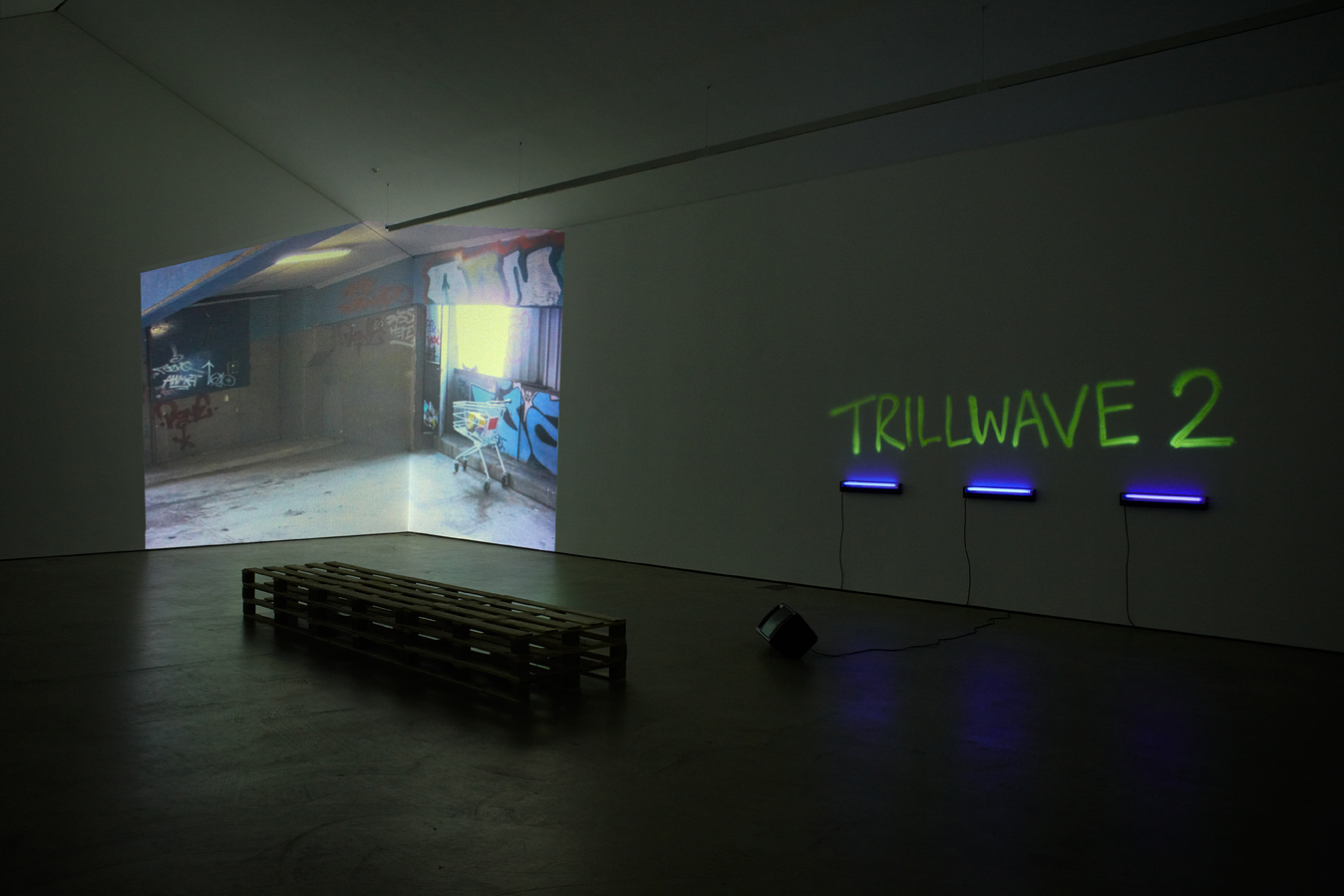
Ilja Karilampi, installation view at Wilkinson Gallery

I’ve been preoccupied with seating recently and in particular with the way film and video is shown in gallery spaces. It turns out that my attention span is much reduced if I’m not sitting comfortably. (Well, durr.) A particular low is the woefully inadequate seating at the ICA for the Lis Rhodes: Dissonance and Disturbance exhibition. When I came to write about that exhibition for MostlyFilm, all I could think about was how uncomfortable I’d been. So visiting galleries in east London yesterday it was pleasing to come across a couple of more interesting approaches.

Continue reading

Seeing is believing

Tony_morgan_5Tony Morgan: Some films (and videos) – 1969-1973, at Thomas Dane Gallery

One of the things I know about Thomas Dane Gallery – apart from stuff like where it is and that I’ve seen some great shows there – is that it closes at 4pm on a Saturday. I know this because I am disorganised and find 4pm a bit too early. On my way in to town last weekend I double-checked the website just in case and noticed that the gallery was open until 6pm which made it possible to both have a late lunch and get to the Tony Morgan show. This was cheering news.

Continue reading

In the kitchen with Martha

Martha Rosler, Semiotics of the Kitchen, 1975 (video still)

They took things very seriously in the 1970s. Well, some things anyway. And two of those things were video art and feminism. In art terms, there was the whole postmodern emphasis on parody and pastiche going on. With video, though artists might have enjoyed the playfulness of exploring a new medium and freeing performance art from the one-off event, the resulting work was often somewhat po-faced. And of course, challenging the longstanding notion that a woman’s place was in the home, where she should be chained to the kitchen sink, metaphorically at least, wasn’t to be taken lightly.

Continue reading

The art of the fall

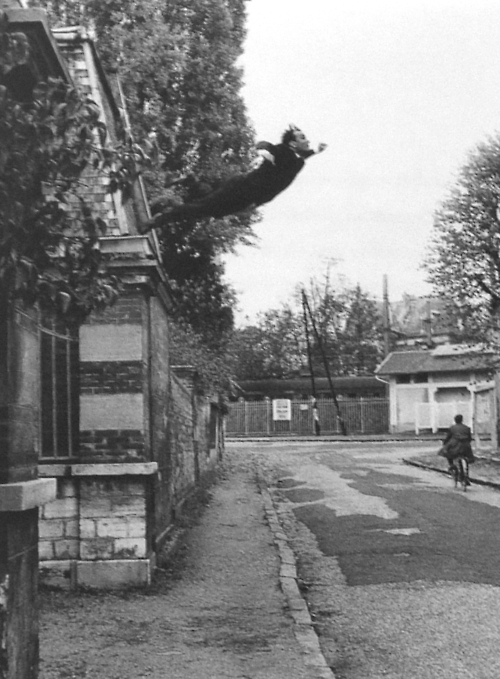
Yves Klein, Leap into the Void, 1960

Is art really as easy as falling off a log ledge (roof, canalside, whatever)? The evidence is plentiful.

In Leap into the Void, Klein certainly makes it look easy, no matter how much our common sense tells us all is not as it seems. Though I love the mix of an earnest look and a preposterous act in Yves Klein’s photograph, his is not the fall that makes me smile the most.

Continue reading

The process of play

Peter Fischli and David Weiss, In the studio

With term starting tomorrow, my thoughts turn to the work my students will be making over the next few weeks in the studio and in particular to seeing them explore a range of different processes (exploring different approaches to making art, putting materials through a number of different processes – be they physical, chemical or whatever – for instance, or making work that involves following a particular conceptual process etc). To help things along, colleagues and I will show them some art and introduce them to some processes, materials and possible ways of working. Which means that this week my preoccupation will definitely be process…

Continue reading