New York stories: walking the line

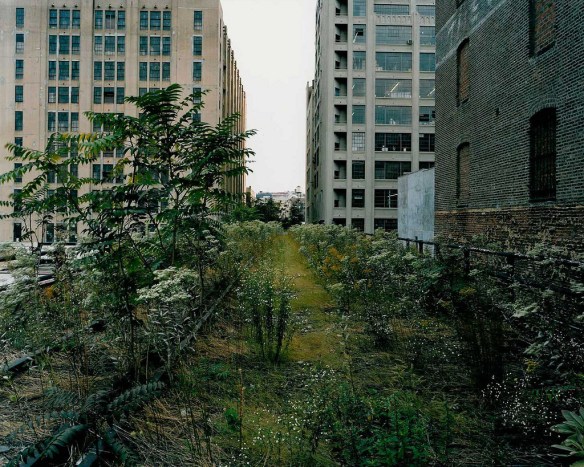
Joel Sternfeld, Looking South at 27th Street, September 2000 from Walking the High Line, 2002

Most cities have their forgotten spaces, but it still somehow surprises me that the High Line, the elevated railway that carried goods through Manhattan from the 1930s until 1980 was allowed to decay for more than two decades in a city where space is at such a premium. Thanks to a campaign by New Yorkers eager to see the derelict tracks reborn as a park the future of the High Line as a public space now seems secure.
Continue reading

Tales from a (perfectly straight and very expensive) riverbank

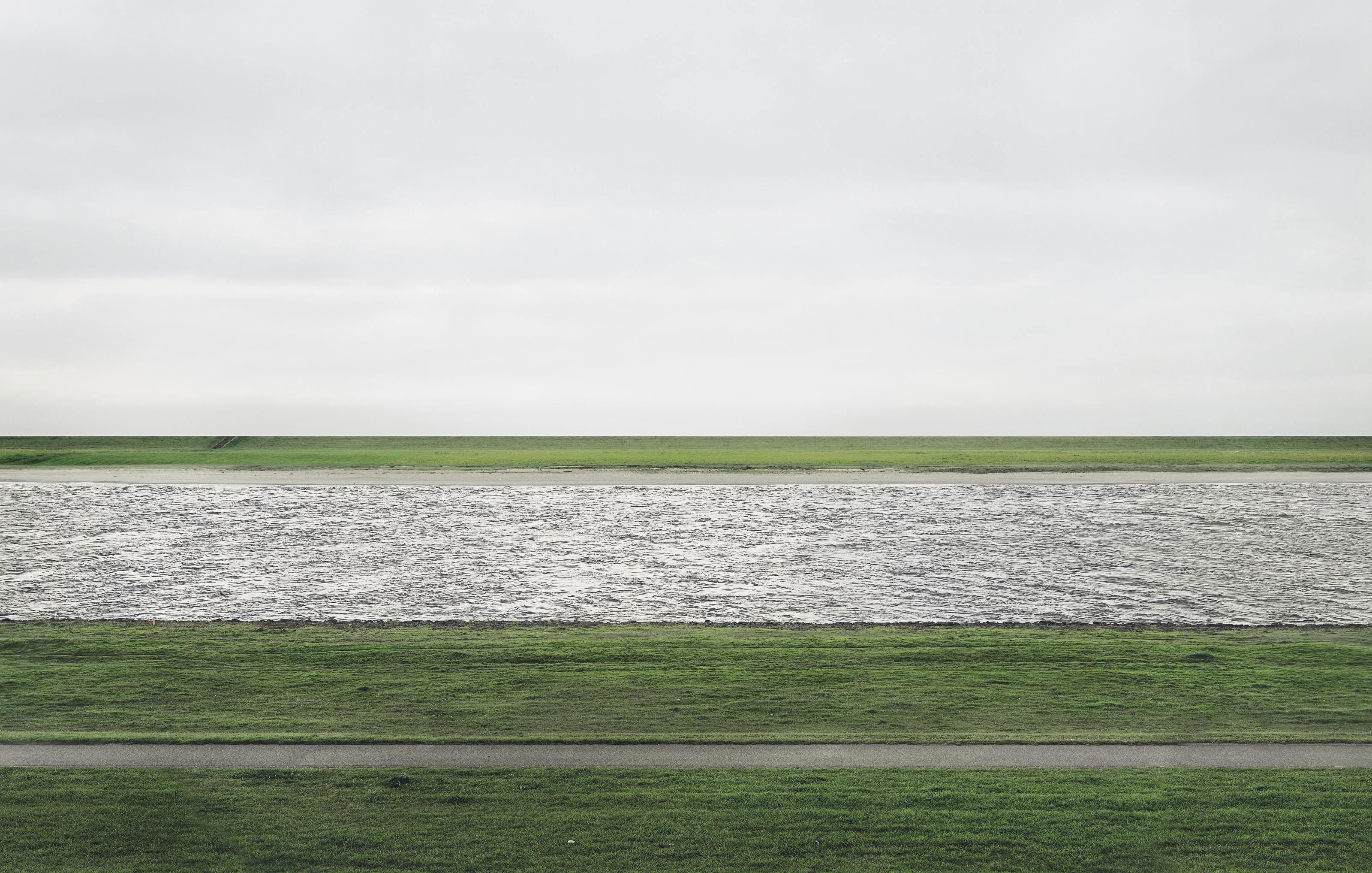
Andreas Gursky, Rhine II, 1999

More than a decade later, I still vividly remember seeing Andreas Gursky’s 1996 photograph Rhine for the first time. I knew Gursky’s work quite well – though it was, and is, always exciting to see them in real life – but I didn’t know this picture and there was just something about it. I still haven’t quite worked out what that something is but I do know that at that first viewing I stood in front of it for about 20 minutes, utterly mesmerised. Subsequent viewings of it and of Rhine II, made three years later and a subtle reworking of the image which has exactly the same hold over me and which is now the most expensive photograph ever sold at auction, having reached a price of $4.3m in November of last year, have been no briefer.


Continue reading

Day-dreaming of sleep

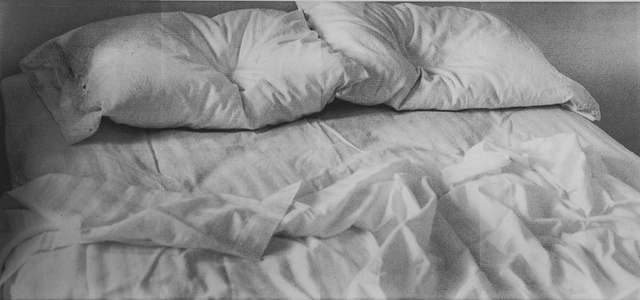
Félix González-Torres, Untitled (Bed), 1991

I love my bed. Most mornings while on my stupidly long commute, I find myself wishing I was still in it. So while I while away my journey day-dreaming of still being curled up under the duvet, here are some other beds both occupied and empty.

The bed in Félix González-Torres’s photograph is, in a way, simulataneously occupied and empty. The bed looks newly vacated – ready to welcome its occupants back before they have to face the day – but the picture is a memorial to the artist’s partner, Ross Laycock, after his death from AIDS. The crumpled sheet and pillows still bearing the indentations of the heads of those who slept there are both the trace of its occupants and reminder of the bed’s emptiness.The whiteness of the picture gives it a delicate beauty.

Continue reading

Machines for living

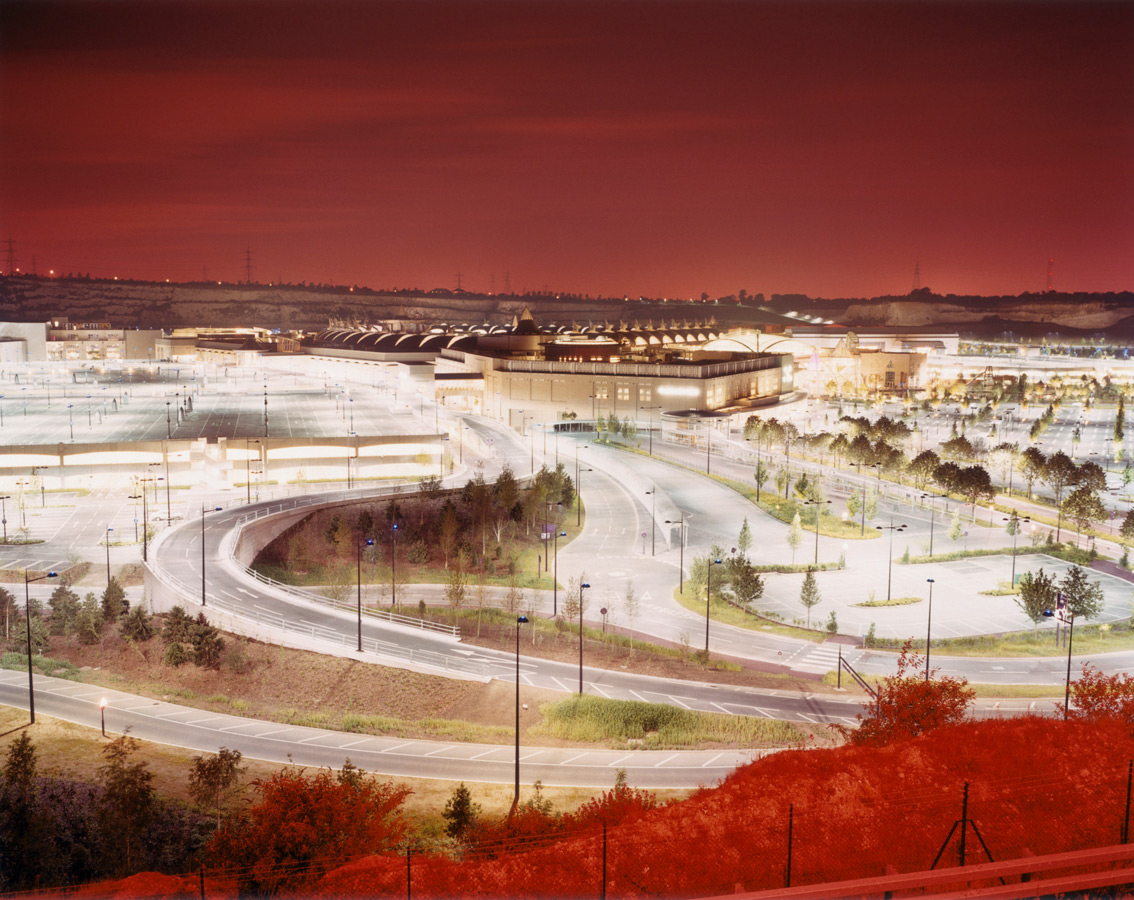
Dan Holdsworth, Untitled (A Machine for Living), 1999

In Dan Holdsworth’s long-exposure photographs the landscape – and the structures built within it – takes on a strange other-worldly quality. This comes in the main from the effect of artificial light, which pollutes the scene giving a strange, toxic glow. Bluewater shopping centre, recorded at night in the bright glow of its own streetlights, seems far removed from the consumerist mecca we might expect.

Continue reading

Fading away

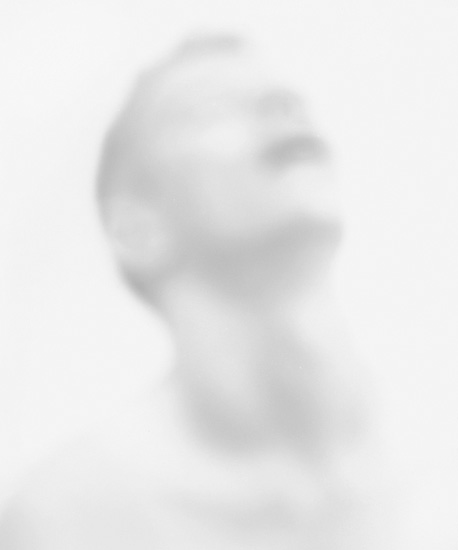
Bill Jacobson, Interim Portrait #378, 1992

Like all media, photography has its conventions and focus is one of the most firmly entrenched of these. Photographs are mean to be in focus. They’re meant to be sharp. It’s in the rules. But then, as any fool knows, rules are meant to be broken.

Bill Jacobson, then, is a serial breaker of rules.

Continue reading

On never knowing who might be looking

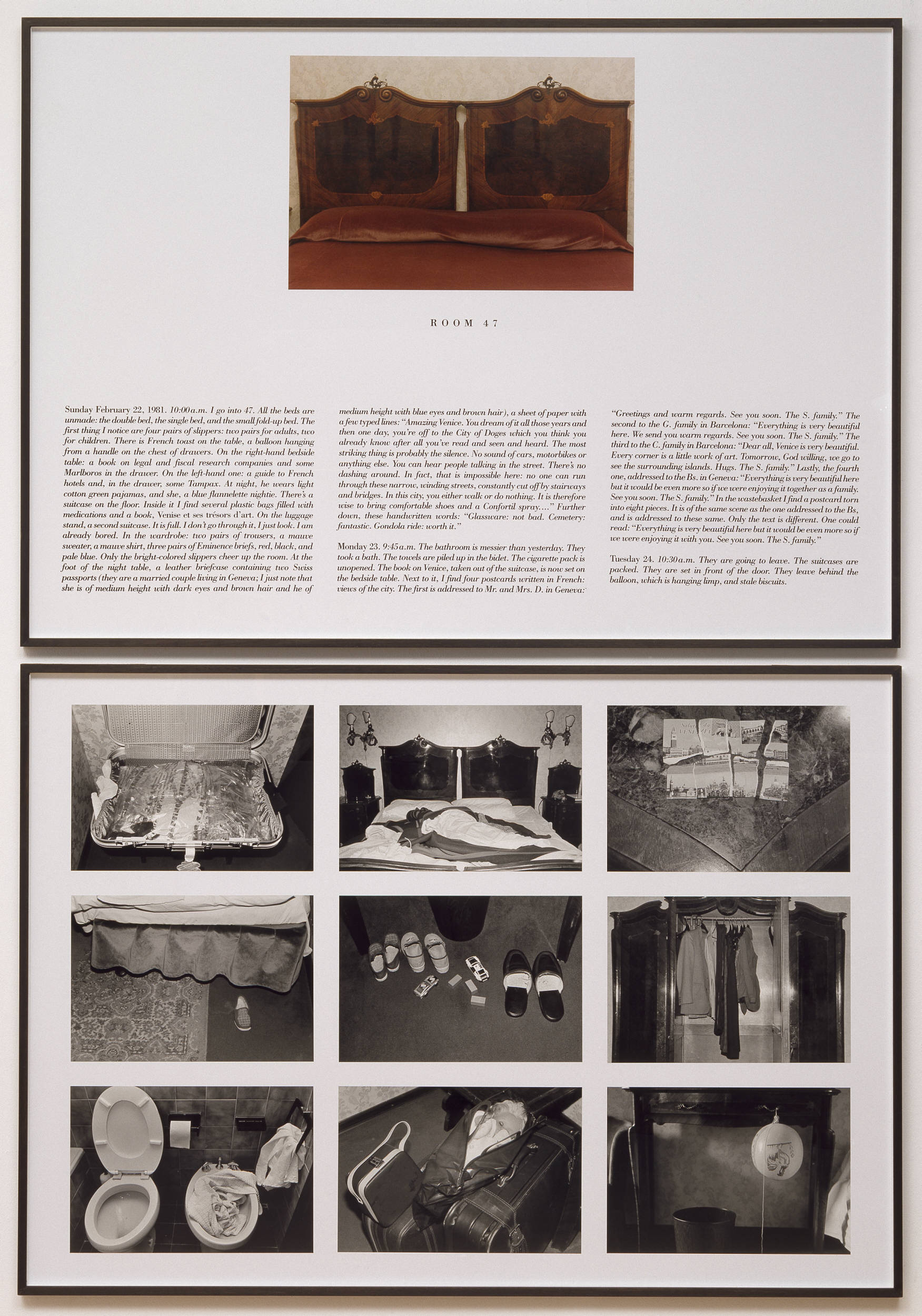
Sophie Calle, The Hotel, Room 47, 1981

When I think about Venice the artist who comes to mind first is Sophie Calle; two of her most intriguing projects – Suite Vénetienne and The Hotel – were made there. Both bodies of work fascinate me but it’s The Hotel that makes me feel the most uneasy. I’m pretty sure no-one’s ever likely to stalk me to make art, which is the basis of Suite Vénetienne,  but it seems entirely possible that a curious chambermaid might go through my stuff, albeit probably not with quite the same determination as Calle. Making up hotel rooms must be pretty boring work, why wouldn’t you amuse yourself by looking through whatever’s left on show?

Continue reading

Many bridges to cross

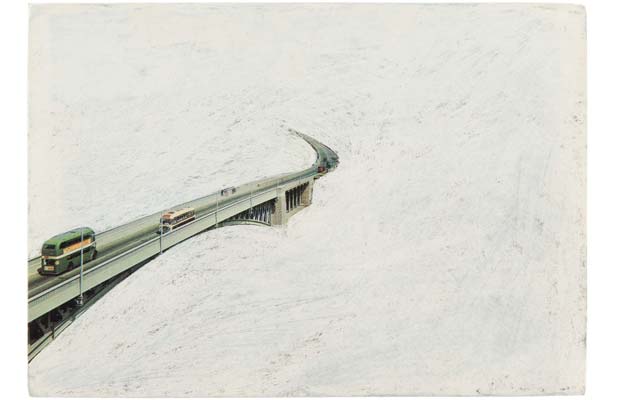
Tim Davies, from the series Bridges, 2009-present (sanded postcard)

I really like postcards. I like the way they represent a place without necessarily being anything like its day to day reality. They seem optimistic somehow. I don’t much like writing them – I tend to restrict myself to a few words and a good deal of flippancy – so can’t really claim to like sending them with any degree of conviction, but I like getting them (and if they arrive back ages after the sender so much the better, especially if they’ve followed a convoluted route) so I send them in the hope that their recipients might enjoy them in much the same way as me. When I choose postcards I aim for maximum cheesiness, as long as it’s authentic (whatever that means) – there is no place for knowing postmodern pastiche here – and often choose cards featuring photographs that aren’t exactly recent. Doubtless a good few artists have worked with postcards but two of the examples that have stayed with me as works I’ve particularly enjoyed are ones I first saw in the Venice Biennale (one in 2009, the second two years later). And, since I’m in Venice this weekend for too short a visit to warrant sending any postcards, I thought I’d write about them here in the form of one of those memorable works.

Continue reading

It’s all in the detail

Ambrosine Allen, Broad Flat Valley

At first glance, Ambrosine Allen’s pictures appear to be black and white photographs of a familiar but somewhat fantastic landscape; it’s only when one looks more closely that the structure of the images becomes apparent. The images are photographic in a sense but there is a strangeness to the surface. These are collages made of tiny scraps of photographs cut from books and used to build up the strange worlds Allen depicts. In the series Compendium to the New World, images from which are on show at Room, the world becomes a strange dreamscape in which odd geological features sit in uncomfortable proximity to one another under stormy skies or in the shadow of volcanic eruptions.

Continue reading