Inside out

20120522-085354.jpg

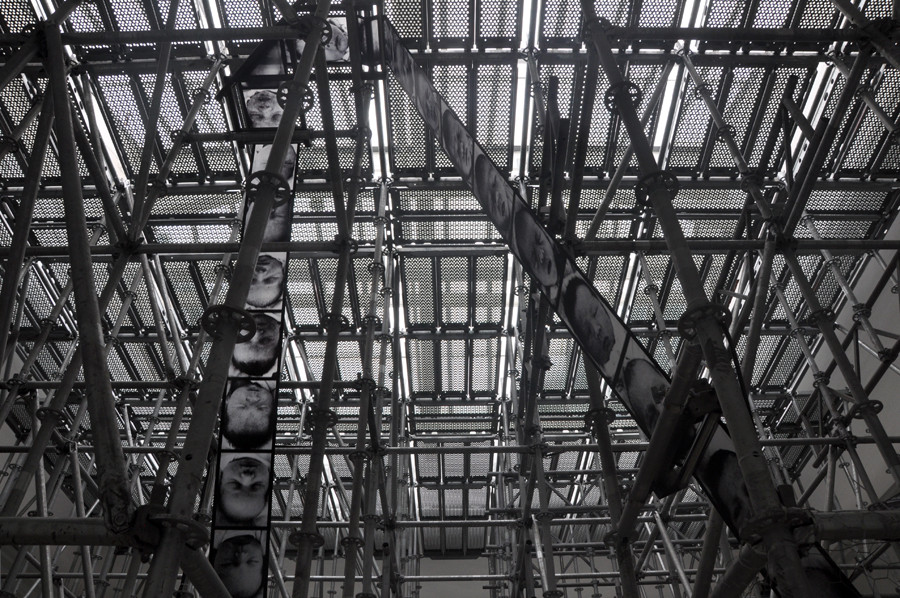
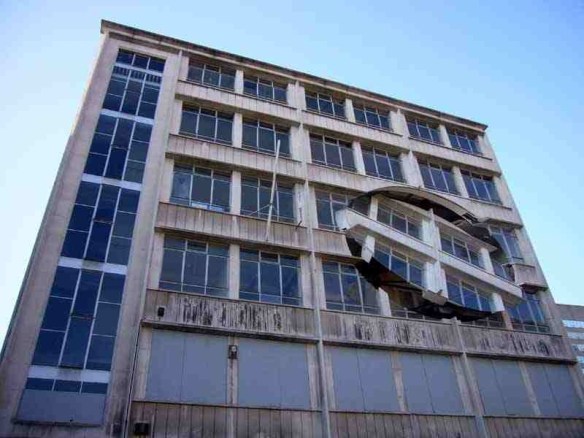
Richard Wilson, Turning the Place Over, 2007

Quite high on the list of art I wish I’d seen is Richard Wilson’s installation for the 2007 Liverpool Biennial. Like other works by Wilson, who is probably best known for his installation 20:50 at the Saatchi Gallery (about which more another time, possibly even tomorrow now that it’s in my head), Turning the Place Over was an architectural intervention on an ambitious scale but unlike 20:50 this was a temporary installation made by messing with the fabric of an empty building.
Continue reading

Making good the gallery space

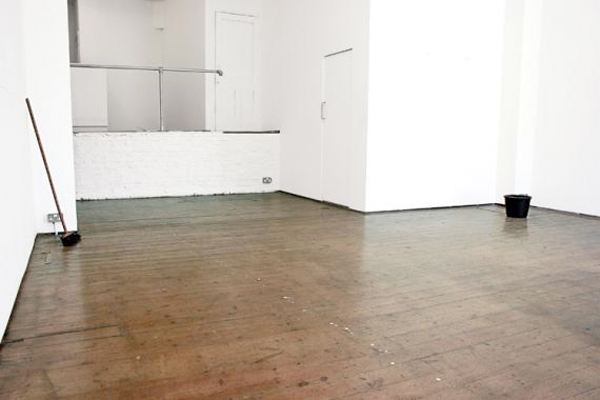
Susan Collis, Don’t Get Your Hopes Up, 2007

As the end of the academic year approaches, the time has come to turn a very messy art school studio into as good an approximation of a white cube gallery space as possible. I love the process of making the end of year exhibition but I’m not so keen on the construction part of it. All that filling, sanding, cleaning and painting is stupidly tiring – even for me, and frankly I mostly direct proceedings while others to the actual work – and pretty stressful. We always get it done but there’s always a point where it seems like we won’t. Which brings my thoughts to work that reminds me of the tools we need and the work that needs doing.

Susan Collis’s work fits the bill perfectly. After all, her exhibition Don’t Get Your Hopes was basically a gallery in need of some art, right? Well, appearances can be deceptive.

Continue reading

Half seen

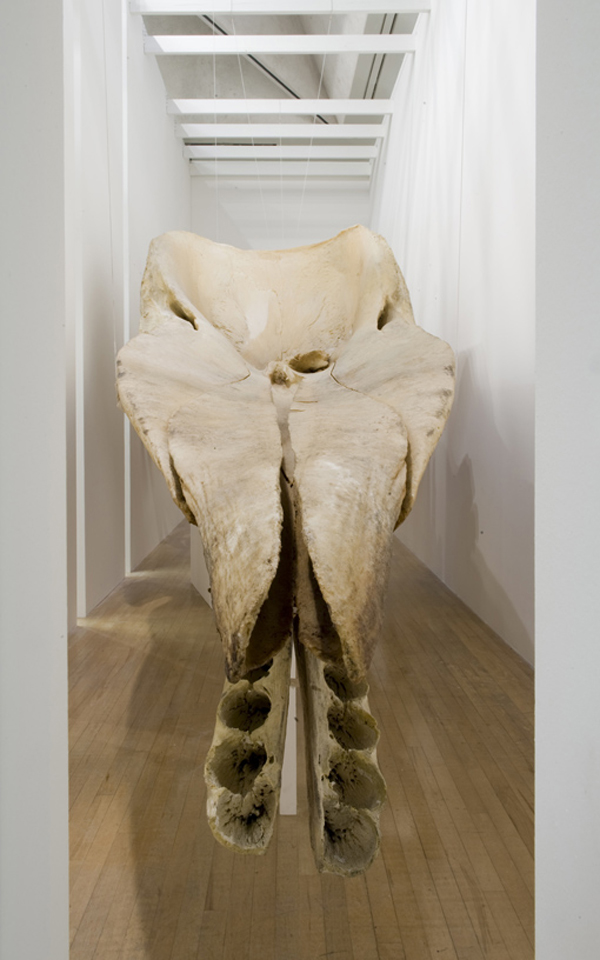
Lucy Skaer, Leviathan Edge, 2009Lucy Skaer, Leviathan Edge part of the installation Thames and Hudson, 2009

Since I’m on a bit of a skull theme, Lucy Skaer’s Leviathan Edge – the skull of a sperm whale borrowed from National Museums Scotland for inclusion in her installation Thames and Hudson – popped into my mind. The skull is rather larger than those adorned by Damien Hirst or Gabriel Orozco. By about 14 foot or so. The whale skull is vast and its shape utterly unfamiliar. It’s a curious object made all the more fascinating by Skaer’s tantalising presentation of it in an enclosed space so that we can only see small sections of it through narrow slits.

Continue reading

Everyday art

Jeremy Deller, Open Bedroom, 1993 (reconstruction)

Like David Shrigley, Jeremy Deller is an artist whose work doesnt always fit easily into the gallery space. Unlike Shrigley though, when his work is brought together as an exhibiton it exceeds expectations. Joy in People at the Hayward Gallery is a show that is much more than the sum of its parts. And there are some pretty great parts.

In 1993, while others were holding open studios, Deller staged Open Bedroom, his first exhibition, in his parents’ house while they were on holiday. The work, his teenage bedroom presented as art, is reconstructed here as the route into both the show and the head of the artist. We get to open drawers and cupboards and explore the ideas, images and objects that fascinated the young Deller. It’s a great start and a useful grounding for a show that picks up these enthusiasms and makes them art.

Continue reading

Motherhood as art

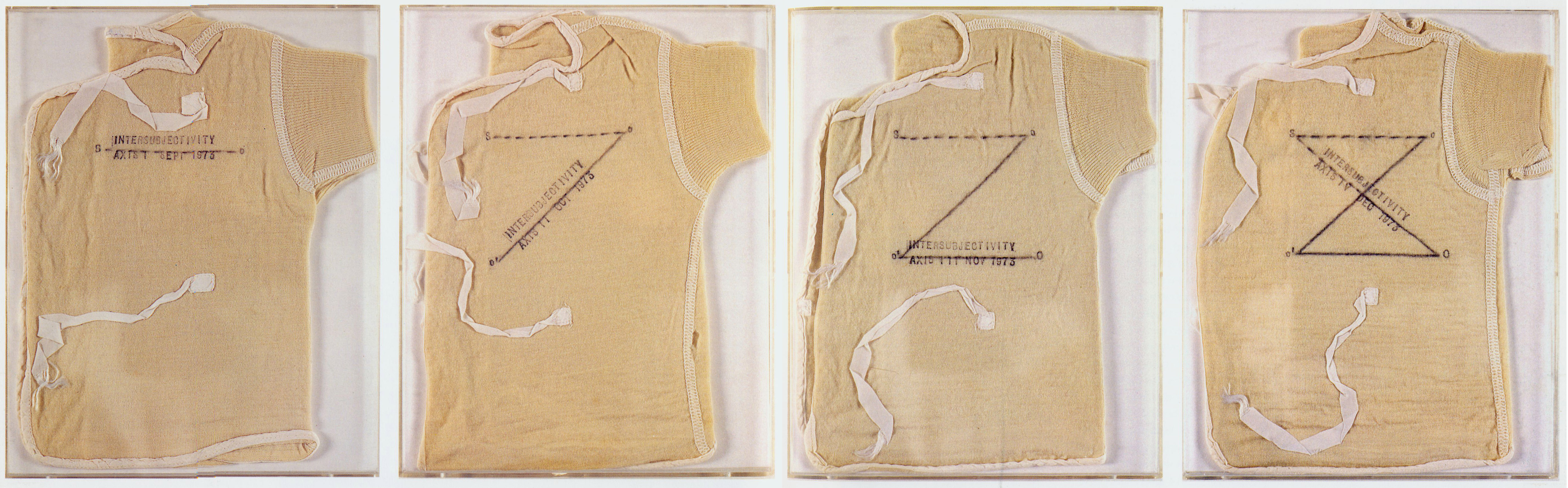
Mary Kelly, Post-Partum Document (detail: vests, from Introduction), 1973-79

Like Susan Hiller, Mary Kelly documented her pregnant belly as art but it is the work she made after the birth of her childfor which she is better known. Post-Partum Document made between 1973 and ’79, the first years of her son’s life, is an extensive document of the mother and child relationship and of the nature of motherhood. The work is in six sections and contains over a hundred items of documentation from the vests shown above to diary notes, graphs and other data and artefacts such as stained nappy liners. The work is driven by the process of making it and clearly parts of that process aren’t pleasant.

Continue reading

Bodily functions

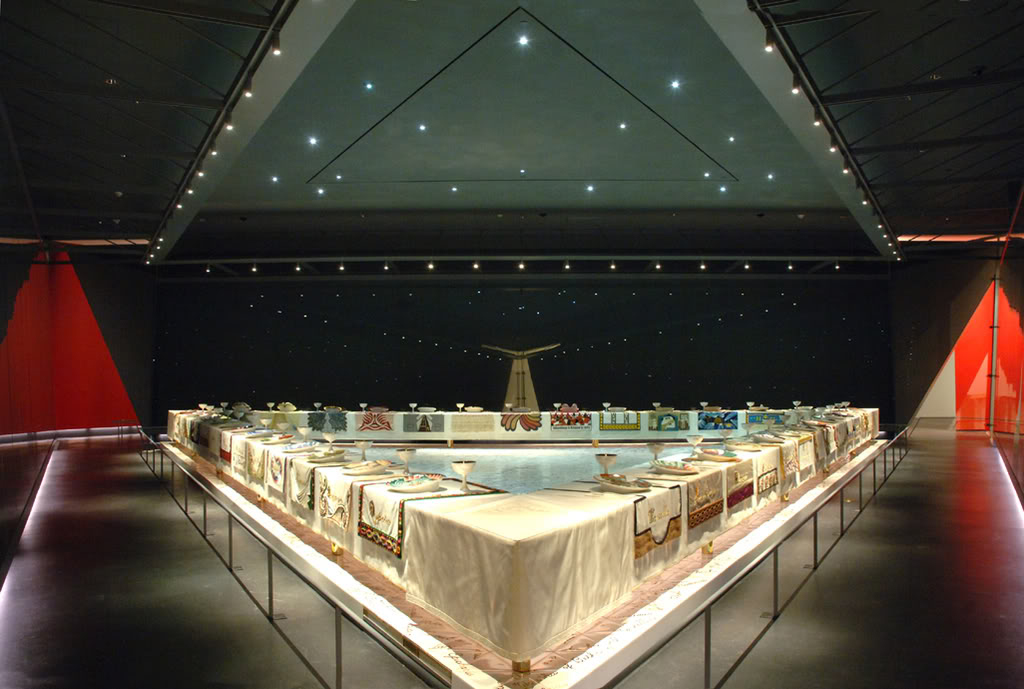
Judy Chicago, The Dinner Party, 1974-79

The reputation of the 1970s isn’t great. If you type ‘1970s the decade’ into its search box, Google helpfully suggests the additions ‘that taste forgot’ and ‘style forgot’. Thanks for that. In fairness, in all sorts of ways it was a pretty rubbish decade. But it was also a decade in which some pretty great art was made and one in which women used art as a political weapon as never before. Probably. I’m sure there are plenty of earlier examples, but there was a pretty significant connection between female artists and the emerging women’s movement. Feminist artists like Mary Kelly, Martha Rosler, Judy Chicago and others made work that challenged previous modes of representation and sought to celebrate women and the female body on their own terms. Inevitably, the results weren’t always pretty.
Continue reading

Laughter, pain and shadow

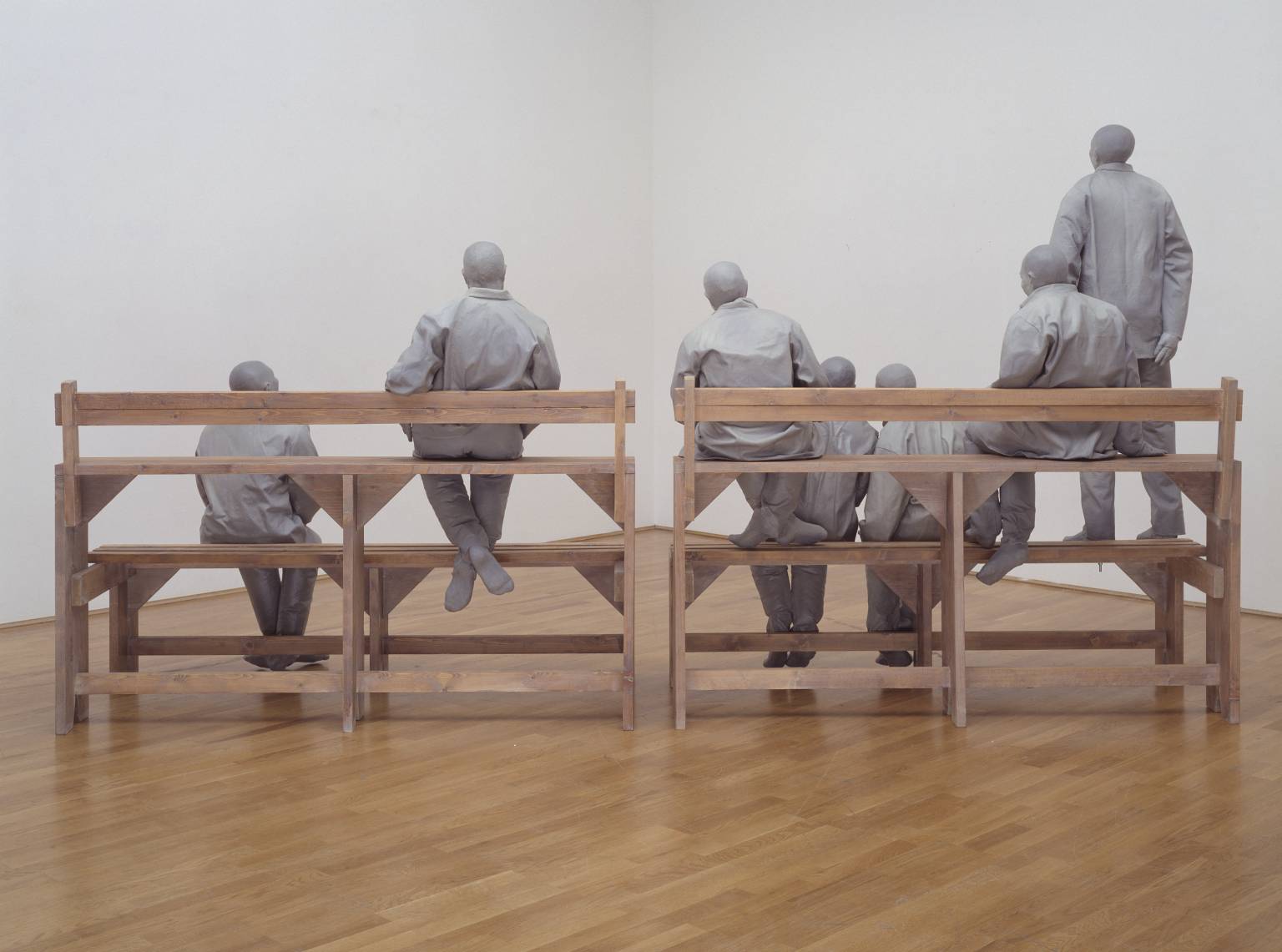
Juan Muñoz, Towards the Corner, 1998

From behind it’s the grey uniformity of the figures that’s striking. They look relaxed and comfortable on the wooden terraced seating. One or two lean in towards one another conspiratorially, but in the main though they are sharing the experience, they seem lost in their own enjoyment of whatever it is they’re watching. Working one’s way round the edge of the piece to see the the work from what we assume to be the front is a very different experience. No longer one of the crowd of watchers – and by now trapped in the corner of the room by the work – one immediately becomes not merely the watched but the laughed at. Regular readers will probably have realised by now that I like art that makes me laugh; disconcertingly, in Juan Muñoz’s Towards the Corner it is the art that is doing the laughing. And it’s laughing at me.

Continue reading

Model behaviour

Kerry Stewart, This Girl Bends, 1996Kerry Stewart, This Girl Bends, 1996

Kerry Stewart’s children are older – in the main, we’re back to the adolescents of Rineke Dijkstra’s Beach Portraits – and less strange than the young kids Loretta Lux and Nicky Hoberman represent, but that doesn’t mean that all’s right with their world. Stewart works with sculpture and installation to create works that can in a way be seen as portraits. They involve people after all. In Stewart’s case the people are made from, variously, plaster or fibreglass and paint. There is a level of realism but also a strangeness that once again seems best explained in terms of the uncanny.

This Girl Bends presents us with a girl in a gravity-defying pose. Her eyes are open but staring, her clothes are ambiguous in their plainness: the collar suggests day wear but her trance-like state says sleepwalker more than it says concentration to me. I confess though that I’m not sure whether I’ve seen this work in real life and it wasn’t one of the works that brought Stewart to mind today; nonetheless, I really like the oddness of it  and would like to come across it in a gallery.

Continue reading

Snow in April

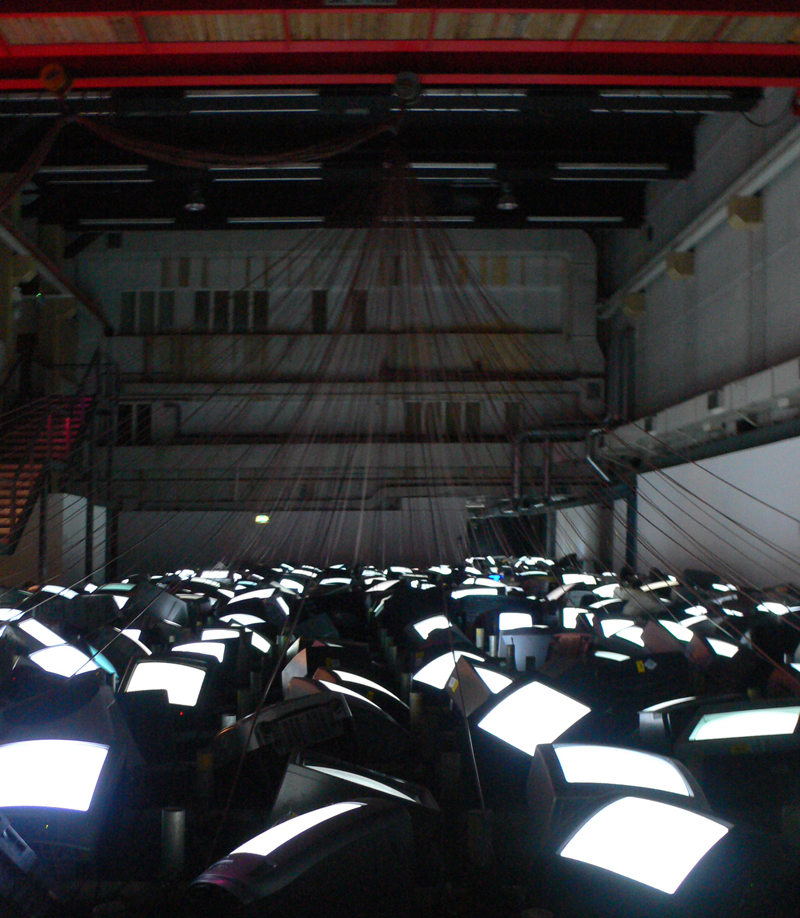
David Hall, 1001 TV Sets (End Piece), 2012

As of Wednesday, analogue telly is a thing of the past. Well okay, it’s clinging on for a few more months in a couple of parts of the country, but for most of us in the UK old tellies either need to be attached to a digibox or it’s all over. At Ambika P3, David Hall’s End Piece … exhibition (part of which I wrote about here a week or two ago) is a fitting way to mark its passing. The centrepiece of the exhibition is the extraordinary, descriptively titled installation 1001 TV Sets (End Piece). With the analogue switchoff on Wednesday the work went from being a bewildering jumble of images with a cacophonous soundtrack to 1001 different types of snow. The sound is still loud but it’s a constant static now rather than the chaos of five competing television channels.

Continue reading

Chance encounter

Christian Boltanski, Chance, 2011

Since I seem to be stuck in mazes and cages this week, it’s perhaps no surprise that Christian Boltanski’s installation for the French pavilion at the 54th Venice Biennale last year has worked its way back to the front of my mind. For me, this was one of the highlights of the Biennale though admittedly I think I’ve yet to see a work by Boltanski that I haven’t liked. This work does feel quite different to most of Boltanski’s installations though, not least because it’s playful – literally, in that it includes a game – and open to a hopeful reading, though more sombre interpretations are also possible.

Continue reading