Representing the real

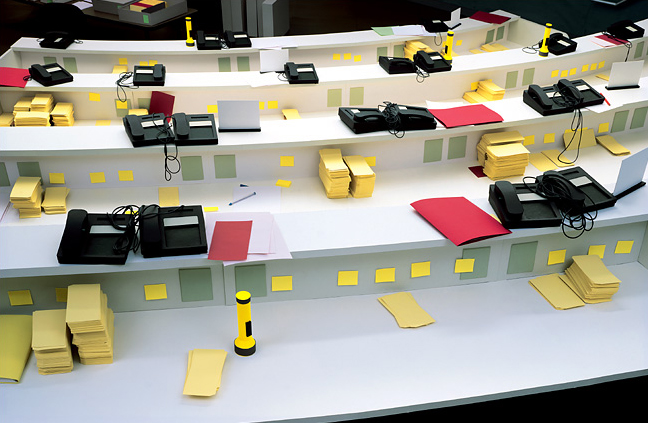
Thomas Demand, Poll, 2001

There are many ways to make a photograph. In photographic terms, Thomas Demand’s approach is very simple. The camera records the scene in as straightforward a manner as it can. But there is something odd – uncanny, perhaps – about the scene; all is not as it seems.

Continue reading

By the light of the silvery moon

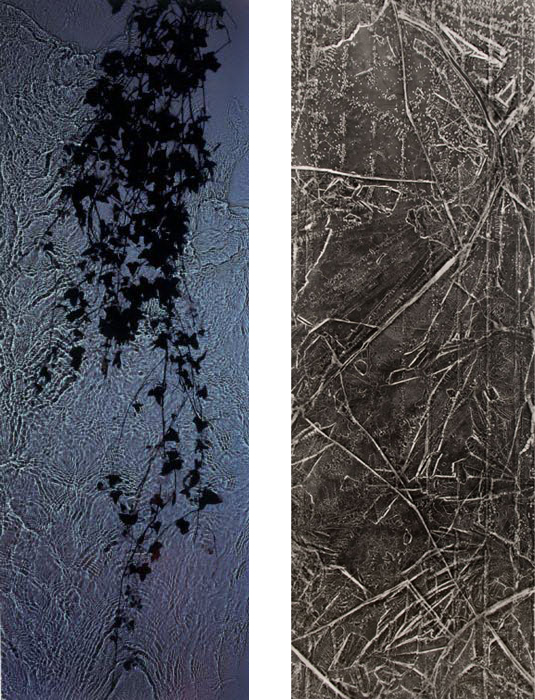
Susan Derges, River Taw, 16 July 1997 and River Taw (Ice), 4 February 1997

Having been thinking a lot about working processes this week, the images that are rattling round my head are mostly ones made by following intriguing processes. In one respect, Susan Derges makes work using one of the simplest possible photographic processes: the photogram. But Derges’s work isn’t made in the darkroom but in the landscape. And these are photograms made on an ambitious scale.

Continue reading

In the kitchen with Cindy

Cindy Sherman, Untitled Film Still #3, 1977

By way of description, the image depicts a domestic scene in which the character – seemingly a housewife – stands at her kitchen sink. The construction of the picture hints at a number of possible narratives and is open to a range of analyses. Though almost cropped from the picture, the woman’s gaze – out of frame and away from the viewer, accentuated by eye makeup surely unnecessary in her own kitchen – holds my attention.

Continue reading

Something from (almost) nothing

John Stezaker,  Marriage (Film Portrait Collage) XLV, 2007

Cutting up old photographs or magazines to make collages is territory artists share with pretty much everyone who’s ever kept a scrapbook, maybe with everyone who’s ever been a child. But nonetheless – or maybe as a consequence, we all recognise the activity after all – it can be incredibly fertile ground for artists. Even something as simple as cutting up two pictures and sticking them back together can result in intriguing and sometimes disturbing new images.

Continue reading

The art of the fall

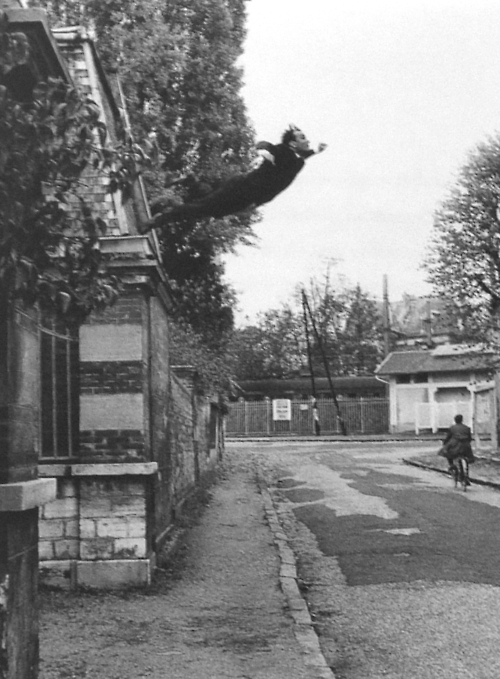
Yves Klein, Leap into the Void, 1960

Is art really as easy as falling off a log ledge (roof, canalside, whatever)? The evidence is plentiful.

In Leap into the Void, Klein certainly makes it look easy, no matter how much our common sense tells us all is not as it seems. Though I love the mix of an earnest look and a preposterous act in Yves Klein’s photograph, his is not the fall that makes me smile the most.

Continue reading

Fact and fiction: Jeff Wall at White Cube

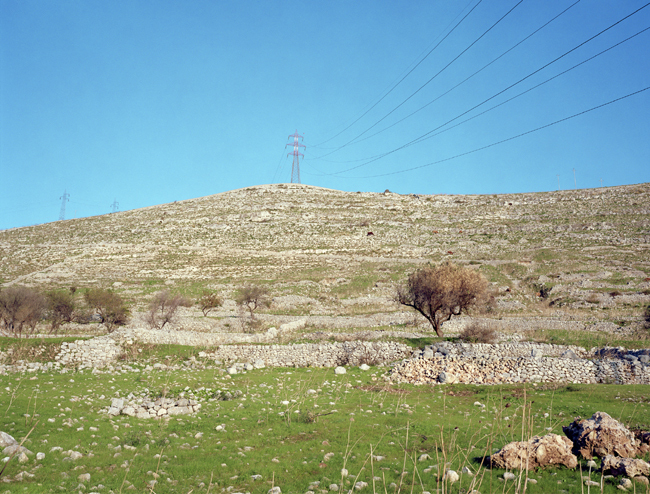
Jeff Wall, Hillside near Ragusa, 2007

I went to Jeff Wall’s show at White Cube unsure quite what to expect. At some point when I wasn’t paying attention, Wall left behind the elaborate tableaux and sometimes less than obvious references to the history of painting and started to tell different stories – somehow simultaneously simpler and more complex – through his photographs. The work here is from two separate bodies of work that feel in some ways as though they could have been made by two different people.

In the ground floor space there are three photographs of the Sicilian landscape. Described as ‘documentary pictures’ in the press release, these tell of a landscape fundamentally unchanged over time but one in which the modern world is nonetheless constant visual presence. The drystone walls in Hillside near Ragusa might have been there for centuries staying low to blend into their surroundings; man is not a recent incomer to this place. By contrast, the electricity pylons stride across the hillside with a confidence that its natural inhabitants – the short, windswept trees growing on the low ground – don’t seem to share.

Continue reading

The art of destruction / The destruction of art

Ai Weiwei, Dropping a Han Dynasty Urn, 1995

To a greater or lesser extent, the destruction of the past is an on-going, universal project. Whether it’s demolishing old buildings to make space for new ones or cutting down woodland to accommodate agriculture on an industrial scale, we can’t ever really let things be. If we never destroyed anything, the world would be an even more weird, uncomfortable and overcrowded place but nonetheless there’s often more to our reluctance to let things go than simple nostalgia. In the last half century or thereabouts, China has witnessed wholesale destruction of its history in the name of both ideology – the Cultural Revolution – and, more recently, progress, as the past is razed to make room for the future. Nonetheless, Ai Weiwei’s destruction of ancient ceramics in the name of art might seem in some respects excessive. It certainly has the power to shock though perhaps one of the most surprising aspects is that the value of what one might assume to be priceless ancient artefacts such as a Neolithic urn dating from 5000-3000BC can be increased by the addition of a Coca-Cola logo.

Continue reading