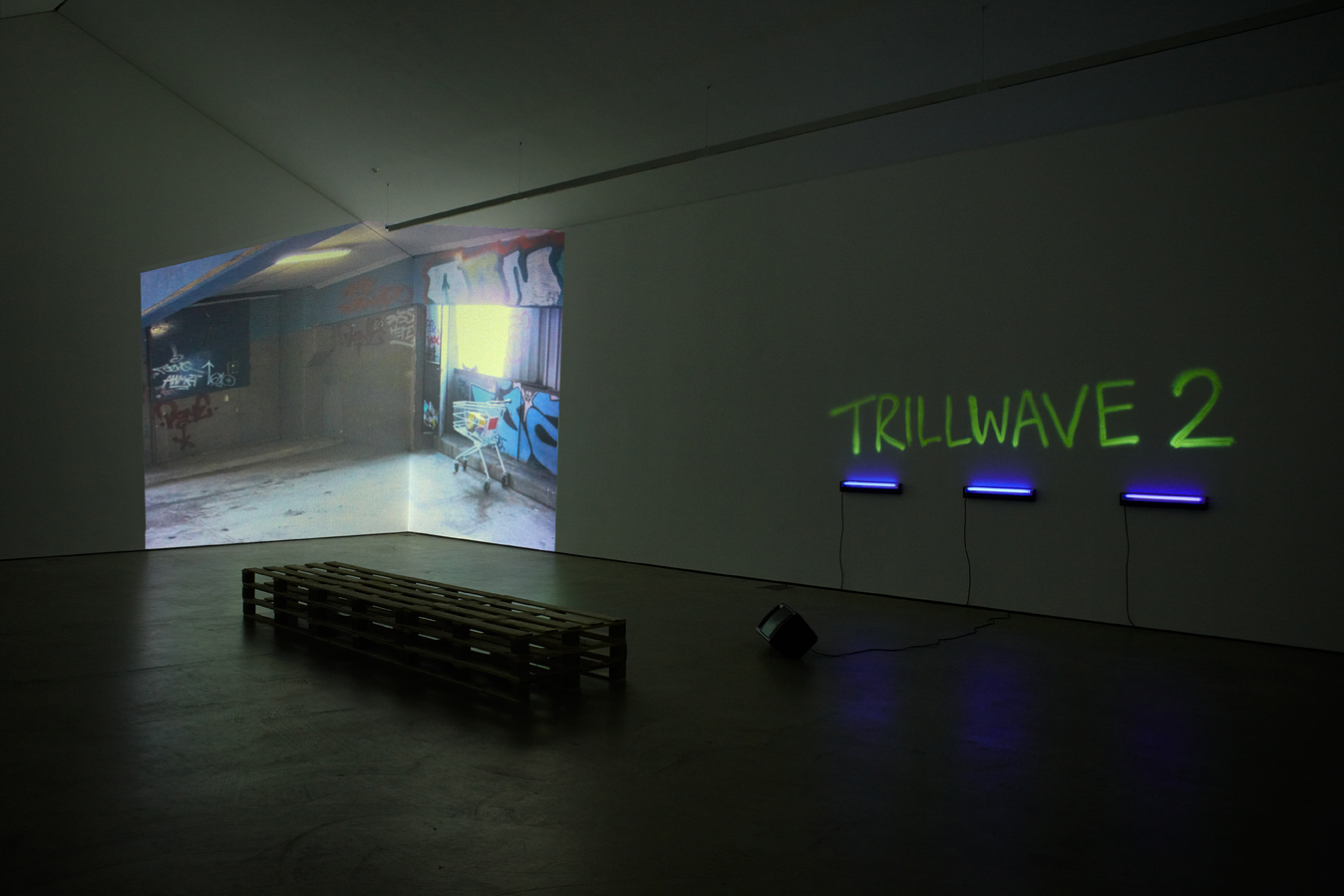
Are you sitting comfortably?

Ilja Karilampi, installation view at Wilkinson Gallery

I’ve been preoccupied with seating recently and in particular with the way film and video is shown in gallery spaces. It turns out that my attention span is much reduced if I’m not sitting comfortably. (Well, durr.) A particular low is the woefully inadequate seating at the ICA for the Lis Rhodes: Dissonance and Disturbance exhibition. When I came to write about that exhibition for MostlyFilm, all I could think about was how uncomfortable I’d been. So visiting galleries in east London yesterday it was pleasing to come across a couple of more interesting approaches.
Continue reading

Mirror Signal Manoeuvre

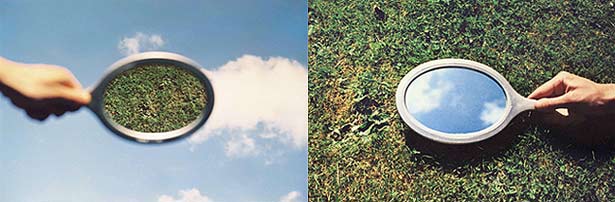
Hreinn Fridfinnsson, Attending, 1973

When I think about the role of art – if it can be said to have one – I think I fundamentally see it as holding a mirror up to the world. I guess this means art tells us stuff me already know, it just switches things around a bit, creating familiarity tinged with an oddness that somehow focuses the mind. Having just written that, I’m inclined to think it proves I probably shouldn’t think about the role of art at all. It just makes me spout art crap.

Continue reading

Seeing is believing

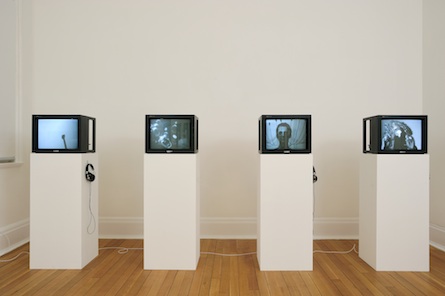
Tony_morgan_5Tony Morgan: Some films (and videos) – 1969-1973, at Thomas Dane Gallery

One of the things I know about Thomas Dane Gallery – apart from stuff like where it is and that I’ve seen some great shows there – is that it closes at 4pm on a Saturday. I know this because I am disorganised and find 4pm a bit too early. On my way in to town last weekend I double-checked the website just in case and noticed that the gallery was open until 6pm which made it possible to both have a late lunch and get to the Tony Morgan show. This was cheering news.

Continue reading

Watching the sky

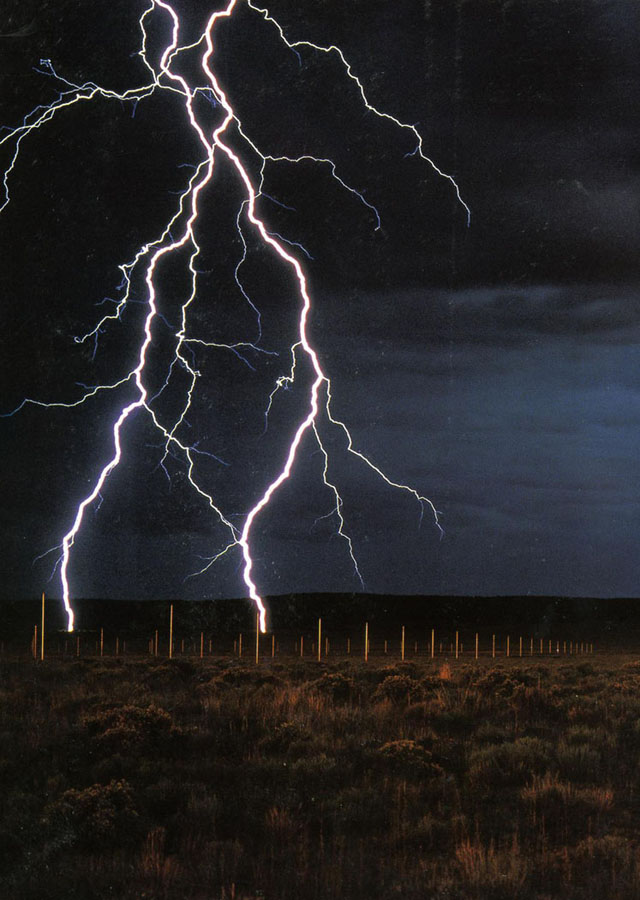
Walter De Maria, The Lightning Field, 1977

The list of art works I really want to see is quite a long one, but somewhere towards the top – and part of an as yet imaginary art holiday that includes other pieces of American land art  – is Walter de Maria’s The Lightning Field. In the middle of nowhere, about three hours drive from Albuquerque, The Lightning Field is, um, basically a field. With, if you’re very lucky (and most who visit it won’t be), some lightning.

Continue reading

Uneven surfaces

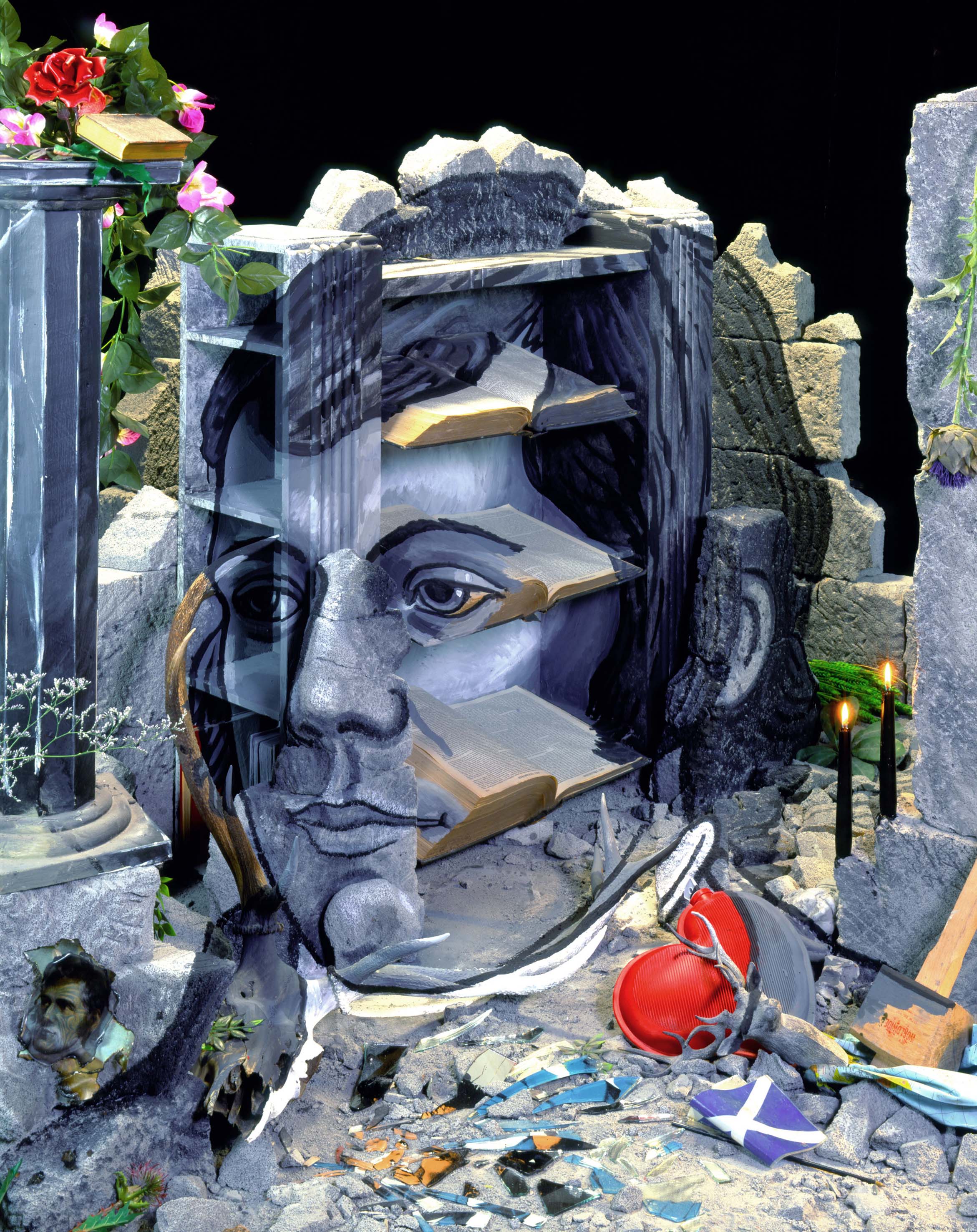
Calum Colvin, Robert Burns, 2002

There are many artists who explore the relationship between painting and photography and plenty who use photography to render studio installations flat – Thomas Demand for instance, who I wrote about yesterday – what makes Calum Colvin’s approach unusual and why talk about his work now?

Continue reading

Past master

Maurizio Cattelan, Bidibidobidiboo, 1996

As a rule, I don’t have much time for taxidermy in art. Sometimes it works, but for me such instances are few and far between. But if anyone can get away with it, it’s Maurizio Cattelan; contrary to my own expectation, his use of taxidermy consistently wins me round.

Continue reading

Daily rituals

Hadrian Pigott, Instrument of Hygiene (Case 4), 1995

I’ve always been interested in the way we muddle through life and the daily routines most of us construct – at least, I don’t think it’s just me – to get through the day and feel vaguely in control of something, anything, however mundane. We are, by nature, creatures of habit to a greater or lesser extent. Before you know it, routines become rituals and it becomes unthinkable to break the sequence. One of the most ritualised aspects of daily life is often personal hygiene.

Continue reading

Making shit art

Wim Delvoye, drawing for Cloaca, 2000

Plenty of people think contemporary art is shit. And of course, some of it probably is. And sometimes when I’m talking to students about their work I’ll use the word crap, but I always mean it to be a positive (for example “this has a pleasingly crap aestheic”). But one, unusually bonkers (and I mean that in a good way too) work, Cloaca by the Belgian artist Wim Delvoye, is shit in a much more literal sense. Don’t read on if you’re squeamish (or about to have lunch)…

Continue reading

Lost in a world of lost people

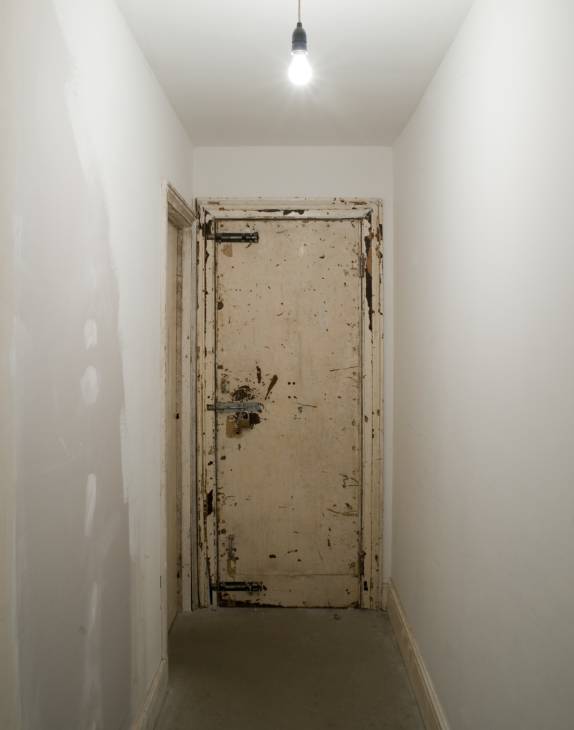
Mike Nelson, Coral Reef, 2000

There’s a slightly shabby door in Tate Britain that leads into another world. It’s a world that allows me in but never makes me feel welcome. It’s a world I wouldn’t want to live in, or even be in when anyone’s home, but one I love to visit. And, if the Tate website is accurate (not something that can guaranteed given its longstanding confusion about the whole thing), it’s a world that is only accessible until Sunday.

Continue reading

The process of play

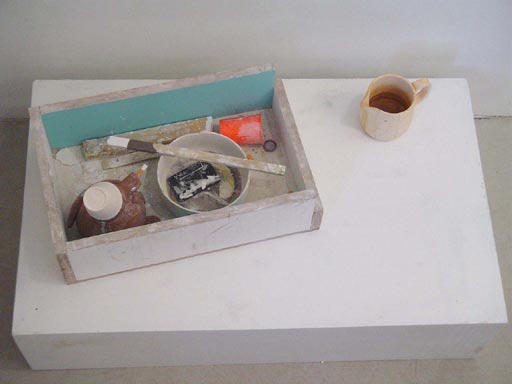
Peter Fischli and David Weiss, In the studio

With term starting tomorrow, my thoughts turn to the work my students will be making over the next few weeks in the studio and in particular to seeing them explore a range of different processes (exploring different approaches to making art, putting materials through a number of different processes – be they physical, chemical or whatever – for instance, or making work that involves following a particular conceptual process etc). To help things along, colleagues and I will show them some art and introduce them to some processes, materials and possible ways of working. Which means that this week my preoccupation will definitely be process…

Continue reading