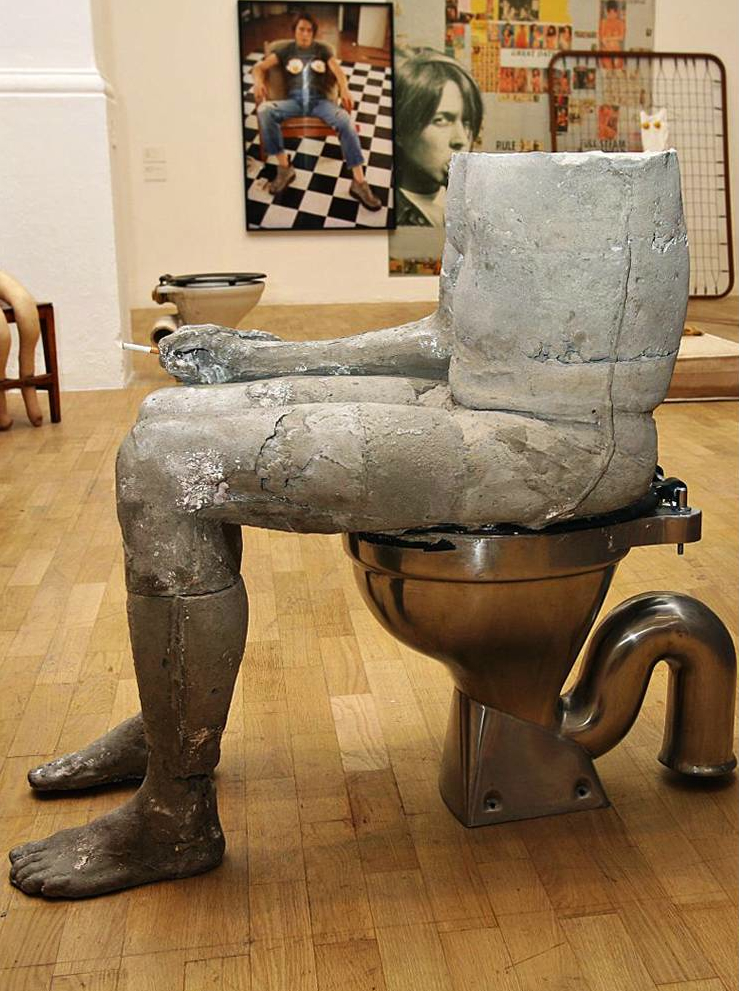
Toilet humour

Sarah Lucas, Cnut, 2004

Sarah Lucas, Cnut, 2004

I guess the leap from thinking about a woman artist making a sculpture of a cock to Sarah Lucas’s work is a distinctly literal one, but as I saw Lucas’s exhibition at the Whitechapel shortly before it ended last month, her work’s been on my mind.

There is of course a long history of toilets in the gallery space but it’s a form few have used with such determined consistency as Sarah Lucas. And while Duchamp’s Fountain – like the works that reference it very directly, such as Sherrie Levine’s Fountain (Buddha) – seems somehow more about the form than the function of the artefact and Claes Oldenberg’s Soft Toilet can be enjoyed for the strange disjunction between the form and materials used in the work and the function of the object on which it is based, Lucas’s toilet works are often grubby and unpleasant to look at.

Continue reading

Blue humour

Katharina Fritsch, Hahn/Cock, 2013

Katharina Fritsch, Hahn/Cock, 2013

Not before time, thinking about Marc Quinn’s Alison Lapper Pregnant brings me back to London and to the oversized cock that is Katharina Fritsch’s work for the fourth plinth: Cock (or Hahn/Cock to give it its full German and English title). Of all the works yet to grace the plinth, and there have been some great ones, some less great ones and one that seemed to make it rain all summer*, I think Hahn/Cock is probably the one that has amused me the most. In the damp greyness of this less than satisfactory winter, it stands proud on the plinth ready to make people chuckle.

It’s big. It’s blue. It’s a cock. What’s not to smile at?

Continue reading

Pregnant pauses

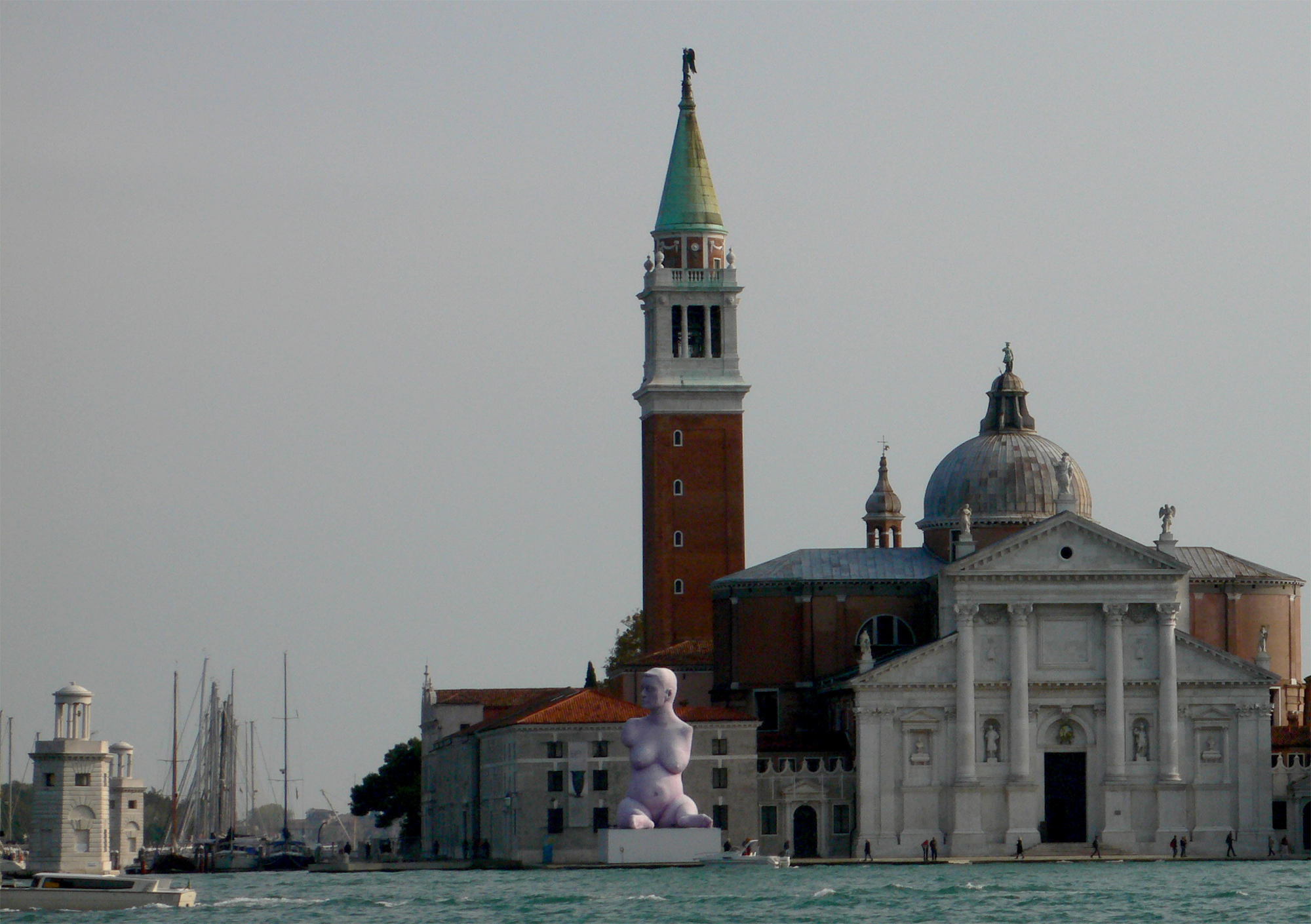
Marc Quinn, Breath, Venice, 2013

Marc Quin, Breath, 2012 (Isola de San Giorgio Maggiore, Venice)

My summer trip to Venice – being a holiday and all – included some things that simply weren’t part of the biennale at all. I’m no longer entirely sure why one of those things was visiting the Marc Quinn exhibition at Fondazione Giorgio Cini. I’ve liked some of Quinn’s work well enough in the past and I guess I was curious. Plus, the exhibition announced itself in that one of the works on show outside the Fondazione Giorgio Cini building was an 11m tall sculpture. Or, more accurately, an 11m tall inflatable version of an earlier Quinn sculpture. This time in a not at all fetching shade of pink.

Continue reading

Light work

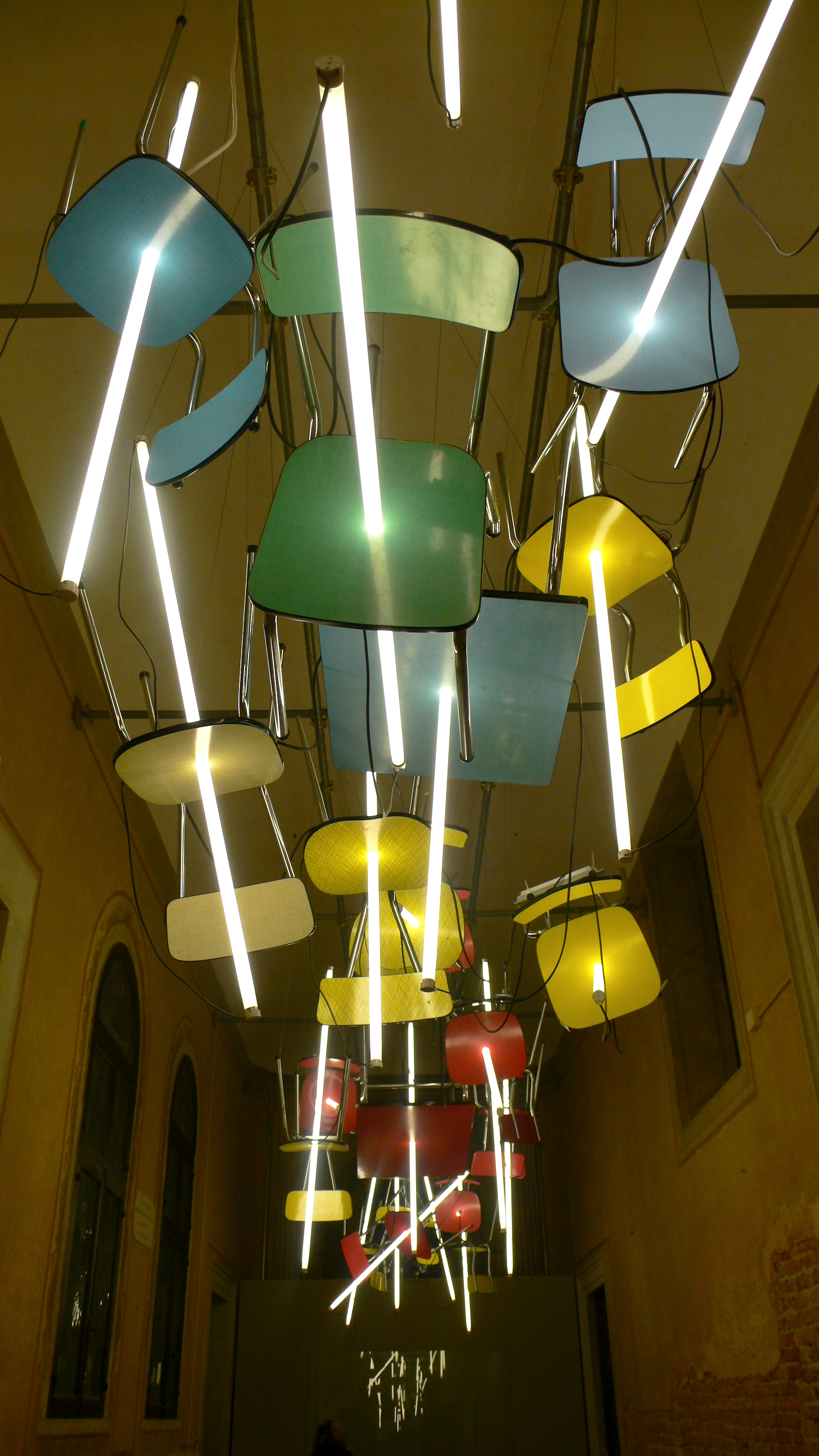
Bill Culbert, Bebop, 2013 (New zealand Pavilion, 55th Venice Biennale)

Bill Culbert, Bebop, 2013 (installation in the New Zealand Pavilion in the Istituto Santa Maria della Pietà at the 55th Venice Biennale)

Ai Weiwei wasn’t the only artist using seating as the building blocks for an art installation in Venice last year. The works in the entrance to the New Zealand Pavilion – held in the Instituto Santa Maria della Pietà – featured suspended chairs and fluorescent tube lights. Culbert, whose work I didn’t really know very well before chancing upon the New Zealand pavilion and wandering in (admittedly I was hardly off the beaten track here, the space was on the waterfront almost no distance from Piazza San Marco), has been working with light since the 1960s. In the work on show in Venice, Culbert used light and domestic objects to create an extraordinary series of installations and smaller sculptural pieces that occupied the space in a really interesting way.

Continue reading

An explosion of seating – nowhere to sit

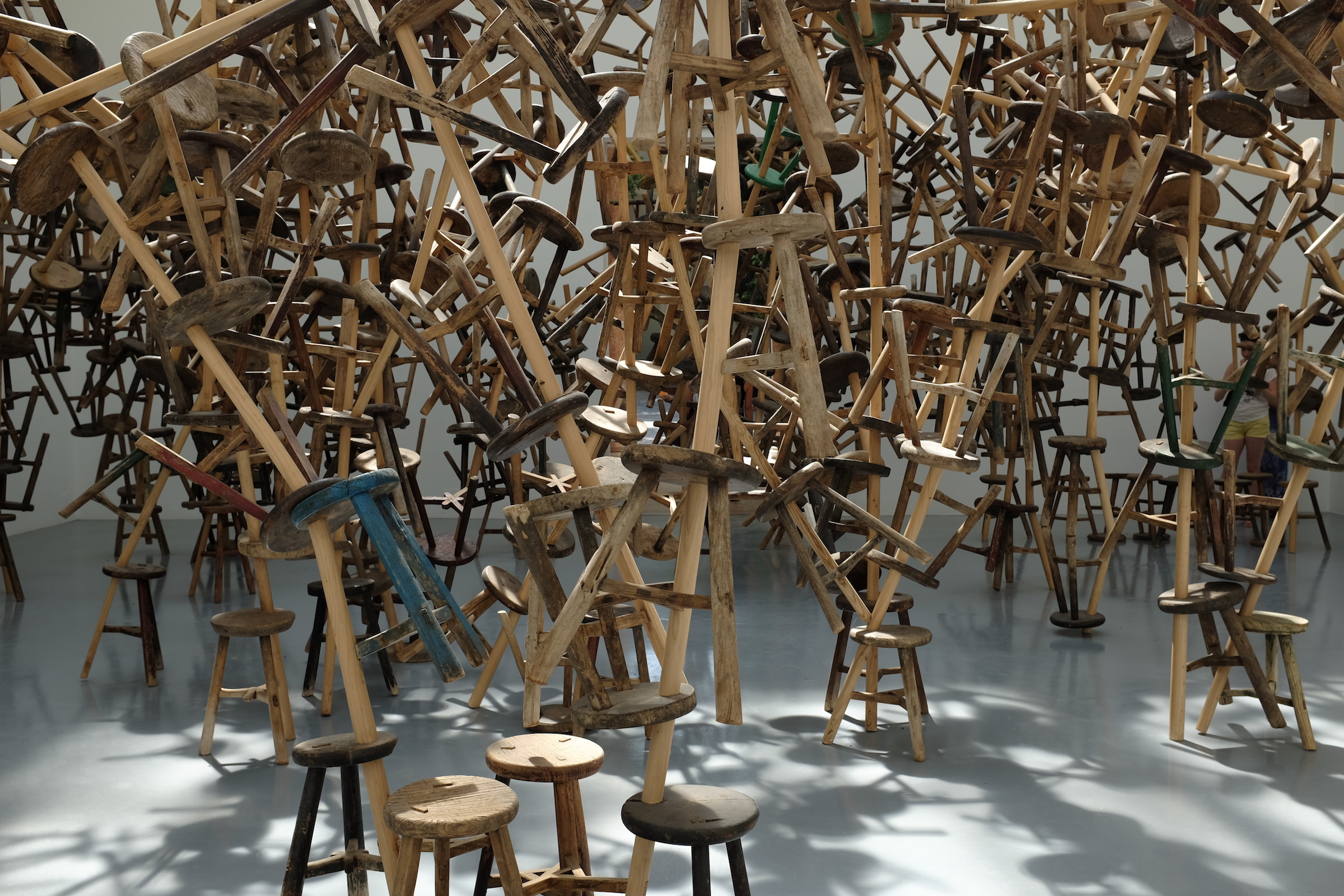
Ai Weiwei, Bang, 2013 (installation in the German Pavilion at the 55th Venice Biennale)

Ai Weiwei, Bang, 2013 (installation in the German Pavilion at the 55th Venice Biennale)

The first thing that confused me about the German Pavilion at last year’s Venice Biennale was that it was in France. Well, not France the actual country, but in France’s pavilion: the two countries swapped buildings for the 55th Venice Biennale as a cultural exchange. Walking into the building the first work on show – in a large central space that generally dictates the tone of anything shown there – was Bang, an installation made of an exploding forest of wooden three-legged stools by the not even a bit German artist (and subject of my last couple of posts) Ai Weiwei. What did it all mean?

Continue reading

Watching them, watching him

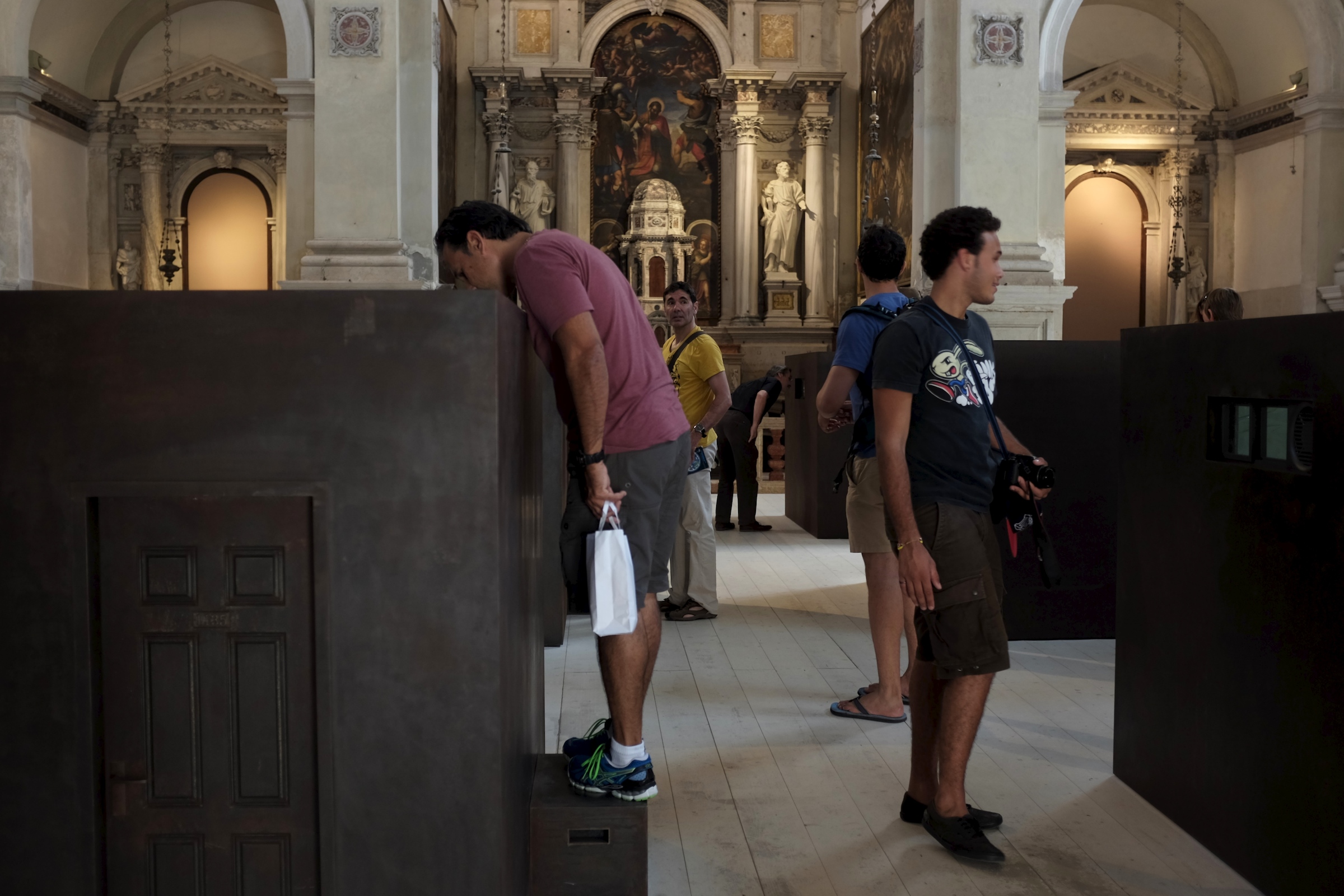
Ai Weiwei, S.A.C.R.E.D., 2013 (installation view,  Sant'Antonin Church)

Ai Weiwei, S.A.C.R.E.D., 2013 (installation view, Chiesa di Sant’Antonin, Venice as part of Disposition organised by Zuecca Projects and the Lisson Gallery)

Walking into a church in Venice and finding six large black crate-like boxes would be a fairly odd regardless but add couple of dozen other art lovers into the equation, wandering around the space and climbing on little black boxes to peer intently into the crates is a distinctly strange and somewhat unsettling experience. Like most churches in Venice, Chiesa di Sant’Antonin, a fourth century building extensively reworked in the Baroque style in the mid seventeenth century, has a rather ornate interior. The austere black boxes that dominate the floor of the space are an incongruous sight; once one gets beyond the immediate visual confusion, the context raises some interesting questions.

Continue reading

Straight talking

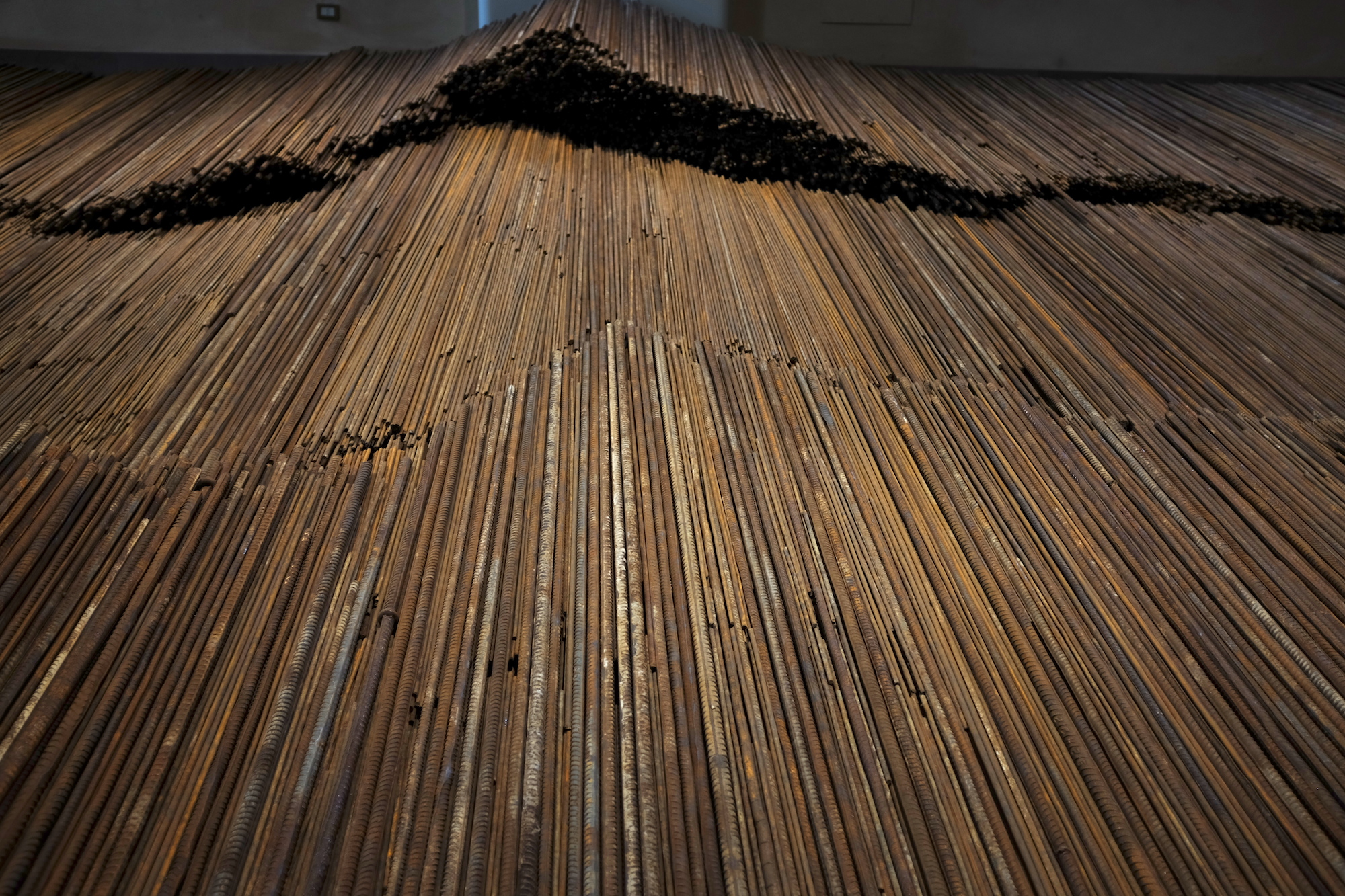
Ai Weiwei, Straight, 2012 (installed at Zuecca Project Space, Venice, 2013)

When the 54th Venice Biennale opened in June 2011, Ai Weiwei had been under arrest in China for two months, his absence as powerful a presence in the art world as his work. Museums and galleries rallied; petitions were signed, posters hung and badges worn. Banners questioning Ai’s whereabouts or calling for his release hung from the galleries that represented him; his Circle of Animals / Zodiac Heads sculpture was on show in London and New York, the Sunflower Seeds had only recently gone from the Turbine Hall at Tate Modern. In Venice, Ai was largely absent; he had no work at the Biennale and was scarcely mentioned in any official capacity.

Guiseppe Sampone Zuecca Project Space 2011 crop

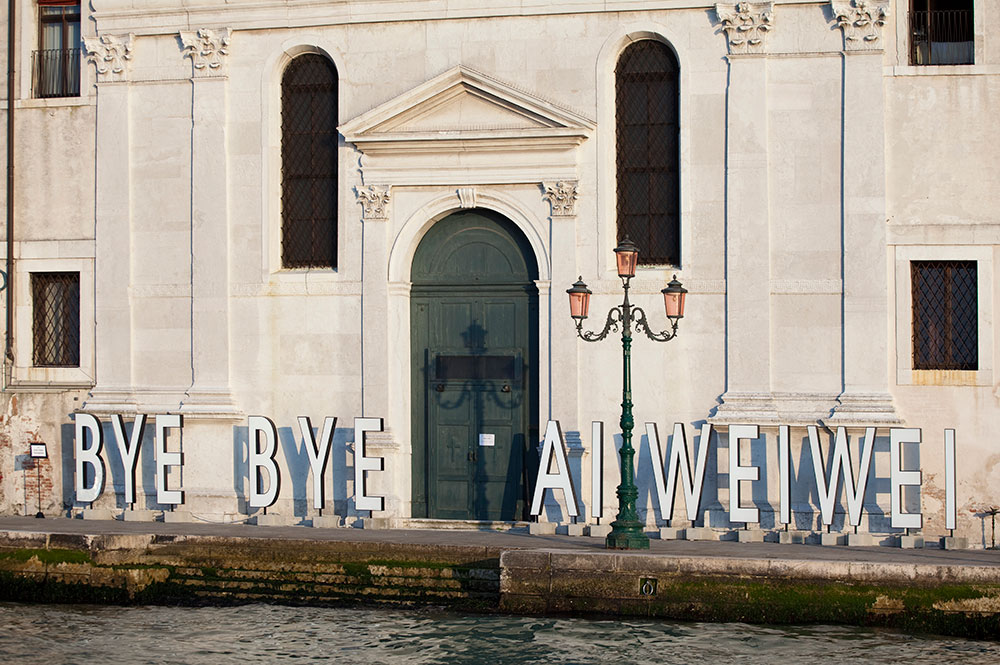
Guiseppe Stampone, Bye Bye Ai Weiwei, outside Zuecca Project Space, 2011

Somewhat confusingly (and, some argued, insultingly), his absence was acknowledged as part of a collateral exhibition by a large sign which read, in four foot tall illuminated letters, ‘Bye bye Ai Weiwei’ positioned prominently on the waterfront on Giudecca island, an, at best, ill-judged work by artist Giuseppe Stampone. Cut forward two years and, though still not allowed to leave China, Ai’s presence was rather more apparent at the 2013 biennale. And this time we got to see his work, some of it in the very building that sign stood outside two years ago, the Zuecca Project Space.

Continue reading

Sitting pretty

installation view of Japan Pavilion, Venice 2013

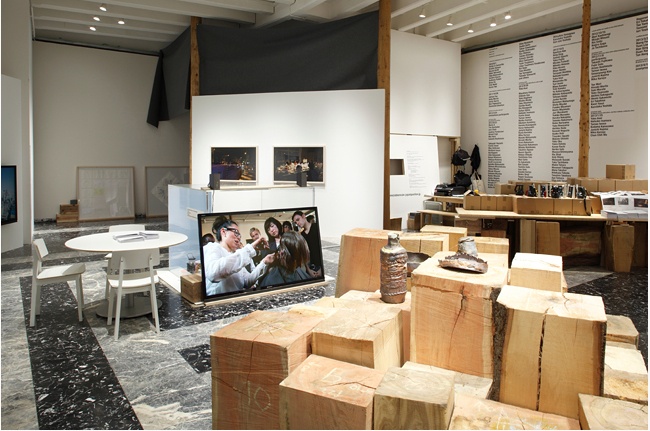
Koki Tanaka, installation view of exhibition in Japan Pavilion, Venice Biennale, 2013

One of the frustrations of art fairs, biennales and the like is the intense time pressure of trying to see everything you want to see in a day (or contemplate buying another ticket to go back, an unappealing option even if one has an extra day free to make it possible), making video and performance works really tricky. On the plus side, the excuse to have a bit of a sit down is often welcome so it’s not all bad. Certainly at last year’s Venice Biennale some of the works I enjoyed the most were time based including a number I really wanted to go back and spend more time with given the chance (didn’t really happen in the case of the things I most wanted to revisit, unfortunately, but that’s the way it goes really). I’ll write more about some of the works that have stayed with me most clearly in the coming days, I hope, but I’ll start with a show that mixed video and objects in a space that still bore the traces of the previous year’s architecture biennale. None of which is what interests me most about the work.

Continue reading

A moveable feast

Joana Vasconcelos, Trafaria Praia, 2013

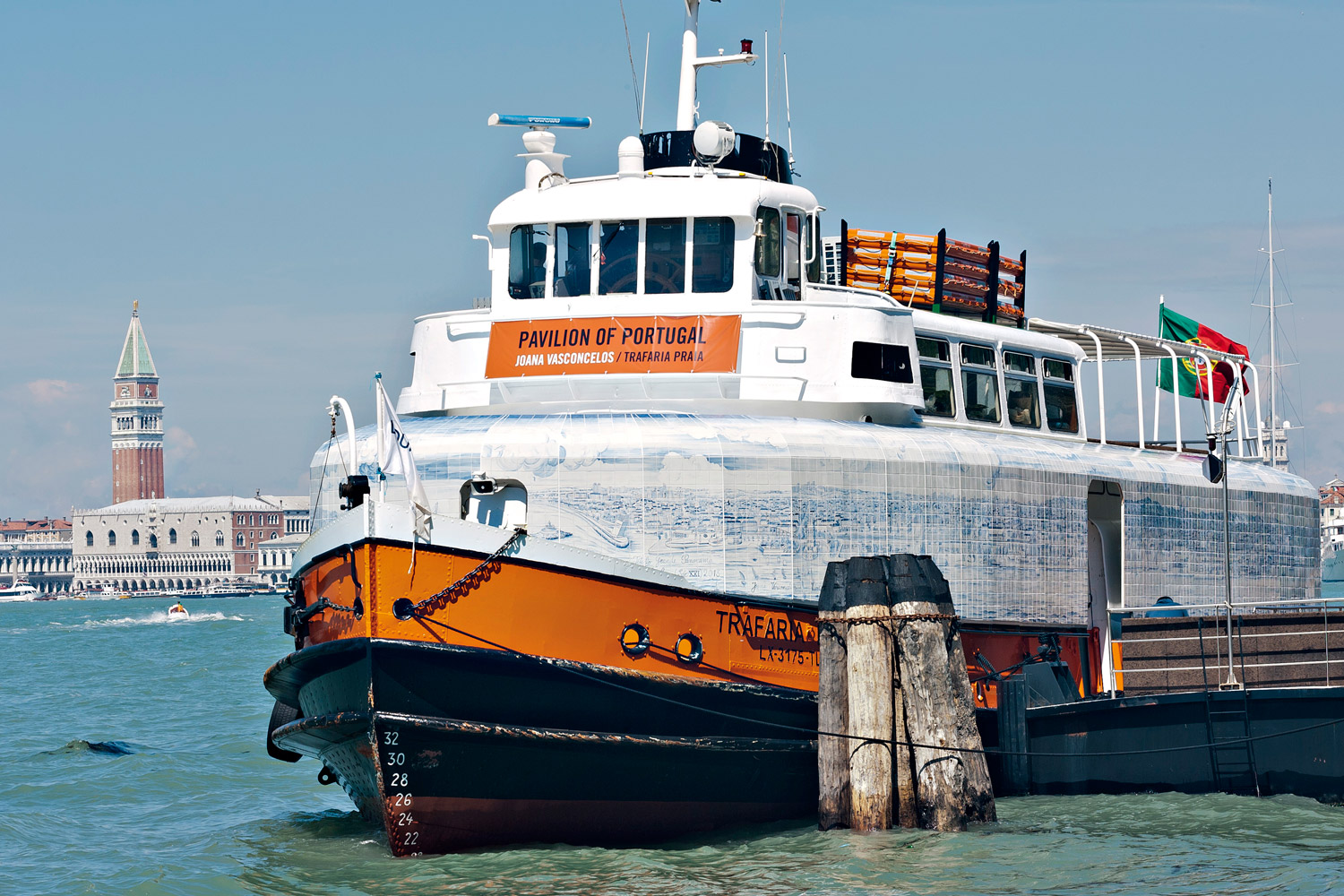
Joana Vasconcelos, Trafaria Praia, 2013

Given that this is the season on sparkly lights, it seems timely to remind myself about Joana Vasconcelos’s Trafaria Praia, the Pavilion of Portugal at the 2013 Venice Biennale. Part art installation, part ferry, this was an unusual space even for Venice. Vasconcelos transformed a Lisbon ferry into an installation that made regular tours of the lagoon. The boat was moored close to the exit of the Giardini – one of the two main Biennale sites and home to many national pavilions – but those who timed their visits right could take a short trip around the lagoon on the Trafaria Praia.

Given more time, I suspect I’d have enjoyed the trip well enough but the pressure of trying to see everything I want to at biennale is such that time based works are inevitably tricky and this is a city where being on land is the novelty so my visit to Trafaria Praia was restricted to visiting the boat at its mooring point. Until I boarded the boat I’d kind of forgotten about the excess of Vasconcelos’s work but, even if it’d been really fresh in my mind, nothing of hers I’ve seen before would have quite prepared me for this.

Continue reading

Starting over

John Pawson, Perspectives, 2011

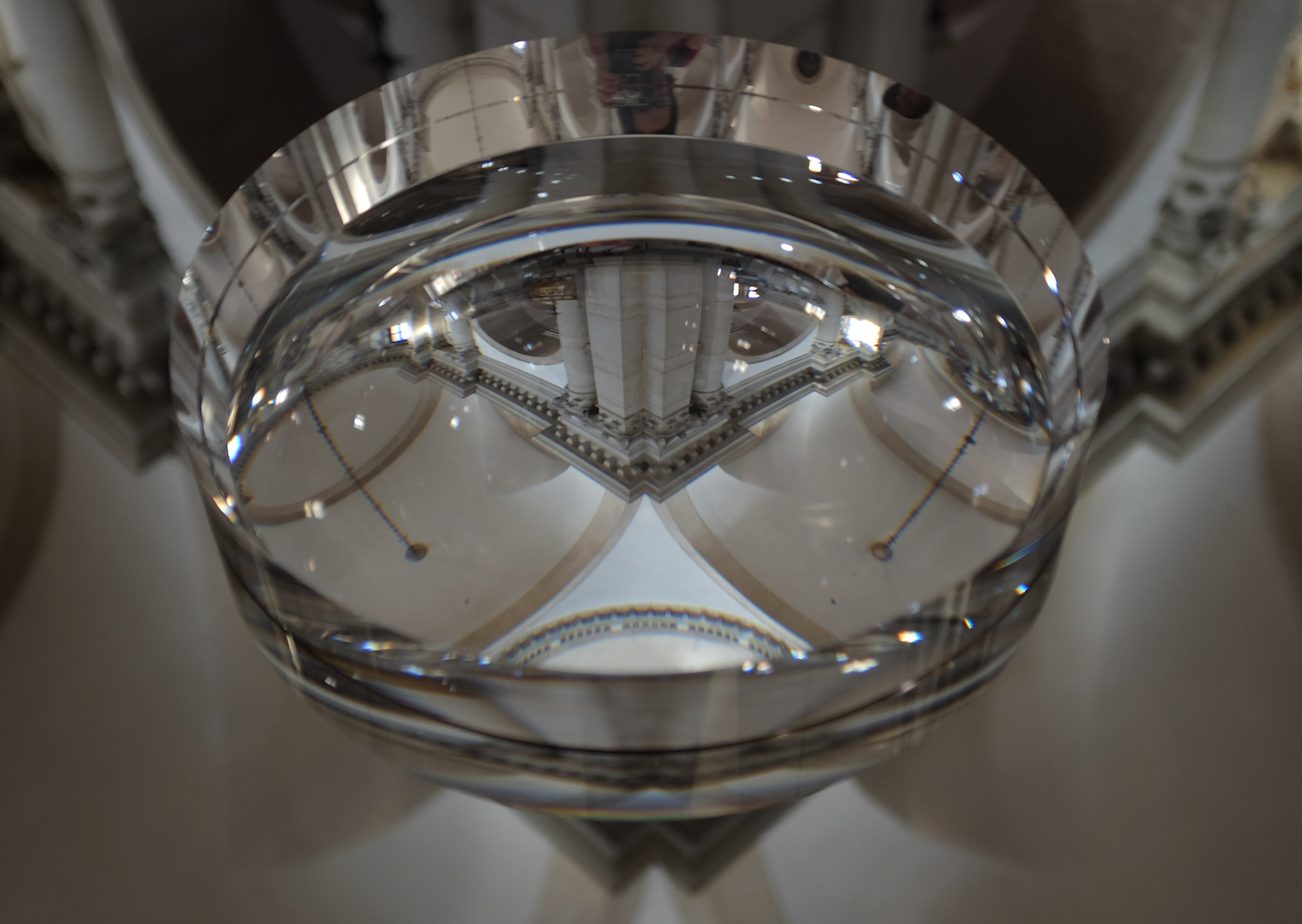
John Pawson, Perspectives, 2011 (installed in San Giorgio Maggiore, Venice, 2013)

So, having lost my blogging mojo in 2013, it’s clearly time for a bit of a fresh start and a resolution to get back to writing random stuff about art on a vaguely regular basis in 2014.*  It seems appropriate to start with a bit of a catch-up on things I’ve seen or been preoccupied by recently but not rambled on about. In some ways I quite like getting a bit of distance on stuff before posting so expect a preponderance of posts about the things that have stuck in my mind most clearly from 2013.

Continue reading