Dividing the space

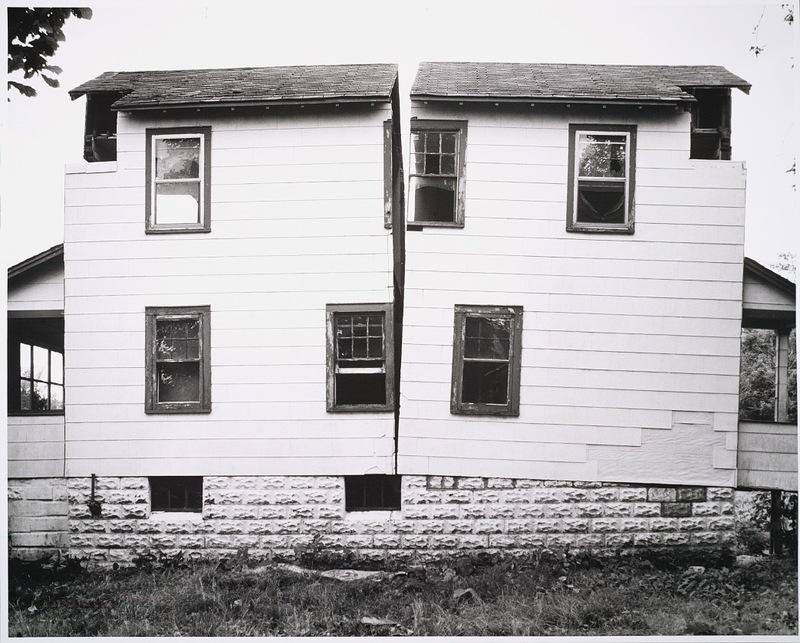
Gordon Matta-Clark, Splitting, 1974

One of my main preoccupations over the last couple of weeks while preparing for the end of year exhibition is how to divide up the space. Obviously for me this involves figuring out where the walls should go and what should go where to make the exhibition make as much sense as possible. But, you know, a bit of literal mindedness and it’s only a small leap from how to divide the studio to Gordon Matta-Clark and the chainsaw and sledgehammer approach to redefining architectural space.

The 1970s may have a lot to answer for in all sorts of ways, but some pretty ground-breaking – or in Matta-Clark’s case building-breaking – art was made then and it’s work that still resonates and that continues to influence subsequent generations of artists.

Continue reading

A perfect match

Vija Celmins, To Fix the Image in Memory I-XII (detail), 1977-82

Vija Celmins, who also makes extraordinary prints and drawings of the night sky, oceans and spiders’ webs which I’m sure I’ll write about at some point, has taken the idea of the copy to an almost neurotic extreme. To Fix the Image in Memory is a collection of stones each with its own identical twin in the form of a painted bronze copy.

Displayed together it’s difficult – okay, pretty much impossible – to tell which is which.

Continue reading

Making good the gallery space

Susan Collis, Don’t Get Your Hopes Up, 2007

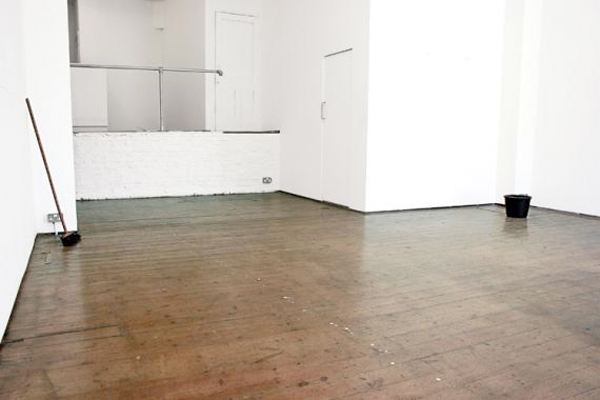
As the end of the academic year approaches, the time has come to turn a very messy art school studio into as good an approximation of a white cube gallery space as possible. I love the process of making the end of year exhibition but I’m not so keen on the construction part of it. All that filling, sanding, cleaning and painting is stupidly tiring – even for me, and frankly I mostly direct proceedings while others to the actual work – and pretty stressful. We always get it done but there’s always a point where it seems like we won’t. Which brings my thoughts to work that reminds me of the tools we need and the work that needs doing.

Susan Collis’s work fits the bill perfectly. After all, her exhibition Don’t Get Your Hopes was basically a gallery in need of some art, right? Well, appearances can be deceptive.

Continue reading

Conversations with history

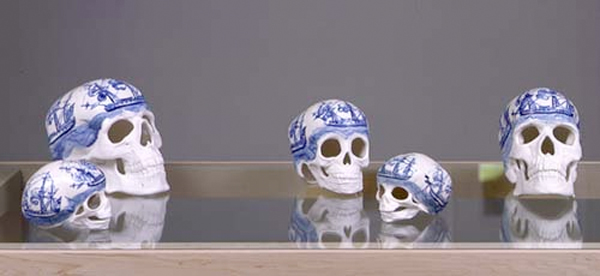
Christine Borland, Family Conversation Piece, 1998

The skull is a powerful symbol. While others have used real skulls as the basis for drawing, sculpture or installation, Christine Borland has used skulls as a starting point for making works in other materials. The skulls in Christine Borland’s Family Conversation Piece are made from fine bone china which is then traditionally decorated in blue and white. The work was originally made for an exhibition at Tate Liverpool, so the choice of bone china was a deliberate one intended to resonate with Liverpool’s history as a producer of china with the decoration – in the style of the porcelain made in Liverpool in the eighteenth century – also referencing the city’s history as a trading port involved in the shipping of both produce and slaves.

Continue reading

Half seen

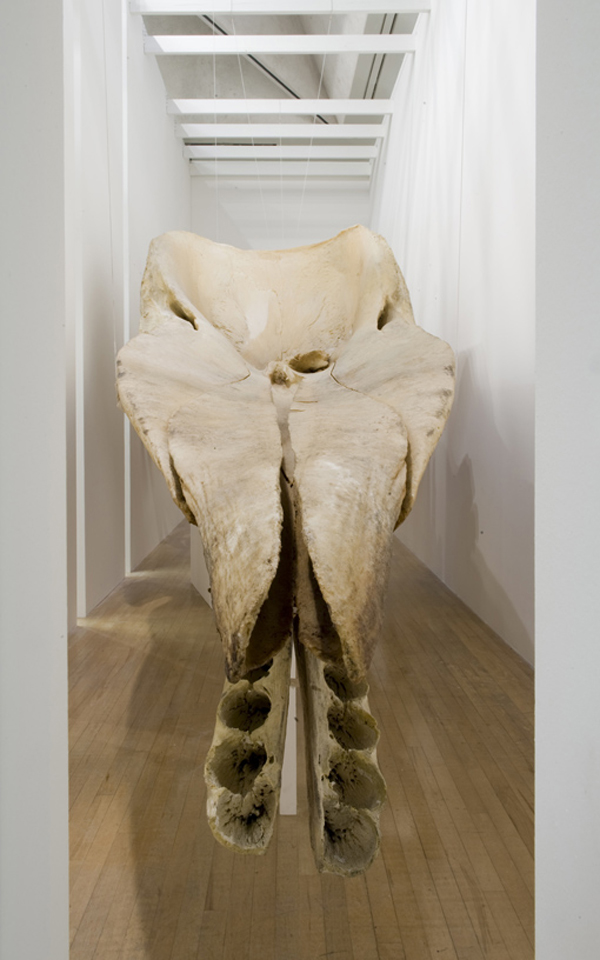
Lucy Skaer, Leviathan Edge, 2009Lucy Skaer, Leviathan Edge part of the installation Thames and Hudson, 2009

Since I’m on a bit of a skull theme, Lucy Skaer’s Leviathan Edge – the skull of a sperm whale borrowed from National Museums Scotland for inclusion in her installation Thames and Hudson – popped into my mind. The skull is rather larger than those adorned by Damien Hirst or Gabriel Orozco. By about 14 foot or so. The whale skull is vast and its shape utterly unfamiliar. It’s a curious object made all the more fascinating by Skaer’s tantalising presentation of it in an enclosed space so that we can only see small sections of it through narrow slits.

Continue reading

Right there in black and white

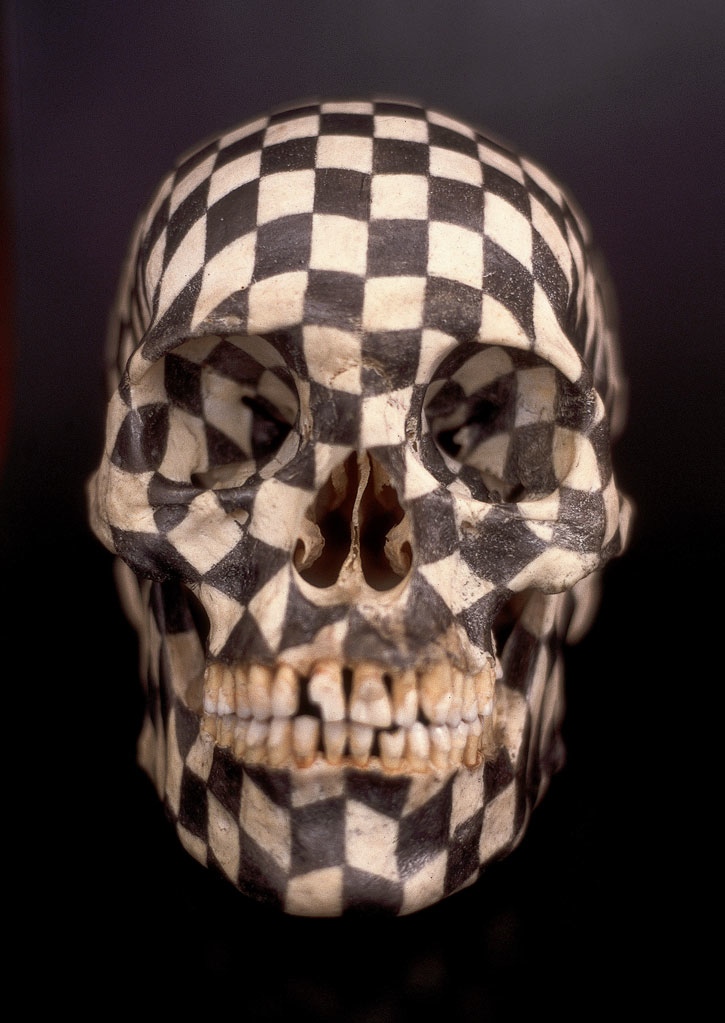
Gabriel Orozco, Black Kites, 1997

For the Love of God, Damien Hirst’s diamond encrusted skull, got me thinking about another – and in my view much more interesting – human skull that has become contemporary art. Gabriel Orozco’s Black Kites is an extraordinary three-dimensional drawing on a distinctly less than conventional ground. This is a work I found both moving and compelling.

Continue reading

Art bling

Damien Hirst, For the Love of God, 2007

The Damien Hirst exhibition at Tate Modern offers both a welcome(ish) chance to revisit Hirst’s early work and be reminded that he did start out by making some genuinely challenging and interesting work and a less welcome opportunity to see some of the most extreme art bling one is ever likely to encounter. Most obviously, there’s that skull. For the Love of God has generated so much press it’s not really possible to be all that surprised by it. Nonetheless, it’s a strange experience.

Continue reading

Frozen moments

Ron Mueck, Drift, 2009

Ron Mueck, who started his working life making models for children’s television before turning his attention and transferring his skills to art, makes the world look strange and often grotesque. His hyper-real figures vary dramatically in scale, from vastly larger than life to positively diminutive; the one thing they never are is life-size. His exhibition at Hauser and Wirth – Mueck’s first solo show in London in over a decade according to the press release – contains just four works but managed to give me quite a lot to think about nonetheless.

Drift occupies on wall of an otherwise empty gallery. A man floats on a lilo on a sea of turquoise. Well, I say he floats. It’s hard to see it any other way but the sea of turquoise is the wall so the floating is imagined given that the man and his lilo are vertical. He seems bathed in sunlight; his hands hang over the sides of the airbed, as though trailing water. He looks relaxed though his eyes are invisible behind his sun glasses and his face is slightly stern.

Continue reading

Laughter, pain and shadow

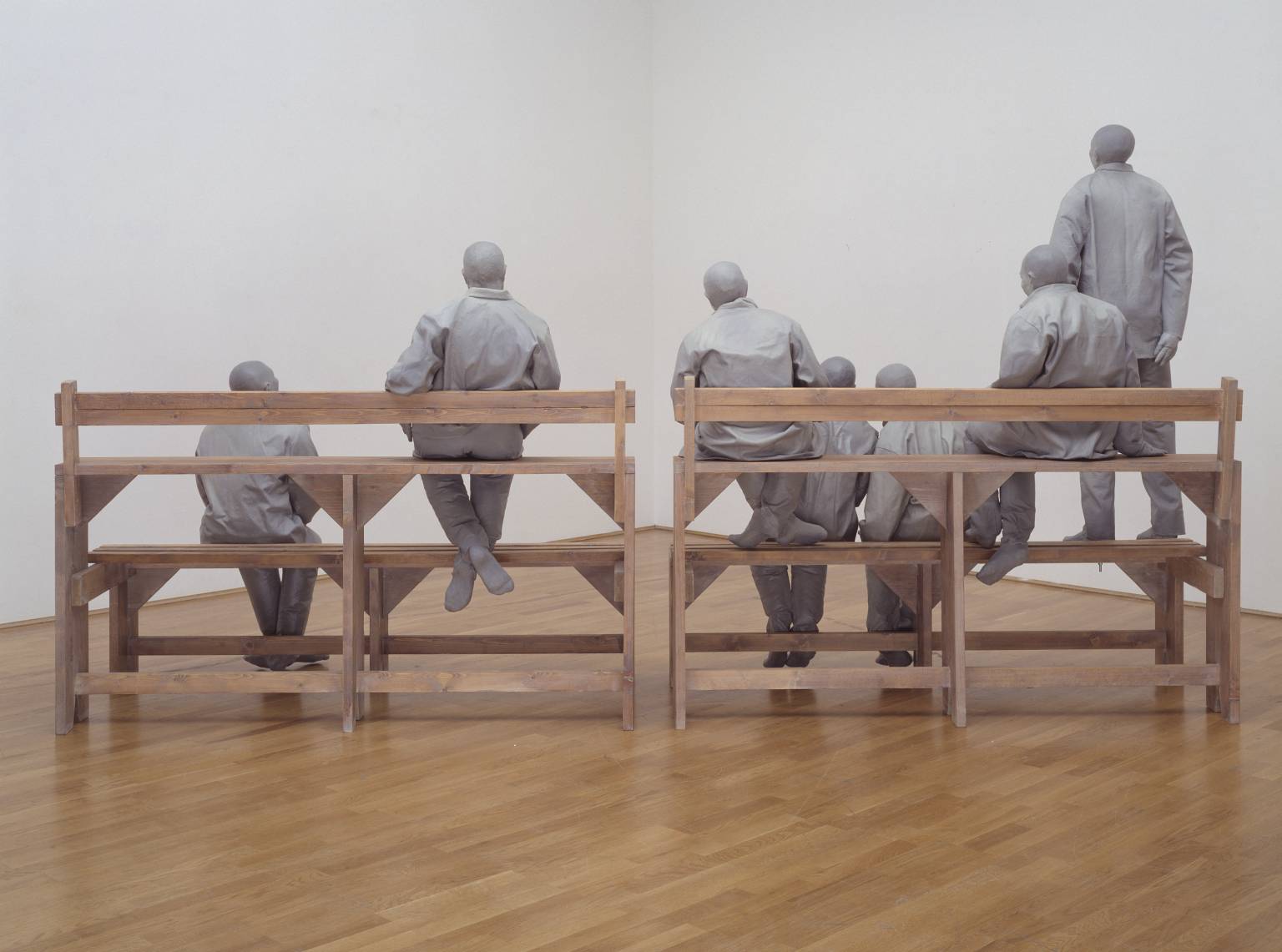
Juan Muñoz, Towards the Corner, 1998

From behind it’s the grey uniformity of the figures that’s striking. They look relaxed and comfortable on the wooden terraced seating. One or two lean in towards one another conspiratorially, but in the main though they are sharing the experience, they seem lost in their own enjoyment of whatever it is they’re watching. Working one’s way round the edge of the piece to see the the work from what we assume to be the front is a very different experience. No longer one of the crowd of watchers – and by now trapped in the corner of the room by the work – one immediately becomes not merely the watched but the laughed at. Regular readers will probably have realised by now that I like art that makes me laugh; disconcertingly, in Juan Muñoz’s Towards the Corner it is the art that is doing the laughing. And it’s laughing at me.

Continue reading

In the crowd

Duane Hanson, Tourists II, 1988

Models of people made in the name of art are hardly a new concept but nonetheless there’s something unexpected about figurative sculpture that needs a second glance – at least – to reveal itself as object rather than person. Duane Hanson’s figures look very real – indeed his working process included casting from live models – and often very out of place in contemporary gallery spaces. It’s the incongruousness of the figures in the context that makes me most enjoy the ones who look like they just might be real until one gets close enough to spot the pretence. Seen in a London gallery, Hanson’s Tourists look like they might be American tourists who have wandered into a contemporary art space by mistake. Hanson is dealing in stereotypes, but in doing so, he is asking us to question our own preconceptions.

Continue reading