London lives

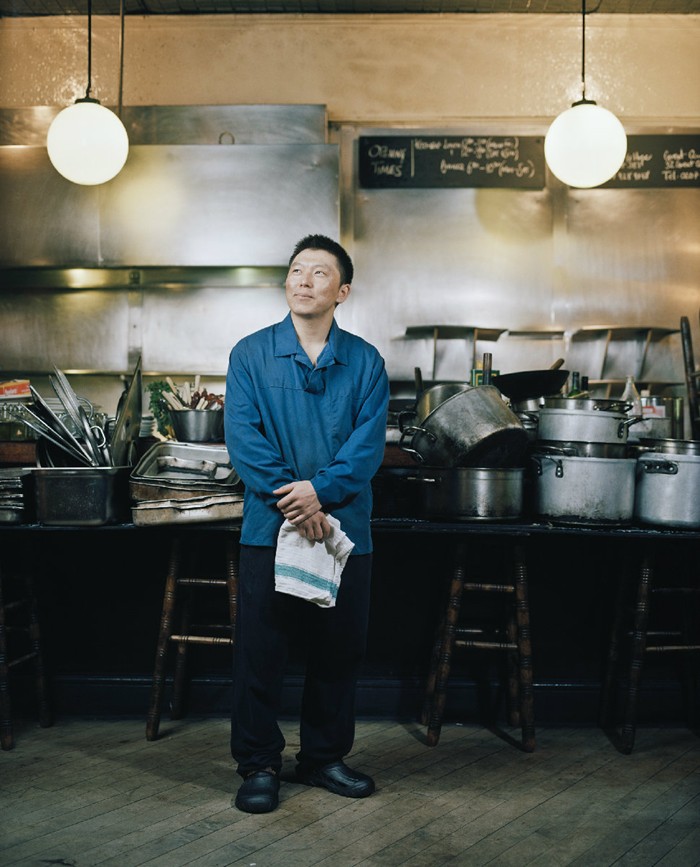
Max Hamilton, Laka Enke Bayr, Mongolia, 2010

Londoners come from anywhere and everywhere. Once you move here, you become a Londoner whether you came here from Surrey or Sudan. With the world coming to London for the Olympic games, The Photographers’ Gallery decided to commission a series of portraits of Londoners for a public art exhibition called The World in London. The aim was to find and photograph a Londoner from each of the 204 countries sending a team to the Olympics. They almost managed it; there are two or three places from which no Londoners have yet been found: American Samoa is one, Nauru another (there may be more that I’ve forgotten about), but the exhibition lives up to its title.
Continue reading

A crisp lack of clarity

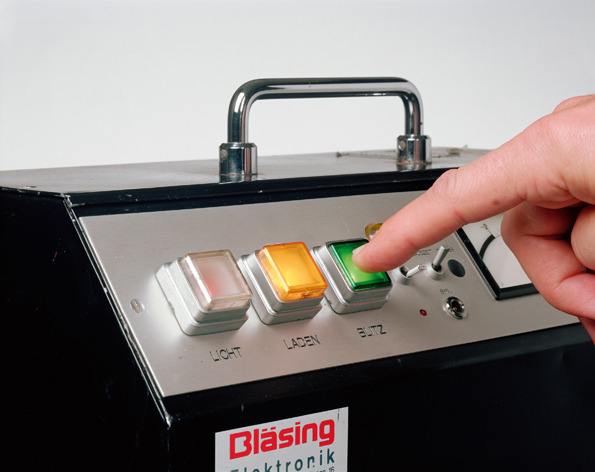
Christopher Williams, Bläsing G 2000, Bläsing GmbH, Essen Model: Christoph Boland, November 15th 2010, 2010

Christopher Williams’s pictures in the Deutsche Börse Photography Prize exhibition might well be really interesting were there enough of them on show to offer some sort of clue as to the artist’s intention. Sadly though the sharpness and objectivity of the images isn’t matched by a clarity of non-visual communication and I was left idly wondering what Williams wanted to say but without any determination to go out of my way to find out. Given that I actively like conceptual art, I probably fall into the section of the audience Williams has the most hope of winning round, although I do admit that once the ‘I really can’t be bothered with this’ feeling takes hold I do tend to given in to it with indecent haste and often quite bad grace.

Continue reading

Life, illuminated and remixed

Rinko Kawauchi, from Illuminance, 2011

The pictures that make up Rinko Kawauchi’s Illuminance, the book for which she was nominated for the Deutsche Börse Photography Prize, are individually beautiful and collectively fascinating and at times baffling. Some feel like stolen moments, some deliberately constructed, all share an understanding of how the camera sees light and its ability to transform the ordinary into the extraordinary. The pictures in the series have been made over a period of about fifteen years for various reasons – including both commissions and personal work – and brought together to form a cohesive body of work.

Continue reading

The cost of change

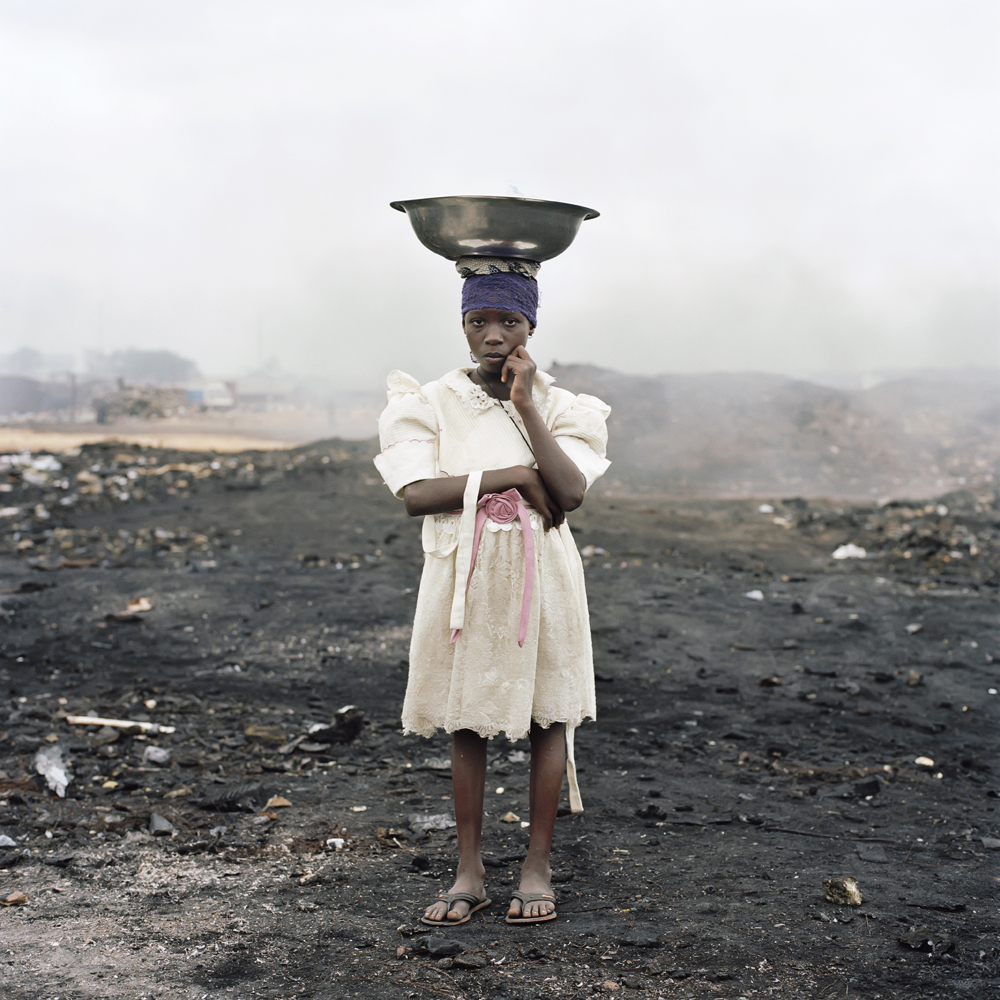
Pieter Hugo, Naasra Yeti, Agbogbloshie Market, Accra, Ghana, 2009

In a way at the opposite end of the scale to John Stezaker’s use of existing pictures, Pieter Hugo’s Permanent Error is a documentary project that clearly shows the very real human cost of technological change and the rush to replace anything we perceive as slightly out of date. I’m sure many of us are guilty of replacing computers that still work because there are newer and faster models around. This body of work is a reminder that we need to learn to deal responsibly with the equipment we cast aside. Hugo has photographed the landscape of a site in Ghana where obsolete technology is dumped and the young people who make a living of sorts salvaging the metals that have a scrap value.

Continue reading

Fragmented view

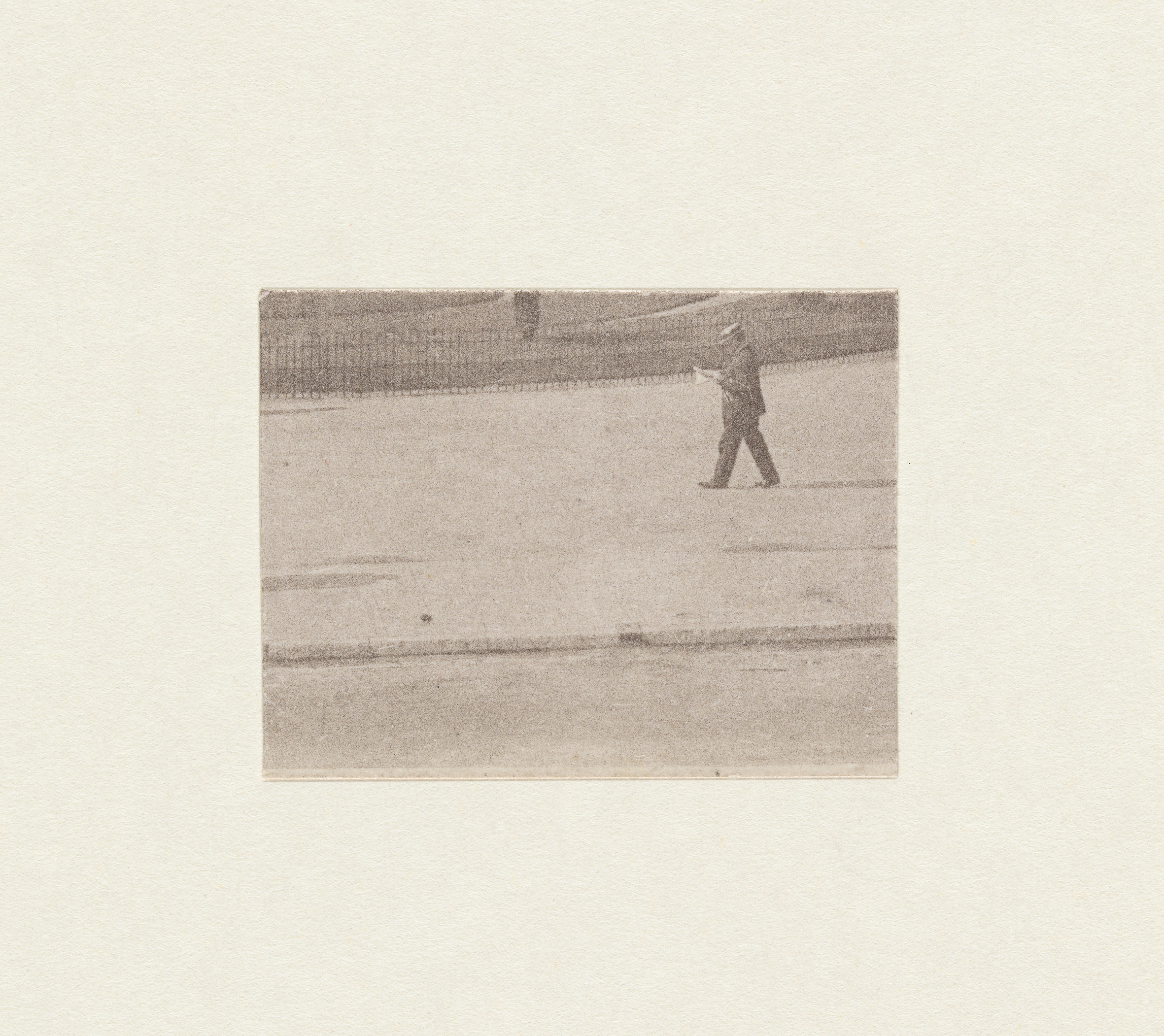
John Stezaker, Untitled II, Reader from The Third Person Archive, 2012

There’s often something strangely frustrating about the Deutsche Börse Photography Prize and in some ways this year’s exhibition is no exception. Photography has been a dominant medium in art practice for a long time now but a prize of this nature has to balance art against documentary practices often resulting in a strangely unsatisfying exhibition. In this year’s exhibition, one body of work stands out in terms of he artist’s use of photography in his practice. Unusually for a Deutsche Börse nominee, John Stezaker (whose work I’ve briefly referred to before) uses rather than makes photographs, producing collages from found images gathered over several decades.

Continue reading

In a state of flux

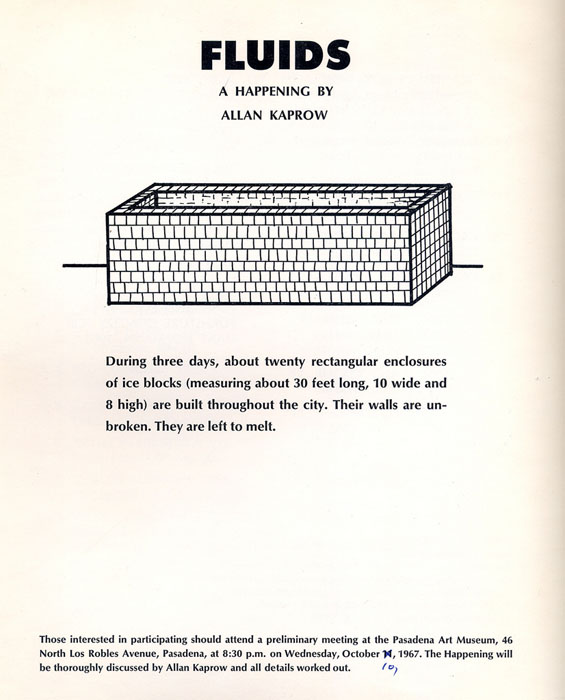
Allan Kaprow, Poster for Fluids: a Happening by Allan Kaprow, 1967

While Francis Alÿs choose to melt ice the hard way, he’s not the only – or the first – artist to make art from ice melting away. In 1967, Allan Kaprow staged a Fluxus ‘happening’ in which enclosures were built from large blocks of ice around the Los Angeles area; they were then left to melt away. Kaprow advertised the event in advance to find volunteers to help build the enclosures, a major undertaking given their size.

The event was documented photographically – by Dennis Hopper (yes, that Dennis Hopper) – but essentially this was an event to be experienced in real life rather; it existed for those who were involved in the building process and in a different way for those who came across the ice enclosures before they melted away.

Continue reading

Costume drama

Yonka Shonibare, Diary of a Victorian Dandy: 11.00 Hours, 1998

For Yinka Shonibare, Hogarth’s The Rake’s Progress was a starting point for an exploration of art history and the representation of black people rather than something to be reworked for a new time. And with a fascination with the Victorian era, Shonibare chose to change both the narrative and the period in which it’s set, creating a series of photographs called Diary of a Victorian Dandy, made over a period of three days at a stately home in Herefordshire. And though Hogarth’s series is a clear inspiration, the story of Shonibare’s dandy is told in five scenes seemingly taking place in a 24 hour period and each titled with just the time of day. The dandy – played by the artist – rises late. He is attended by many servants; contrary to the narrative we see played out across the history of Western painting, it is the dandy who is black rather than one of the servants who seem to dote on him.

Continue reading

Smoothing the surface

Frank Auerbach, Head of J.Y.M., 1981

For Frank Auerbach painting is an obsessive process. He paints the same people over and over again – J.Y.M., or Juliet Yardley Mills to give her her full name, is one of Auerbach’s favourite models; he’s painted her regularly for decades – often painting layer upon layer until he’s happy with the result. As a consequence both of his style of painting and the way the image is built up over a period of weeks or months – and who know, possibly years in some cases – the surfaces become almost sculptural. Even in reproduction – which, let’s face it, is how we often see art – the texture of the paint is apparent. Or so it seems.

Continue reading

Remaking history

Jeff Wall, A Sudden Gust of Wind (After Hokusai), 1993

Although referencing other artworks is perhaps most closely associated with the post-modern practices of the 1970s – think Sherrie Levine and Richard Prince in particular – it’s  a practice widely used in contemporary art. Jeff Wall’s large-scale photographic tableaux, many made in the 1980s and ’90s, could perhaps be seen as a kind of bridge between work that uses appropriation as a way to explore ideas about authorship – a key concern in post-modernism – and work that draws on art history and reworks it, perhaps in an attempt to understand the present by looking at the past. These works – shown as large light-boxes, a form that references advertising but also feels related as closely to cinema as to still photography without actually taking on the expected form of any of these – are both visually stunning and fascinating to look at; the detail is extraordinary and the scale – A Sudden Gust of Wind is roughly 2.5m by 4x – makes it possible to examine even the tiniest details. Though Wall continues to make engaging work, in my view his more recent work – which was one of the first things I wrote about here – isn’t as interesting as the earlier tableaux.

Continue reading

Suburban stories: the borrowers

Gregory Crewdson, Untitled (Woman at Vanity), 2004 (from the series Beneath the Roses)

Although Gregory Crewdson’s strongest influences seem to come from Hollywood cinema, and his works are easy to read as film stills, in some of his pictures there are also clear art historical references. Untitled (Woman at Vanity) could easily be a still from a film or and American television series. I find myself wondering about the open curtains – especially given that this is a ground floor bedroom – and worrying about the slightly open patio door. The couple seem sad, but this is not a shared state; each looks lost in their own thoughts and their own private disappointment. The setting and the relationship between the couple might scream Crewdson but coupled with a hint of Edward Hopper.

Continue reading