Mastering the system

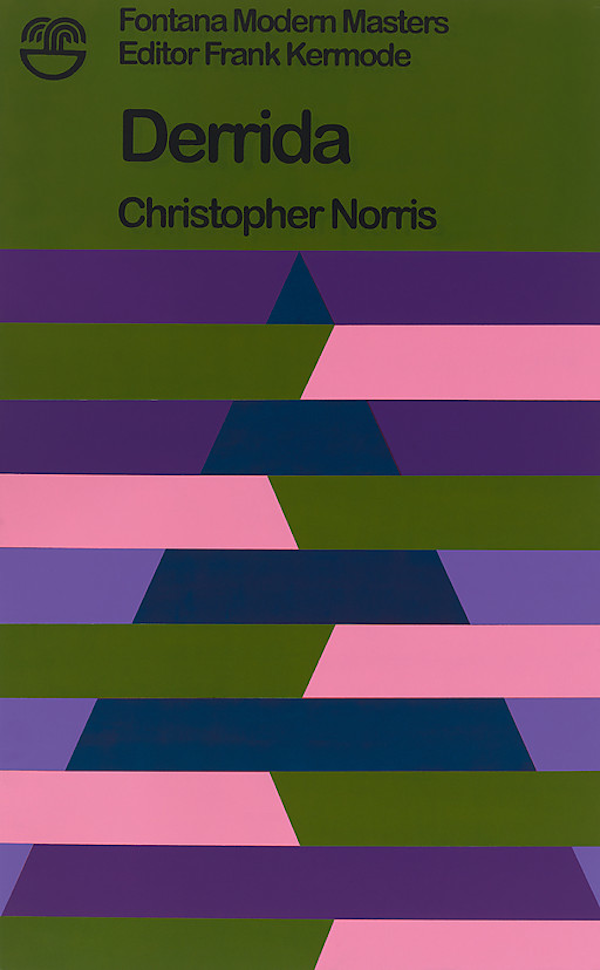
Jamie Shovlin, Derrida from Various Arrangements, 2011-12

For many people, the Fontana Modern Masters series provided an introduction to philosophy, critical theory and assorted other aspects of twentieth century thinking. The books, first published in the 1970s sand early 1980s were portable and cheap and the colourful geometric designs on the covers made them easy to spot. I know a trawl of my bookshelves would yield a few; certainly Bryan Magee’s Popper helped me through philosophy of science one of the few bits of my physics degree I properly enjoyed (yes, that’s right, physics; and no, I have no idea what I was thinking either).

So, why am I writing about some book covers from several decades ago now? Well, I’m not really, expect as a bit of background on the matter in hand: Jamie Shovlin’s Various Arrangements which I caught recently – somewhat by accident and on the last day – at Haunch of Venison.

Continue reading

Contested land

Willie Doherty, Dead Pool II, 2011

At first sight, Willie Doherty’s recent photographs – included, along with works from throughout Doherty’s career, in the exhibition Disturbance, currently at the Towner Art Gallery in Eastbourne – are beatiful if somewhat bleak images of a desolate  landscape. But like all Doherty’s work the subject matter is Northern Ireland and even that basic level of knowledge – coupled with the titles of works such as Dead Pool II or Seepage – means that the photographs carry a very different resonance.

Continue reading

Burning light

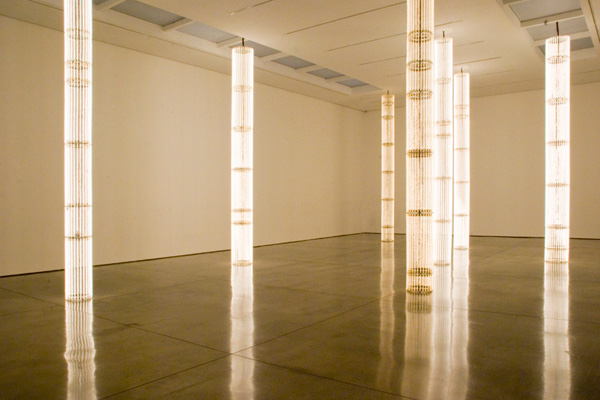
Cerith Wyn Evans, S=U=P=E=R=S=T=R=U=C=T=U=R=E (‘Trace me back to some loud, shallow, chill, underlying motives overspill’), 2010

Going back to work that transforms the space in an unexpected way, thinking about Martin Creed’s Work No. 227: The lights going on and off made me think about Cerith Wyn Evans’s S=U=P=E=R=S=T=R=U=C=T=U=R=E (‘Trace me back to some loud, shallow, chill, underlying motives overspill’) which I first saw at White Cube Mason’s Yard a couple of year ago and again recently in a somewhat pared down form at the extraordinary De La Warr Pavilion in Bexhill in Sea.

The installation is a series of columns made of lighting filaments running though glass tube. The columns both form obstructions in the room and alter the light levels within it. More interestingly though they generate a huge amount of heat. And, as you may have guessed given the mention of Creed’s installation, they go on and off.

Continue reading

Reenacting acting

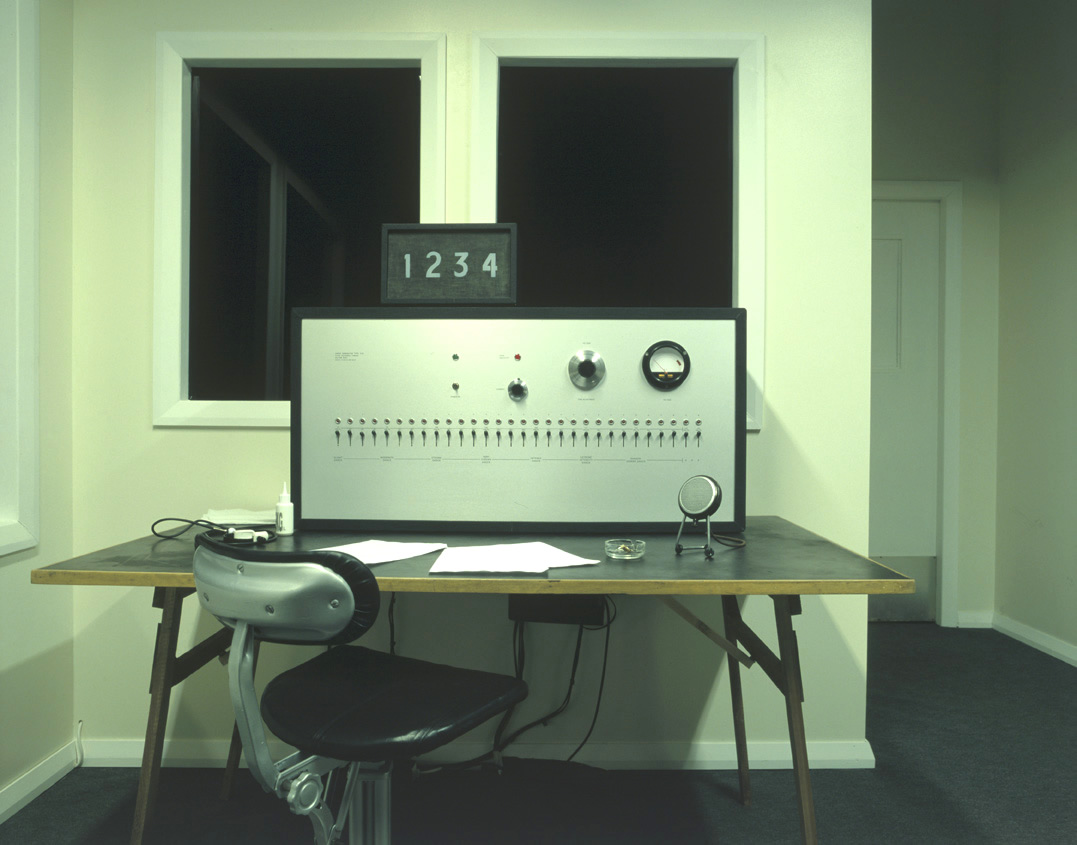
Rod Dickinson, Milgram Reenactment, 2002

In Stanley Milgram’s 1961 experiment to test obedience to authority, the experimenter orders the volunteer subject – cast in the role of teacher for the purposes of the experiment – to administer a painful electric shock to an unseen pupil when they get something wrong. In fact the experimenters and pupils were actors and the screams were pre-recorded sounds. The test determines the degree to which the subjects of the experiment were prepared to obey orders when doing so involved – or so they believed – inflicting pain on others.

In 2002, artist Rod Dickinson, working in collaboration with Graeme Edler and Steve Rushton, exactly recreated the setting used by Milgram – the Interaction Laboratory at Yale – and engaged actors to reenact the experiment as an art performance.

Continue reading

Dirty work

Mark Dion, Tate Thames Dig, 1999

In 1999 the process of transforming what had once been Bankside Powerstation into Tate Modern was well underway. Tate had long since needed more space in which to show its two collections – the national collections of British Art and of Modern Art (here considered to be post-1900) – and the new space was eagerly anticipated. The collections would at last get their own spaces, each museum facing the Thames one from Millbank on the northern bank, the other from Bankside, further east and on the southern bank of the river.

In anticipation of the new space, Mark Dion adopted the role of archaeologist to create the installation Tate Thames Dig, initially shown in the Art Now room at what was then known as the Tate Gallery (now Tate Britain).

Continue reading

True blue

Roger Hiorns, Seizure (detail: crystals on wall), 2008

Although I knew the basis of the work – a flat full of copper sulphate crystals – nothing could quite have prepared me for Roger Hiorns’s 2008 installation Seizure. Unlike the installations I’ve written about in the last few posts, this wasn’t remotely disorientating – that wasn’t the idea at all – rather, it was the astonishingly beautiful result of a process that was both hugely ambitious and possibly a little bit crazy.

With the support of Artangel – who make it possible for artists to realise unusually difficult projects such as this one, or Michael Landy’s Breakdown – Hiorns sealed one of the flats before introducing copper sulphate solution which was then left to crystallise. The result was a blue wonderland in a run-down low-rise block in inner London.

Continue reading

Airy stories

Martin Creed, Work No. 200 Half the air in any given space, 1998

While I’m thinking about spaces of confusion and installations that can disorientate the viewer it seems like aa good opportunity to have think about Martin Creed’s Work No. 200 and Work No. 247 both also titled Half the air in any given space. In these works, half the air in the space is separated from the rest by being contained within balloons. This is another work I’ve somehow managed to miss and it’s right there on my list of things I really want to see.

Continue reading

Lost in the fog

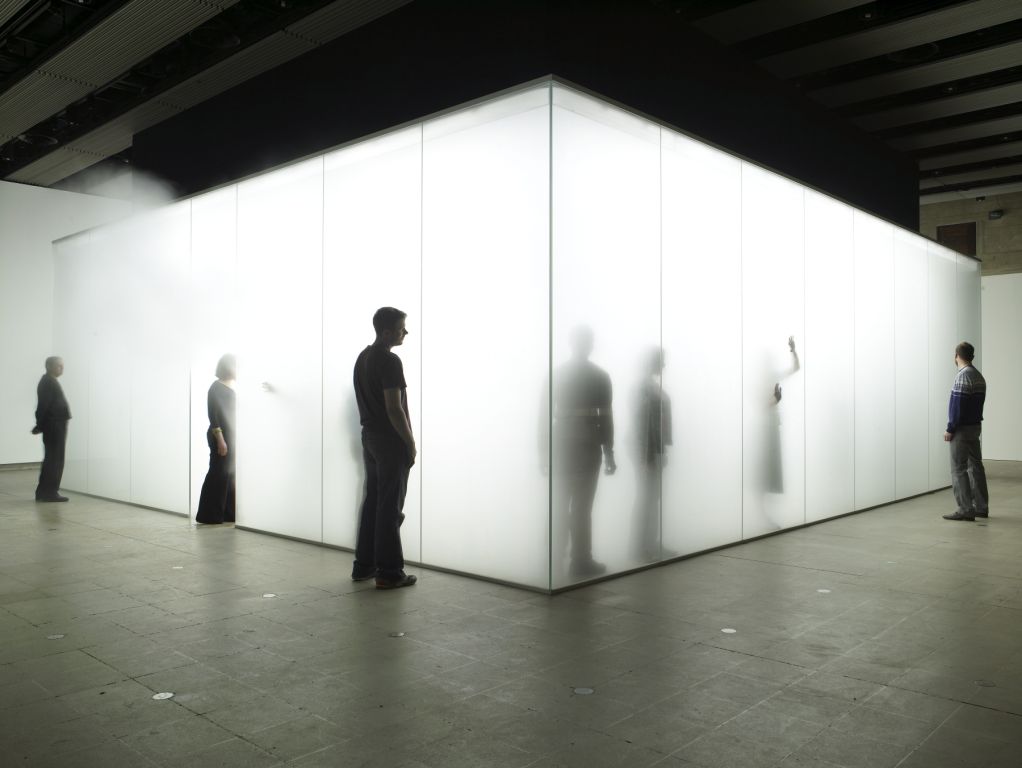
Antony Gormley, Blind Light, 2007

Disorientation and an assault on the senses isn’t something I normally associate with Antony Gormley. Figurative sculptures, yes; glass boxes full of fog and confusion, no. Them’s the rules. But rules are made to be broken, I suppose, and the unexpected from an artist you thought you’d got the measure of is no bad thing.

Blind Light is a brightly lit, glass walled room filled with mist. As people enter the space they quickly disappear from view. From the outside occasionally shadowy figures can be seen as they get close to the walls, hands becoming suddenly clear as they touch the wall.

Continue reading

The weight of darkness

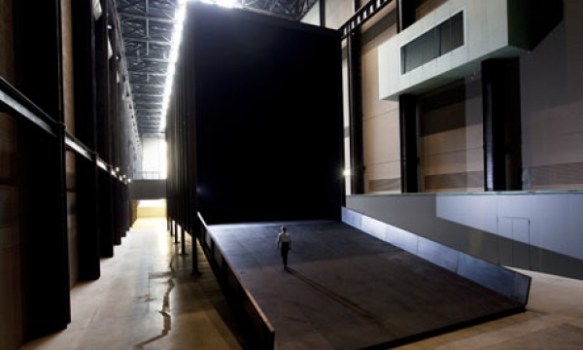
Miroslaw Balka, How It Is, 2009

Disorientation is a powerful force. Whereas Klein’s white void might have amounted to nothingness as art, Miroslaw Balka’s How It Is, the 2009 Unilever Commission for the Turbine Hall of Tate Modern, couldn’t be seen as nothingness in quite the same way. This was an altogether heavier void and, for me, its weight was a significant part of its power.

Continue reading

A blank canvas

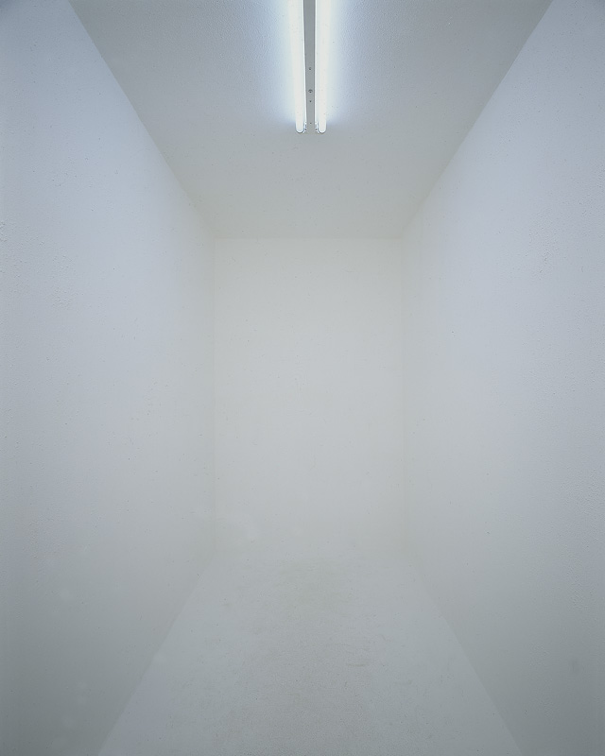
Yves Klein, Immaterieller Raum (Immaterial Space), Museum Haus Lange, Krefeld, 1961 (restored 2009)

Over the last few posts I realise I have been dealing with increasingly immaterial art. Though the work is visible it’s ultimately mostly made of nothingness. So, with Invisible soon to open at the Hayward Gallery, now seems like as good a time as any to think about work that really is made of nothing. The void as art. Well we’ve been here before in a way with Yves Klein’s Leap into the Void, but that was an actual photograph and art can get much more insubstantial than that…

Continue reading