Ordinary people

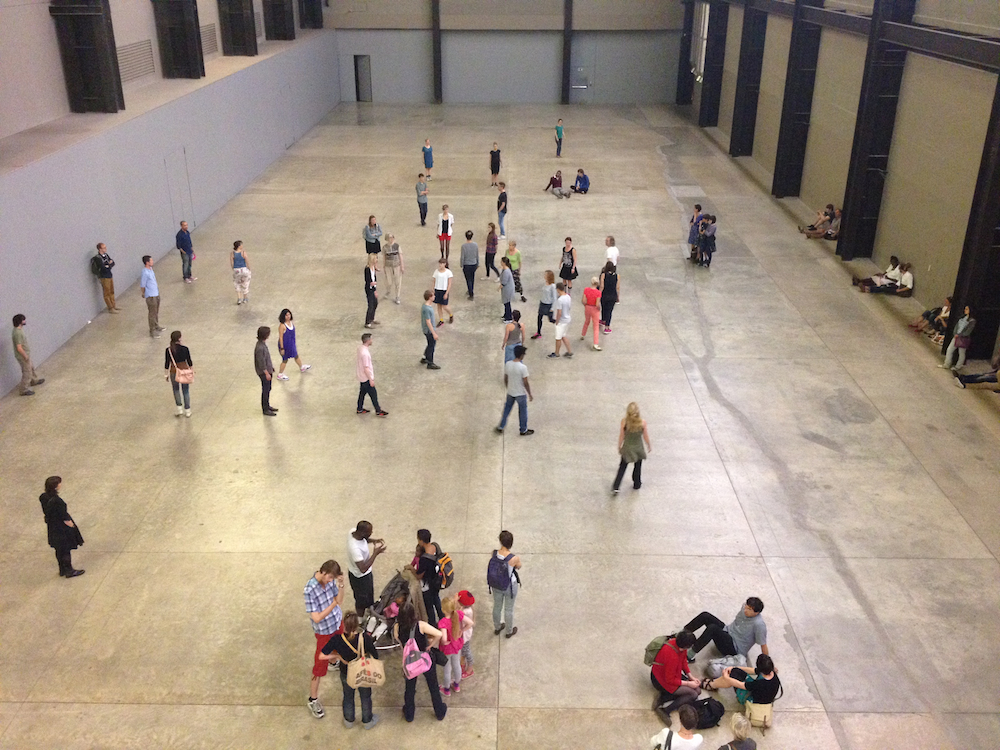
Tino Sehgal, These Associations, 2012

From the start, the Turbine Hall at Tate Modern has been unusual. Taking its name from the function of the vast space when the building was still a power station, it’s really not a typical museum space. The artists commissioned to make work for it have all responded to it in very different ways but it’s the response of the audience, almost as much as the work itself, that makes the annual Unilever Commission fascinating. From Olafur Eliasson’s The Weather Project (which I’ve written about before) to those brief few days when visitors to Ai Weiwei’s Sunflower Seeds were allowed the access the artist had intended before health and safety concerns caused the work to be cordoned off, the Turbine Hall somehow makes people behave more like they would at the beach than in an art museum. All of which makes Tino Sehgal (whose work I’ve touched upon before elsewhere) an intriguing choice for this year’s commission. How would an artist whose work lies in the dynamic between audience and performer make work for such a cavernous space? And how would the audience respond?
Continue reading

Shadow play

Lis Rhodes, Light Music, 1975 (installed at Tate Modern, 2012)

Performance art in museums is still something of a rarity. Though film/video installations do fare a bit better, the prospect of having a space dedicated to showing practices such as these in a major museum is an exciting one. Given that I am also intrigued by the reuse of former industrial spaces, all in all I’m quite excited about the opening of The Tanks – the vast underground tanks that once held the oil for Bankside power station – at Tate Modern. Converted, like the building itself, by architects Herzog + De Meuron, The Tanks are not remotely like the white wall gallery spaces we’ve come to expect. Like the Turbine Hall, The Tanks – two large circular spaces plus some smaller rooms – have been left unashamedly industrial.

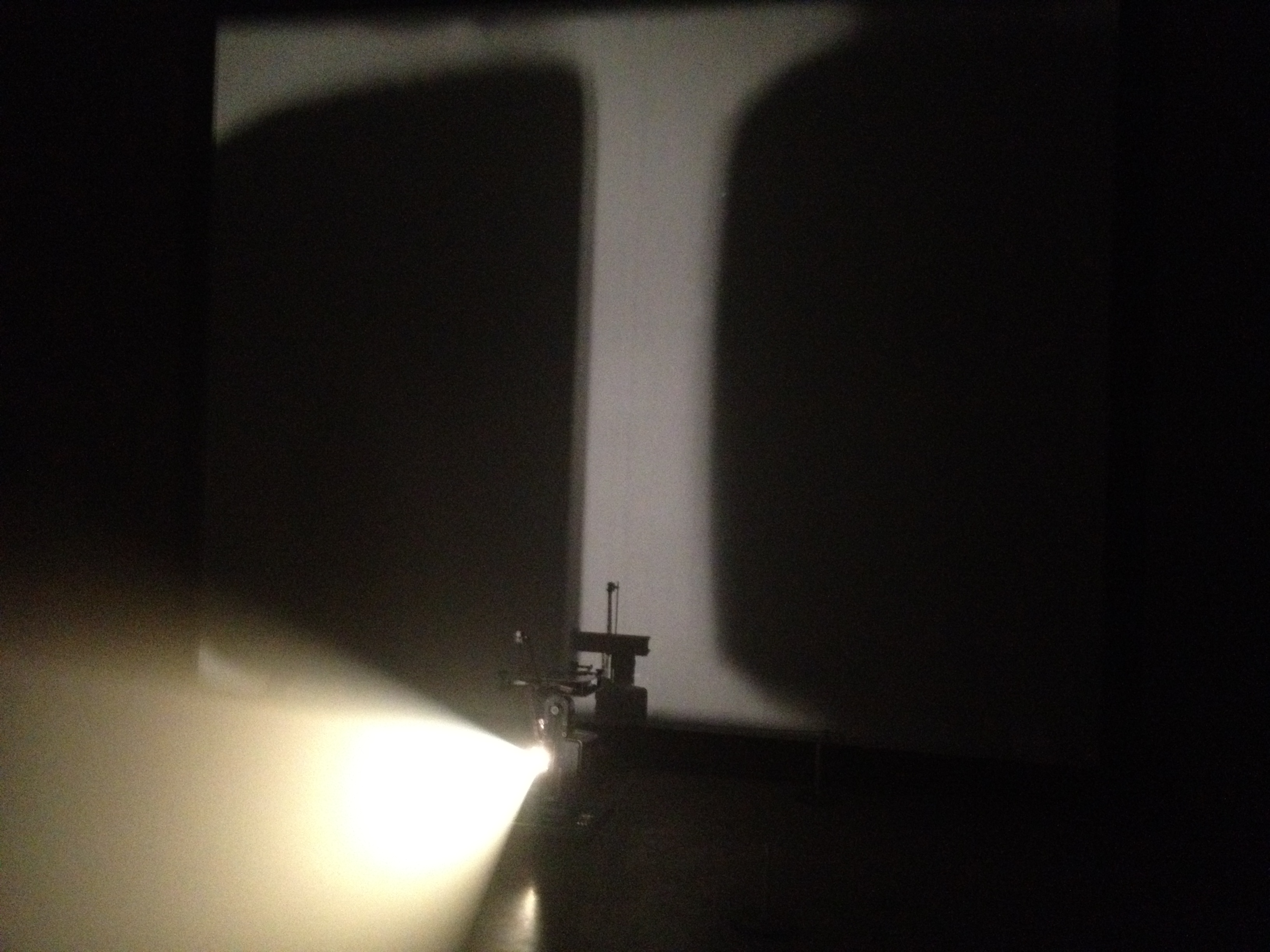
In many ways Lis Rhodes’s Light Music which I saw in The Tanks at Tate Modern reminded me of Anthony McCall’s solid light works, such as Line Describing a Cone (1973). There is the same use of a hazy space to accentuate the beams of projected light. But it is also a very different work. Though both can be described as drawings, Light Music feels more random, as the lines one screen come and go; like much of Rhodes’s work, in some ways, this feels more like collage.

Continue reading

Ready salted – Damián Ortega: Traces of Gravity at White Cube

Damian Ortega, Congo River, 2012

Damián Ortega, Congo River, 2012

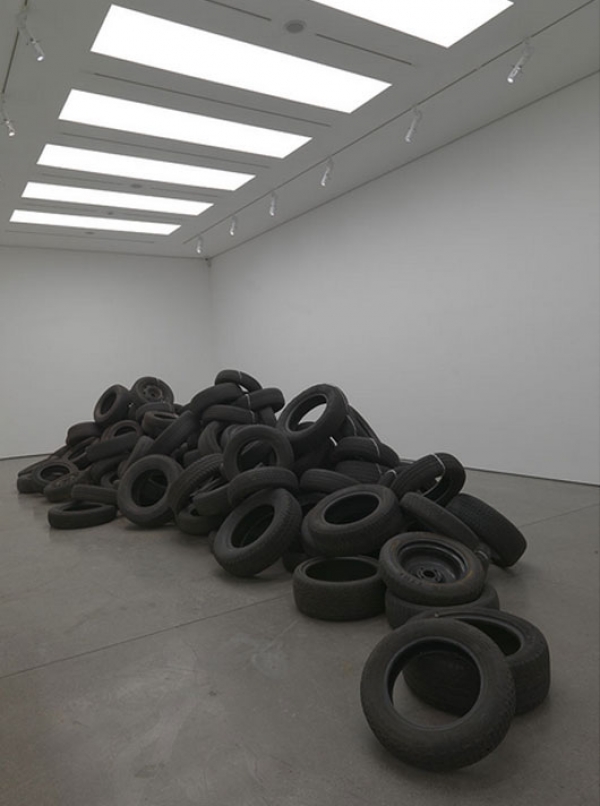
I seem to be looking at a lot of art made from other stuff at the moment. The journey from Bruce Lacey’s assemblages and robots at Camden Arts Centre to Damián Ortega’s sculptures at White Cube Mason’s Yard is a short tube ride and a big conceptual leap. Both exhibitions include sculpture made from ordinary objects but the two shows feel worlds apart.

Continue reading

In the stacks

Marcos Saboya and Gualter Pupo, aMAZEme, installation in Royal Festival Hall, 2012

If someone had asked me to imagine what 250,000 books looked like, I’m not sure I’d have had a clue. A quarter of a million anything is a lot, that much I do know. But I was always rubbish at guessing the number of smarties in the jar at fêtes, and those numbers were always in the hundreds which is much more manageable somehow. Anyway, in case you happen to be wondering what 250,000 books looks like, there they are, made into a maze resembling the fingerprint of writer and educator Jorge Luis Borges by Brazilian artists Marcos Saboya and Gualter Pupo in the Clore Ballroom at the Royal Festival Hall. As with almost everything else in London this summer, it’s part of the London 2012 Festival, the culmination of the Cultural Olympiad.

Continue reading

Slowly diminishing sculpture

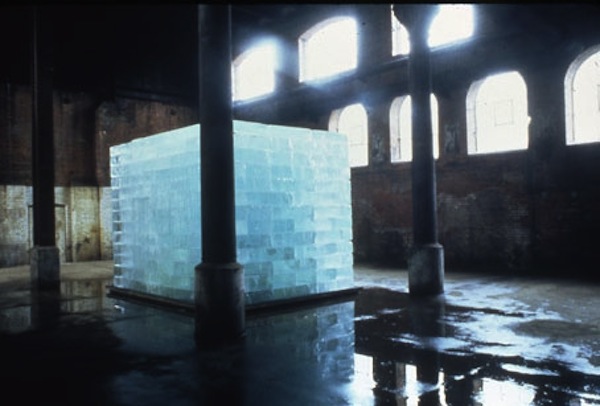
Anya Gallaccio, Intensities and Surfaces, 1996

Using ice as a building material for making art is pretty much always going to end in, well, if not tears, then puddles. In California that outcome will be comparatively speedy but in a London winter the process takes a bit longer. Anya Gallaccio’s Intensities and Surfaces, made in Wapping Pumping Station – the clue’s in the name: a former pumping station in, yes, Wapping, in London – took the form of a large scale ice construction at first glance not dissimilar to one of Allan Kaprow’s ice enclosures. But Gallaccio’s block was solid; it was also lit slightly from within (not apparent in any of the pictures I’ve been able to find of it but I’m almost certain I’m not misremembering) and with a block of rock salt within it and possibly, I think, layered between the ice bricks.

Continue reading

Building in hope

Yael Bartana, Summer Camp, 2007 (still)

Yael Bartana, Summer Camp (still), 2007

There are many ways of making political art. For some the point needs to be made in an explicit way while others are happier to leave things open to interpretation. Though Summer Camp is much easier to make sense of than And Europe Will Be Stunned, which I wrote about here recently, Yael Bartana is clearly towards the open to interpretation end of the scale. In Summer Camp, Bartana records the rebuilding of the house of a Palestinian family in the village of Anata (east of Jerusalem) by volunteers organised by the Isreali Committee Against House Demolitions (ICAHD), a non-violent direct action group both protests about house demolitions and seeks to rebuild demolished houses. The team of volunteers filmed by Bartana included both Palestinians and Isrealis as well as people from other countries. In a sense then, Summer Camp is effectively a documentary, but as with the films that form And Europe Will Be Stunned there’s more to it than that. 

Continue reading

Coded messages

Cerith Wyn Evans, Astrophotography…The Traditional Measure of Photographic Speed in Astronomy…’ by Siegfried Marx (1987), 2006

Thinking about Kris Martin’s Mandi iii and its futile attempts to communicate information reminds me about Cerith Wyn Evans’s chandeliers, one of which – the snappily titled Astrophotography…The Traditional Measure of Photographic Speed in Astronomy…’ by Siegfried Marx (1987) – was in the Fade In/Fade Out exhibition at Bloomberg SPACE. Unlike Martin’s piece though, Wyn Evans’s did communicate its message, alebit in a way few could read without assistance. Astrophotography…The Traditional Measure of Photographic Speed in Astronomy…’ by Siegfried Marx (1987) is not just the title of the work but also of the text it is painstakingly spelling out in morse code.

Continue reading

Simple confusion

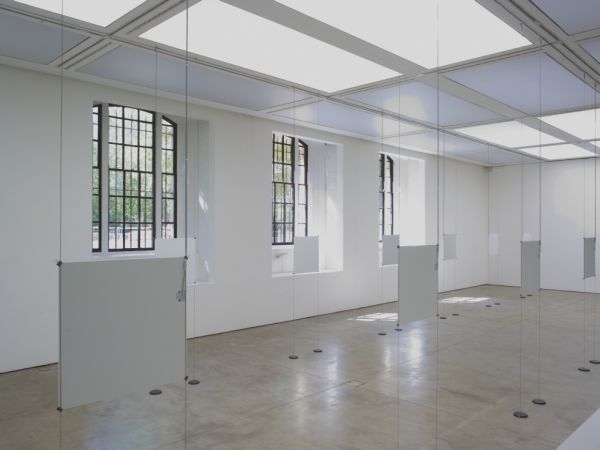
Bruce Nauman, Days, 2009

There is a beautiful simplicity to Bruce Nauman’s Days at the ICA. The space is empty but for two rows of plain white squares suspended at roughly head height. Walking between the white panels – seven in in each row – it’s clear that they’re loudspeakers and that from each a voice can be heard speaking the days of the week. So far, so simple. The space is almost empty and what’s in there is simplicity itself – my liking for art that’s minimal and preferably white can be no secret to anyone who’s been reading this on even a semi-regular basis – so predictably enough I’m in favour of  Days from the start.

Continue reading

Secret spherical screens

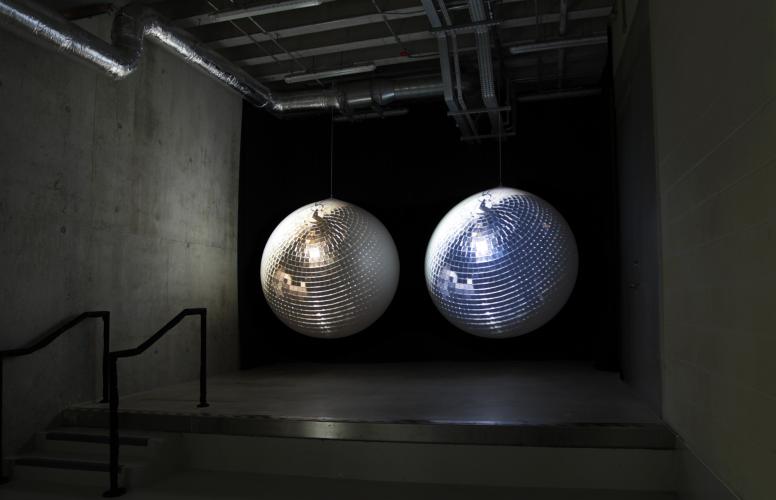
Lindsay Seers, installation view of Entangled² at Turner Contemporary, 2012 

Seeing Lindsay Seers’s work is never straightforward. Her work is essentially video but it’s never as simple as watching something on a monitor or projected onto the gallery wall. Entangled² is no exception. Unlike previous works I’ve seen, Seers hasn’t built a space within a space to contain the work here. Instead it’s shown in an existing part of the gallery building but one the publicity material refers to as a ‘secret location within Turner Contemporary’. There are screenings every half hour; those wanting to see the work are met in the foyer and led out through the car park to the space. While this is something that could easily irritate me, I’ve found all the work I’ve seen by Seers so far really intriguing so I quite enjoyed loitering in the foyer and wondering who else was on a Seers-seeing mission. And, a real plus, it mean that the whole audience was in placed and headphoned-up before the piece started which meant no distracting comings and goings during the film. So far so good, but what about the work?

Continue reading

Today, tomorrow and yesterday

The unmediated sea at Margate.

There’s something compelling about the sea. It looks so flat and innocent but it demands our respect and we know how violent it can be. But even on the dullest, stillest day, I think I could stare out to sea for quite a long time without getting bored. Standing outside Turner Contemporary at Margate, Mark Wallinger’s Sinema Amnesia is watching the sea this summer and showing it back to us in the form of The Waste Land. The installation takes the form of a shipping container supported by scaffolding and not trying to pretend otherwise. There are references to cinema not just in the title but also the signage but otherwise it’s essentially just a black box in a car park in a run-down seaside town, albeit a car park outside a contemporary art gallery.

Mark Wallinger, Sinema Amnesia installed in Margate, 2012

Continue reading