More questions than answers

Yael Bartana, Mary Koszmary (Nightmares), 2007

I don’t go to see art expecting easy answers. I like work that makes me think. (I like work that just bowls me over visually too, but I’m going to assume that’s a given rather than getting bogged down by trying to make an exhaustive list of types of art I like. Let’s just work on the basis that I like art. And, for my purposes here, that thinking is a bonus and a bit of confusion is fine.) I’m not scared of challenging work and I don’t necessarily expect to get it straight away. I’m pretty tenacious; I’ll go back for a second look (if I can, my tendency to see exhibitions on the day they close can be something of a limitation in this respect) or read whatever background information I can find. All of which should be borne in mind when I say that I’ve seen Yael Bartana’s And Europe will be Stunned three times now and I’m still trying to figure out exactly what I think about it.

The work is made up of three connected films – Mary Koszmary (Nightmares), Mur i wieża (Wall and Tower) and Zamach (Assassination) – made over a period of several years and is based around the premise of a movement encouraging the return of Jews to Europe. You won’t often find me focusing on biographical information, but it’s relevant here: The artist, Yael Bartana, is an Isreali Jew whose grandparents died in Poland during the Holocaust.
Continue reading

Solid water

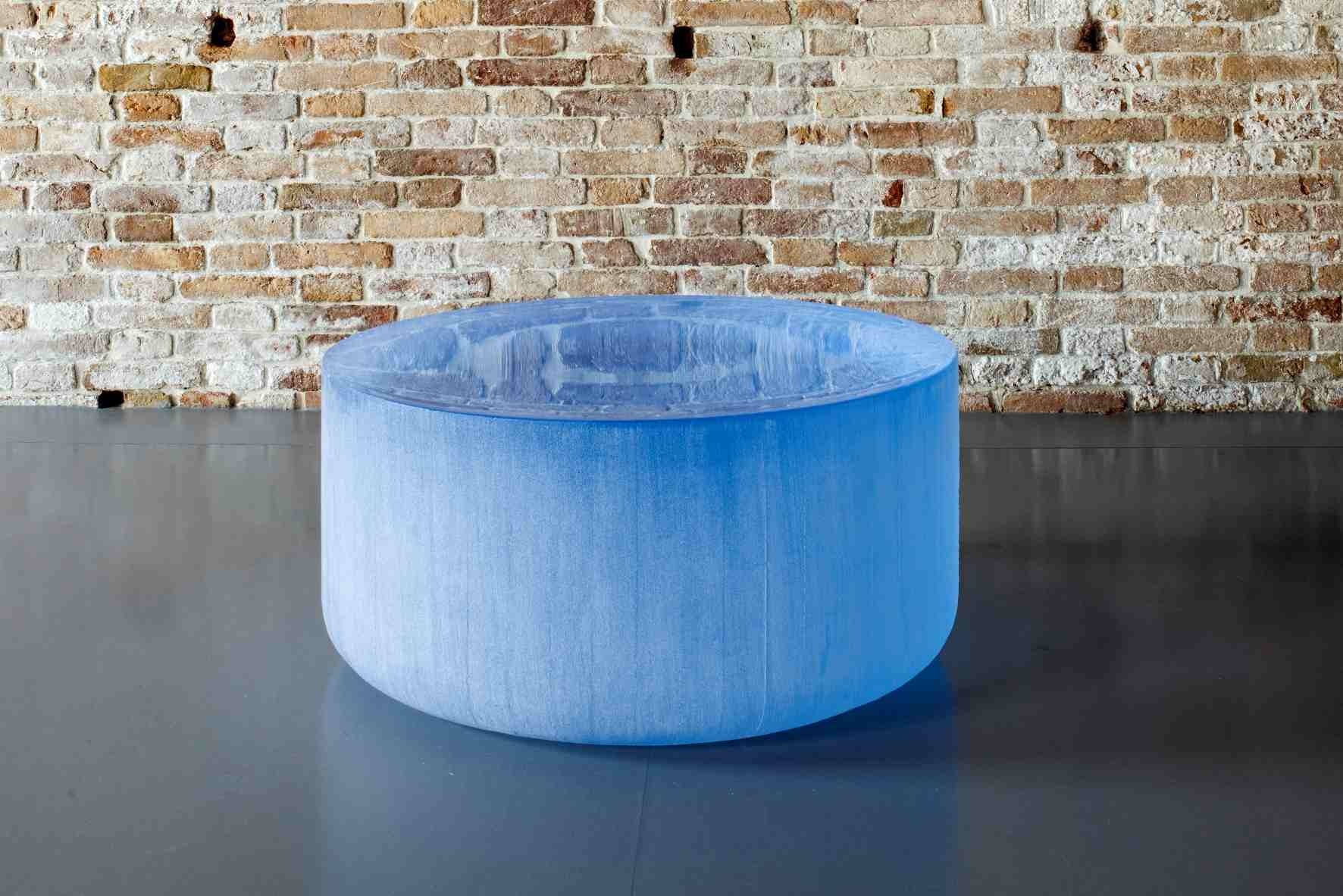
20120222-161633.jpgRoni Horn, Well and Truly, 2009-10

The is a something visually confusing about Roni Horn’s Well and Truly, on show at the moment in at Punta della Dogana as part if the exhibition In Praise of Doubt. The work consists of a number of similar cast glass sculptures each of which looks like water, solidified – but somehow, inexplicably, as solid water, rather than ice – in the form of a low straight-sided dish (that is, as a short column with a slight rounding where the sides meet the base). The sides look sanded (though this is from contact with the mold during casting) but the tops, which dip slightly, are clear and reflect their surroundings.

Continue reading

Shadows in the forest

Loris Gréaud, Gunpowder Forest Bubble, 2008

There is something enchanted about Loris Gréaud’s Gunpowder Forest Bubble (currently installed in Palazzo Grassi as part of the exhibition The World Belongs to You). By the light the moon, which hangs low in the shadowy forest, I can see that I am alone. The trees are bare and dark; they loom above me. There is a sense of theatre about the installation, albeit without a predetermined narrative. This is the forest as a fairytale space where anything is possible, and anything – perhaps especially – danger might be revealed. And there is danger here, notionally at least, for the stark carbonised trees are coated in gunpowder. Rationally I might know that the risk is minimal to non-existent, but still: gunpowder! That hardly seems safe.

Continue reading

Just lying there

Maurizio Cattelan, All, 2008

Though not a sight one would ever hope to see, a row of bodies covered in sheets is easy enough to understand. The first thing that feels wrong here is the solidity of the sheets; the row of figures are marble statuary rather than fabric covered human remains. This realisation gives the figures a new familiarity, one rooted in religious representation.

Take a closer look though and all is not as it seems…

Continue reading

On never knowing who might be looking

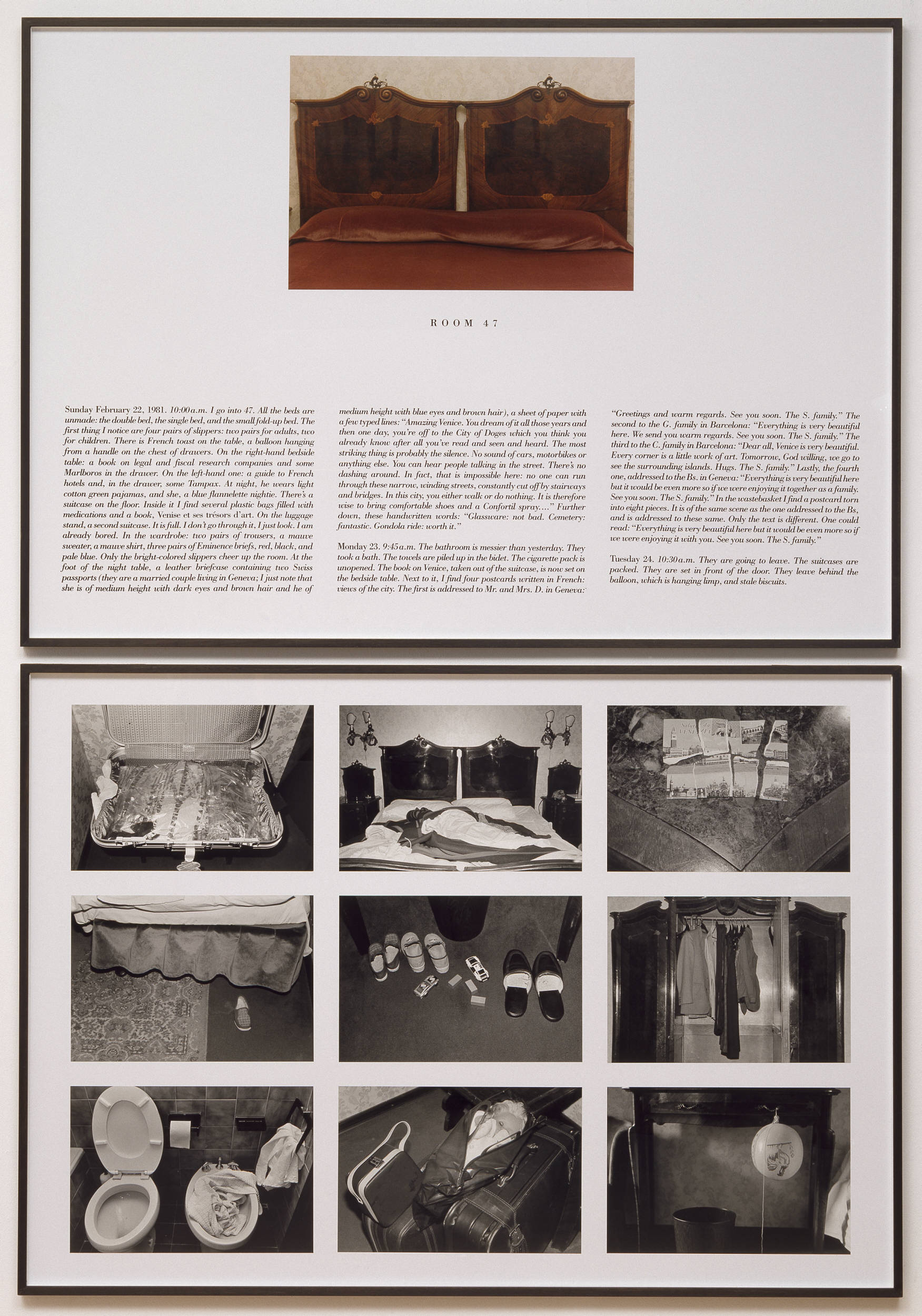
Sophie Calle, The Hotel, Room 47, 1981

When I think about Venice the artist who comes to mind first is Sophie Calle; two of her most intriguing projects – Suite Vénetienne and The Hotel – were made there. Both bodies of work fascinate me but it’s The Hotel that makes me feel the most uneasy. I’m pretty sure no-one’s ever likely to stalk me to make art, which is the basis of Suite Vénetienne,  but it seems entirely possible that a curious chambermaid might go through my stuff, albeit probably not with quite the same determination as Calle. Making up hotel rooms must be pretty boring work, why wouldn’t you amuse yourself by looking through whatever’s left on show?

Continue reading

Looking efficiency in the eye

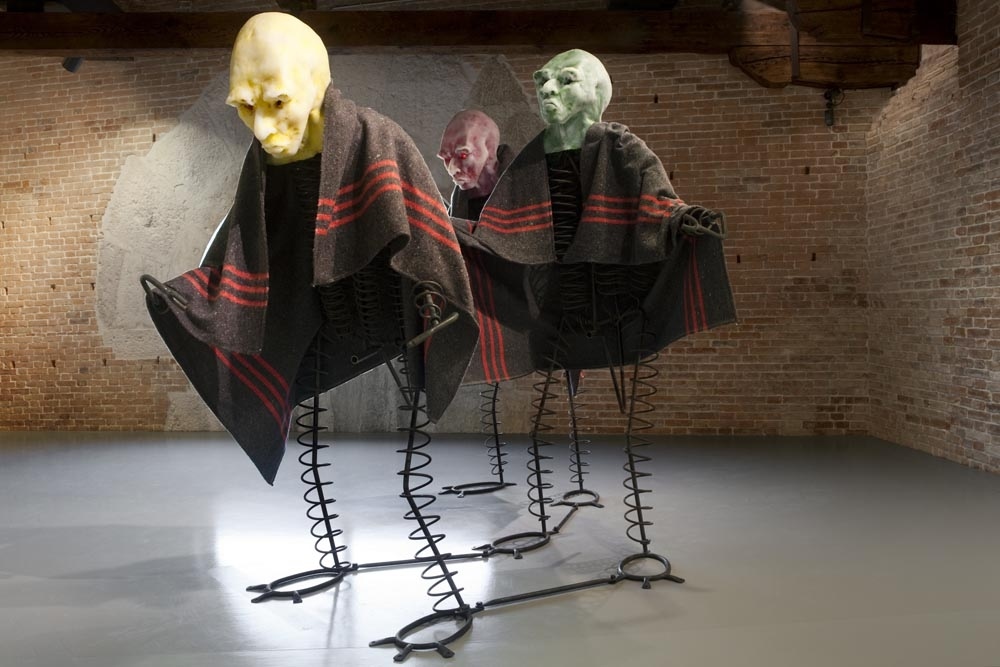
Thomas Schütte, The Efficiency Men, 2005

There is something slightly terrifying about Thomas Schütte’s The Efficency Men. The metal frame bodies are strange and the blankets round their shoulders give an air of pathos but ultimately it’s the eyes in their oversize heads that get me. Staring into the eyes of one of the figures isn’t at all comfortable.

Continue reading

Many bridges to cross

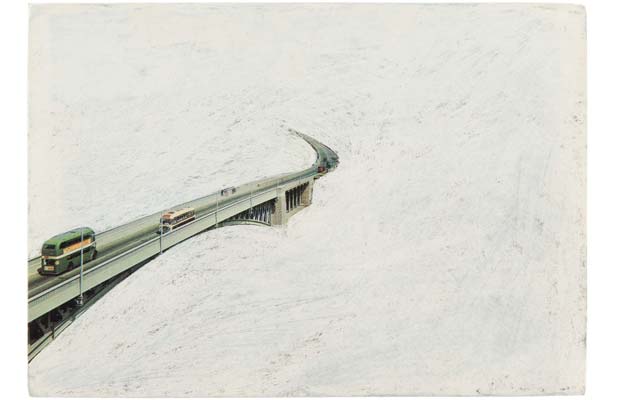
Tim Davies, from the series Bridges, 2009-present (sanded postcard)

I really like postcards. I like the way they represent a place without necessarily being anything like its day to day reality. They seem optimistic somehow. I don’t much like writing them – I tend to restrict myself to a few words and a good deal of flippancy – so can’t really claim to like sending them with any degree of conviction, but I like getting them (and if they arrive back ages after the sender so much the better, especially if they’ve followed a convoluted route) so I send them in the hope that their recipients might enjoy them in much the same way as me. When I choose postcards I aim for maximum cheesiness, as long as it’s authentic (whatever that means) – there is no place for knowing postmodern pastiche here – and often choose cards featuring photographs that aren’t exactly recent. Doubtless a good few artists have worked with postcards but two of the examples that have stayed with me as works I’ve particularly enjoyed are ones I first saw in the Venice Biennale (one in 2009, the second two years later). And, since I’m in Venice this weekend for too short a visit to warrant sending any postcards, I thought I’d write about them here in the form of one of those memorable works.

Continue reading