Just lying there

Maurizio Cattelan, All, 2008

Though not a sight one would ever hope to see, a row of bodies covered in sheets is easy enough to understand. The first thing that feels wrong here is the solidity of the sheets; the row of figures are marble statuary rather than fabric covered human remains. This realisation gives the figures a new familiarity, one rooted in religious representation.

Take a closer look though and all is not as it seems…

Continue reading

Using the system to challenge the system

Cildo Meireles, Insertions into Ideological Circuits, 1970

Fundamental to my view of art is the idea that it can come from anywhere and be made of anything and for me a great example of that is the work made by the Brazilian artist Cildo Meireles in the early 1970s, specifically his Insertions into Ideologoical Circuits an example of which is shown here.

For this work, Meireles used the return and refill system operated at that time for soda bottles. Meireles would doctor Coca Cola bottles, adding messages that were all but invisible on the empty bottle but which appeared when the bottle was filled with the conveniently dark liquid. The bottles would them be returned into the system, refilled with coke and distributed to shops.

Continue reading

On never knowing who might be looking

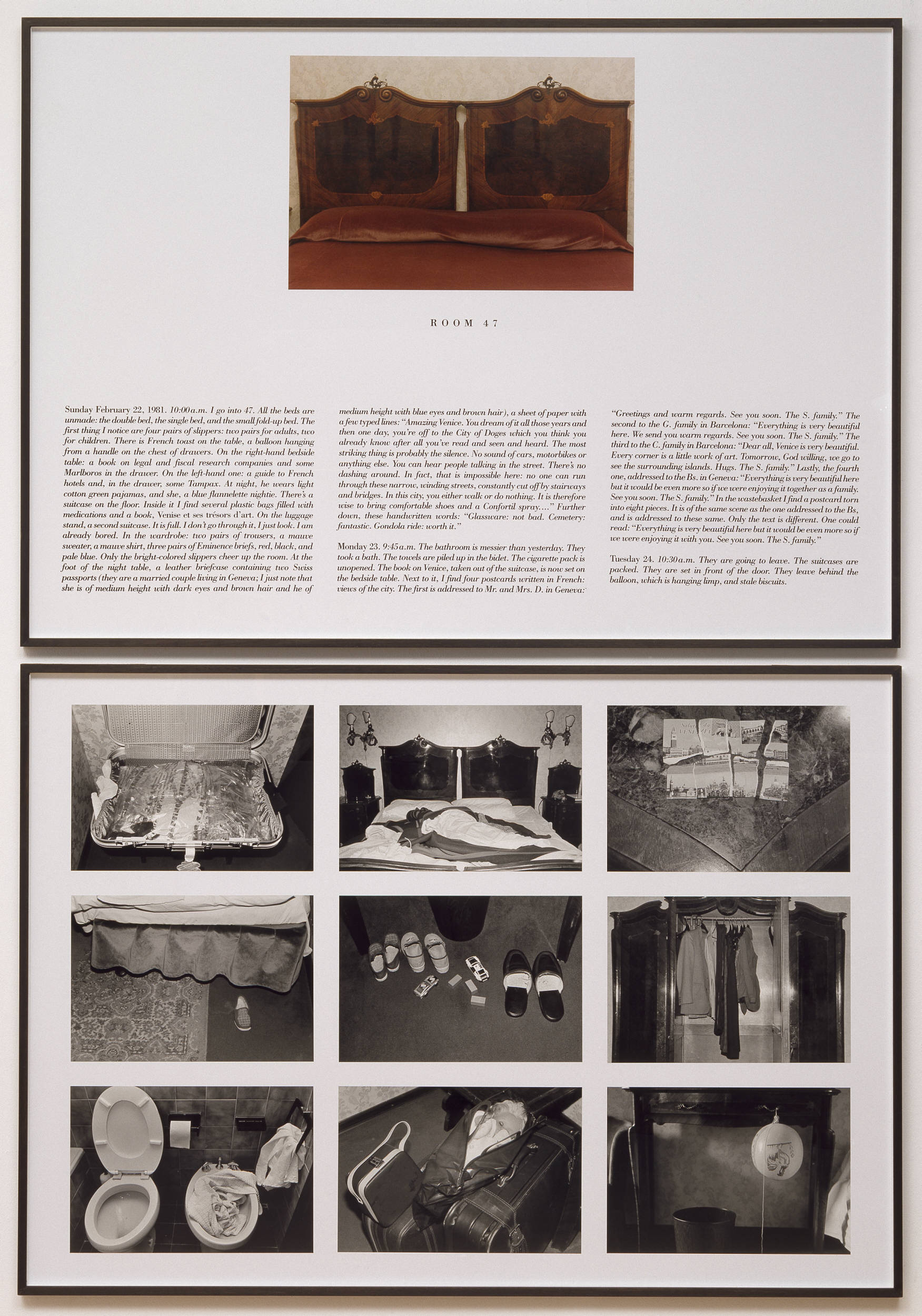
Sophie Calle, The Hotel, Room 47, 1981

When I think about Venice the artist who comes to mind first is Sophie Calle; two of her most intriguing projects – Suite Vénetienne and The Hotel – were made there. Both bodies of work fascinate me but it’s The Hotel that makes me feel the most uneasy. I’m pretty sure no-one’s ever likely to stalk me to make art, which is the basis of Suite Vénetienne,  but it seems entirely possible that a curious chambermaid might go through my stuff, albeit probably not with quite the same determination as Calle. Making up hotel rooms must be pretty boring work, why wouldn’t you amuse yourself by looking through whatever’s left on show?

Continue reading

Beautiful decay

Anya Gallaccio, Beauty, 1991-2003

Flowers have a long history in art, not least in the history of pretty but clichéd painting. The flowers in Anya Gallaccio’s work aren’t painted though, nor sculpted. They are real, presented in panels and not altered – or, crucially, preserved – in any way.

Continue reading

Looking efficiency in the eye

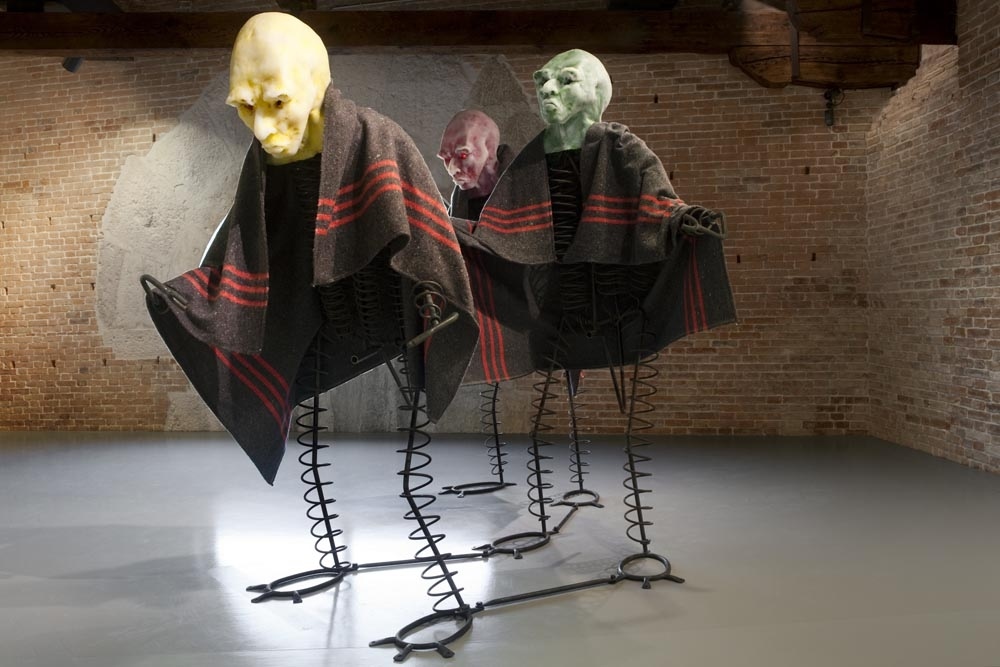
Thomas Schütte, The Efficiency Men, 2005

There is something slightly terrifying about Thomas Schütte’s The Efficency Men. The metal frame bodies are strange and the blankets round their shoulders give an air of pathos but ultimately it’s the eyes in their oversize heads that get me. Staring into the eyes of one of the figures isn’t at all comfortable.

Continue reading

Many bridges to cross

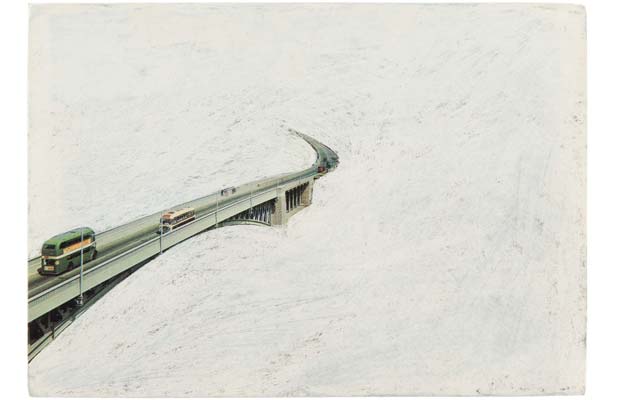
Tim Davies, from the series Bridges, 2009-present (sanded postcard)

I really like postcards. I like the way they represent a place without necessarily being anything like its day to day reality. They seem optimistic somehow. I don’t much like writing them – I tend to restrict myself to a few words and a good deal of flippancy – so can’t really claim to like sending them with any degree of conviction, but I like getting them (and if they arrive back ages after the sender so much the better, especially if they’ve followed a convoluted route) so I send them in the hope that their recipients might enjoy them in much the same way as me. When I choose postcards I aim for maximum cheesiness, as long as it’s authentic (whatever that means) – there is no place for knowing postmodern pastiche here – and often choose cards featuring photographs that aren’t exactly recent. Doubtless a good few artists have worked with postcards but two of the examples that have stayed with me as works I’ve particularly enjoyed are ones I first saw in the Venice Biennale (one in 2009, the second two years later). And, since I’m in Venice this weekend for too short a visit to warrant sending any postcards, I thought I’d write about them here in the form of one of those memorable works.

Continue reading

It’s all in the detail

Ambrosine Allen, Broad Flat Valley

At first glance, Ambrosine Allen’s pictures appear to be black and white photographs of a familiar but somewhat fantastic landscape; it’s only when one looks more closely that the structure of the images becomes apparent. The images are photographic in a sense but there is a strangeness to the surface. These are collages made of tiny scraps of photographs cut from books and used to build up the strange worlds Allen depicts. In the series Compendium to the New World, images from which are on show at Room, the world becomes a strange dreamscape in which odd geological features sit in uncomfortable proximity to one another under stormy skies or in the shadow of volcanic eruptions.

Continue reading

Are you sitting comfortably?

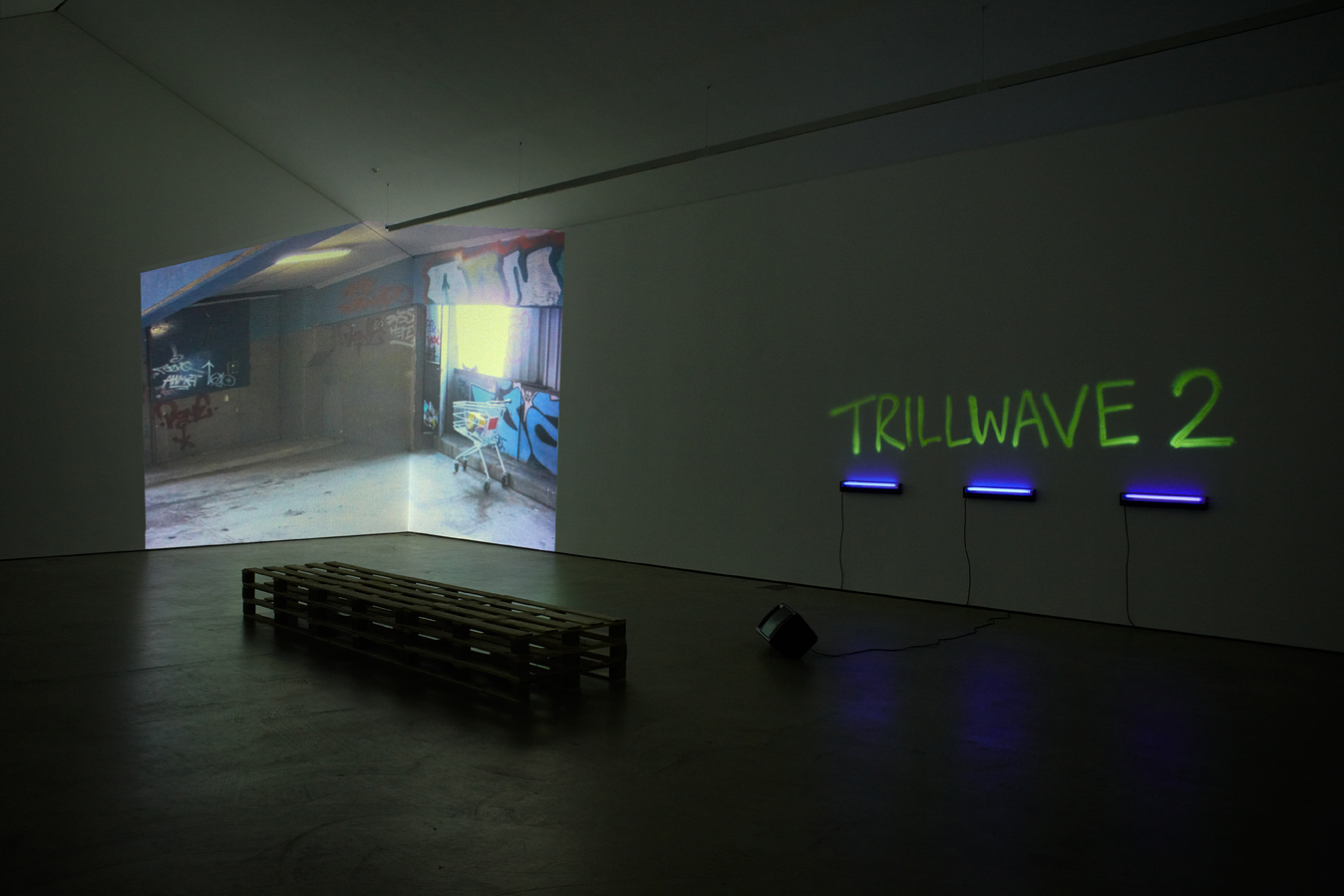
Ilja Karilampi, installation view at Wilkinson Gallery

I’ve been preoccupied with seating recently and in particular with the way film and video is shown in gallery spaces. It turns out that my attention span is much reduced if I’m not sitting comfortably. (Well, durr.) A particular low is the woefully inadequate seating at the ICA for the Lis Rhodes: Dissonance and Disturbance exhibition. When I came to write about that exhibition for MostlyFilm, all I could think about was how uncomfortable I’d been. So visiting galleries in east London yesterday it was pleasing to come across a couple of more interesting approaches.

Continue reading

Time, light and completeness

Hiroshi Sugimoto, In the Praise of Shadow, 1999

To a greater or lesser extent all photography is about time and light. A long exposure can make turn something ordinary into a softly unfamiliar image; a short exposure can freeze a moment in time giving a picture the naked eye could never isolate. For Hiroshi Sugimoto the duration of a photograph is often determined by its subject. In the series In the Praise of a Shadow all the light given out by candle is recorded in a single image; Sugimoto describes this as recoding ‘the life of a candle‘.

Continue reading